Bakers following a recipe that specifies skimmed milk
Choose labelled liquid skimmed milk when the recipe calls for it. Check the required quantity rather than treating “mature” as a milk specification.


For biscuit baking, choose the form of skimmed milk your recipe specifies rather than looking for a “mature” variety: the UK product listings cited here distinguish fresh, filtered, UHT and dried milk, not maturity grades. Plain fresh skimmed milk fits a recipe calling for liquid skimmed milk; filtered or UHT milk may better suit your storage plans. Use powder when the recipe calls for it, or make it up according to the pack directions before measuring the required liquid.
Choose labelled liquid skimmed milk when the recipe calls for it. Check the required quantity rather than treating “mature” as a milk specification.
UHT skimmed milk offers a cupboard option. Dried skimmed milk is another option if you can make it up to the packet directions before using it in place of liquid milk.
Filtered fresh skimmed milk may suit a longer refrigerated storage window. The Waitrose & Partners product cited here states up to one month unopened and seven days after opening; follow the dates and instructions on the bottle you buy.
Start with the milk form and quantity in the recipe, then choose a pack you can store and use as directed.
| Priority | What to check | Your needs |
|---|---|---|
| Recipe fit | Check whether the recipe specifies liquid skimmed milk or milk powder, and measure the stated amount. Keep its other ingredients unchanged unless the recipe gives a substitution. | My recipe calls for liquid skimmed milk, so I need that form rather than a supposed “mature” grade. |
| Storage | Check the pack size, date and instructions for storage before and after opening. Waitrose & Partners states up to one month unopened and seven days opened for its filtered fresh product. | I bake occasionally and want a format I can keep until I need it, or I bake often enough to use an opened fresh bottle. |
| Powder preparation | Follow the powder’s own directions before measuring liquid milk for a recipe. Tesco instructs users of its instant dried skimmed milk to add 57 g powder to 600 ml cold water. | If I keep milk powder as a backup, I need to make it up first unless my recipe explicitly calls for dry powder. |
| Allergens | Read the current pack’s ingredients and allergen statement, including for milk powder. The Food Standards Agency identifies milk as an allergen that can also appear in foods brushed or glazed with it. | When I bake for someone with a milk allergy, I need to check every relevant ingredient and avoid cow’s milk. |
The UK listings cited here identify fresh, filtered, UHT and dried forms, not a maturity grade that predicts biscuit results.
Buy the form named in the recipe and check whether it requires liquid milk or powder.
Filtered and UHT describe milk formats; their storage differences do not establish a biscuit-texture advantage.
Choose a format for your storage needs while keeping to the recipe’s milk quantity and other ingredients.
Opened storage periods differ by product: the Sainsbury’s fresh skimmed milk cited here says three days, while the Waitrose & Partners filtered product states seven days.
Match the pack to how soon you will use it, and follow its current date and storage instructions.
Skimmed milk and skimmed milk powder contain milk. Ingredient information can change between a listing and the pack supplied.
Check the physical pack’s current ingredients and allergen statement before baking for someone with an allergy.
These examples illustrate milk formats and label details, not a ranking of brands for biscuit baking.
Tesco lists standard fresh, filtered and instant dried skimmed milk options.
Sainsbury’s British Skimmed Milk is a fresh liquid option for a recipe specifying skimmed milk.
M&S lists fresh skimmed milk in different pack sizes, including 1.136 L and 2.272 L products.
Waitrose & Partners lists both filtered fresh skimmed milk and Essential long-life UHT skimmed milk.
Tesco lists a 2 L Cravendale filtered fresh skimmed milk.
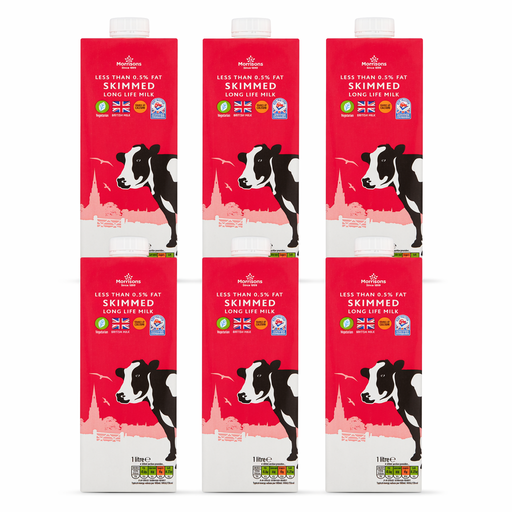
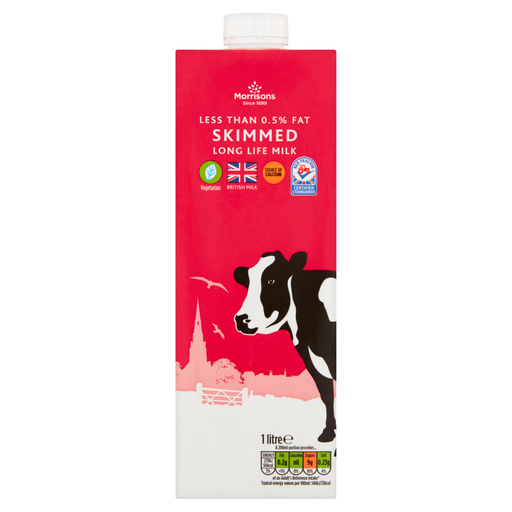
These Morrisons UHT skimmed milk packs offer liquid milk for recipes specifying skimmed milk, with a choice between one carton and a six-carton bundle.
 No image available
A six-carton option if you want UHT liquid skimmed milk on hand for biscuit recipes. The product description lists 0.1 g fat per 100 ml and says to refrigerate after opening and use within three days. It also says the milk is not suitable for children under five; check the current pack wording and allergen statement before use.
 No image available
A single carton of UHT liquid skimmed milk for a recipe that calls for that milk form. The product description lists 0.1 g fat per 100 ml and says to refrigerate after opening and use within three days. It also says the milk is not suitable for children under five; check the current pack wording and allergen statement before use.
The UK skimmed-milk listings cited here do not identify “mature” as a milk form or baking specification. Follow the recipe’s stated form and quantity of milk instead.
You can make up dried skimmed milk before measuring the liquid quantity your recipe requires. Tesco’s instant dried product instructs users to add 57 g powder to 600 ml cold water; do not add powder dry in place of liquid unless the recipe calls for it.
Follow the bottle you buy. The cited Sainsbury’s fresh skimmed milk says to refrigerate below 5°C and consume within three days of opening; the cited Waitrose & Partners filtered product states seven days after opening.
No: skimmed cow’s milk contains milk, an allergen. Check the current packaging of every ingredient before baking for someone with a milk allergy; the Food Standards Agency notes that milk can also occur in powders and foods brushed or glazed with it.