Runners who use milk after training
If you tolerate dairy, skimmed milk can contribute fluid, protein and carbohydrate to a post-run snack or meal. What else you need depends on the session and the time before you train again.


If you tolerate dairy, skimmed milk can be part of a post-run snack or meal, but a glass alone does not replace a wider fuelling plan for a long run or race. If taste is the deciding factor, Arla B.O.B is positioned as tasting like semi-skimmed milk; if storage matters more, compare filtered fresh milk with UHT cartons and follow each pack’s instructions.
If you tolerate dairy, skimmed milk can contribute fluid, protein and carbohydrate to a post-run snack or meal. What else you need depends on the session and the time before you train again.
If taste affects whether you will drink it, a skimmed product positioned as having a fuller taste may be worth trying. Arla B.O.B’s semi-skimmed-style taste description is a product claim, not a result everyone will experience.
Fresh filtered milk and unopened UHT cartons offer different storage arrangements. The useful choice depends on when you will open the pack and how quickly your household will use it.
Start with how you intend to use the milk after a run, then compare taste positioning, pack storage and dairy tolerance.
| Priority | What to check | Your needs |
|---|---|---|
| Post-run food | Read the carbohydrate and protein values for the portion you will drink. Sainsbury’s, Asda and Waitrose list 9–10g carbohydrate and 7–7.2g protein per 200ml for their specified UHT skimmed milks; those figures do not describe every product. | I want milk as part of a post-run snack, not as my entire long-run or race-fuelling plan. The UK Sports Institute notes that recovery can involve depleted fuel as well as other demands, so the session and time until the next one matter. |
| Taste | Check whether a taste description belongs to the exact variant. Sainsbury’s lists Arla B.O.B as skimmed milk that tastes like semi-skimmed milk; this is product positioning, not an independent taste comparison. | Ordinary skimmed milk tastes too thin to me, so I would try a taste-positioned option during routine training before relying on it around an important run. |
| Storage | Compare the unopened period, refrigeration temperature and instructions after opening. Arla states up to three weeks unopened and seven days opened at 0–5°C for its specified Cravendale filtered 2L milk; the listed UHT cartons have different opened-pack periods. | I need a pack that fits how often we shop and how quickly we use milk. A long unopened life is less useful if I cannot finish the carton within its instructions after opening. |
| Dairy tolerance | Check the current ingredients and allergen information for the exact pack. Ordinary skimmed milk contains dairy; a fuller-taste description does not mean it is lactose-free. | If dairy causes me symptoms, I need to consider that before making milk part of a running routine. The NHS distinguishes lactose intolerance from milk allergy. |
Milk contributes nutrients and fluid, but the listed UHT examples provide 9–10g carbohydrate per 200ml. A glass on its own is not a complete marathon-fuelling plan.
Plan the rest of your food around the session and your wider routine, and practise what you intend to have after training.
Arla B.O.B’s semi-skimmed-style taste description is a supplier claim. It cannot establish how every runner will perceive it or how it compares with every other skimmed milk.
If taste is decisive, try a practical pack size during ordinary training rather than introducing unfamiliar milk before a key run.
Fresh filtered and UHT milk still have instructions for storage after opening. For example, Arla specifies seven days for its stated Cravendale product at 0–5°C, while the listed Sainsbury’s and Asda UHT products specify three days after opening.
Choose a size your household can use within the particular pack’s instructions, and follow its refrigeration guidance.
The NHS describes lactose intolerance as symptoms after consuming lactose in dairy. That is not the same condition as milk allergy, so a change in taste or fat content does not resolve either concern.
Check the current allergen label. Seek appropriate medical advice if you suspect an allergy or have recurring symptoms after dairy.
These examples illustrate differences in taste positioning, format and pack instructions; a brand name alone does not establish which milk suits your training routine.
A filtered fresh skimmed-milk option for shoppers considering how long an opened bottle will last.
Its skimmed-milk range includes fresh, filtered and branded examples, according to Tesco Groceries.
A long-life skimmed-milk example for an unopened cupboard backup.
A UHT skimmed-milk example with nutrition stated per serving.
A fresh skimmed-milk example for shoppers who prefer a refrigerated bottle.
A long-life skimmed-milk example with a stated five-day opened-pack period.
These Morrisons UHT skimmed-milk listings fit the unopened-cupboard-backup route. If a fuller taste is your main reason for choosing milk, assess that preference separately rather than assuming it from the UHT format.
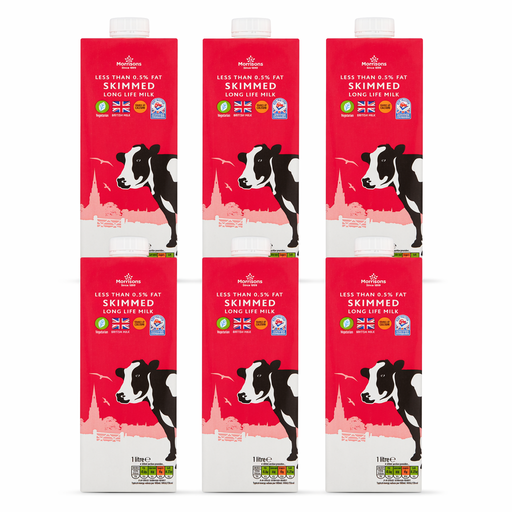 No image available
The UHT format suits an unopened cupboard backup for a post-run snack or meal. Confirm the pack configuration and total volume on the product page before choosing this listing, then follow the pack’s instructions after opening.
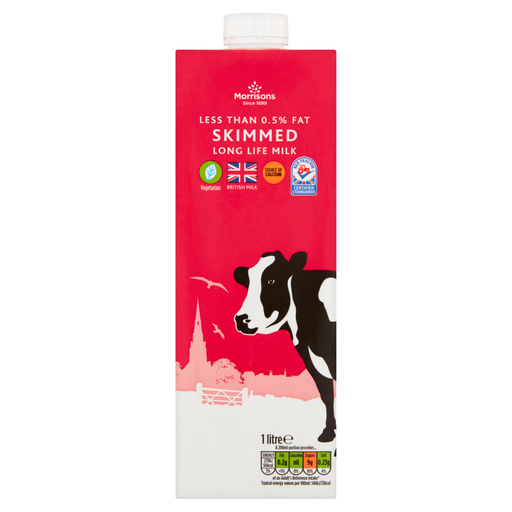 No image available
This 1-litre UHT listing is another option for keeping unopened skimmed milk between shops. Check the current pack for its storage instructions, and try it during routine training if taste around runs matters to you.
No: use it as one part of a post-run snack or meal rather than the whole plan for a long run or race. The specified Sainsbury’s, Asda and Waitrose skimmed milks list 9–10g carbohydrate per 200ml, while what you need alongside milk depends on the session and recovery time.
Arla B.O.B is a relevant option to try because Sainsbury’s lists it as skimmed milk that tastes like semi-skimmed milk. That description is a product claim, not a guarantee of your preference, so try it during ordinary training.
Follow the particular pack: Arla states up to seven days at 0–5°C after opening for its specified Cravendale filtered milk. The specified Sainsbury’s and Asda UHT cartons say to refrigerate and use within three days; Waitrose specifies refrigeration below 5°C and consumption within five days for its listed long-life milk.
Do not assume a different skimmed-milk taste or format will address a reaction to dairy. The NHS says lactose intolerance can cause symptoms after foods containing lactose; milk allergy is different. If symptoms recur or you suspect an allergy, seek appropriate medical advice and check the current pack’s allergen information.