Students setting up a first kitchen
If milk will go into cereal, tea, coffee or cooking, think about how much you can use before an opened pack's stated deadline. A smaller bottle may suit an uncertain first week.


Choose standard fresh skimmed milk if you expect to finish an opened bottle promptly, filtered fresh milk if your chilled-milk use is irregular, or an unopened UHT carton as a cupboard standby while you settle in. Sainsbury's lists three days after opening for its fresh skimmed milk and seven days for the Cravendale filtered product it sells; check the instructions and pack size of the milk you buy. Rather than treating “mature” as a skimmed-milk type, compare storage format, labelled nutrition and how much you will use.
If milk will go into cereal, tea, coffee or cooking, think about how much you can use before an opened pack's stated deadline. A smaller bottle may suit an uncertain first week.
Days away from your accommodation or limited space in a shared fridge can make pack size and storage format particularly important. Filtered fresh milk and unopened UHT cartons serve different purposes.
If fat, protein or calcium content matters to your choice, compare values on the exact packs. The NHS notes that skimmed milk is lower in fat than higher-fat milk while retaining milk's important nutritional benefits.
Start with how often you will use milk and whether you have fridge space, then check the pack's storage and nutrition information.
| Priority | What to check | Your needs |
|---|---|---|
| Storage format | Check whether the pack is standard fresh, filtered fresh or UHT. Read its unopened storage instructions and date mark. | I need milk ready for regular chilled use, or an unopened carton I can keep as a cupboard standby. |
| Pack size | Compare the total quantity with your likely use. A single 1-litre carton and a pack of six 1-litre cartons are different commitments. | While I settle into a shopping routine, I would rather choose a quantity I can store and use. |
| After opening | Follow the exact pack's refrigeration and use instructions. Sainsbury's lists three days for its fresh skimmed milk; its Cravendale listing states seven days for the filtered product. Waitrose lists five days for its Essential UHT milk, refrigerated below 5°C. | If I only use milk occasionally, the time allowed after opening could affect which pack I finish. |
| Labelled nutrition | Compare values on the same basis, such as per 100ml. Sainsbury's lists 3.6g protein and 130mg calcium per 100ml for its fresh skimmed milk; Waitrose lists 4.5g and 146mg per 100ml for Arla B.O.B. | Protein or calcium content matters to my choice, so I want to compare the labelled values rather than rely on a taste claim. |
A larger bottle can go unused if your routine changes. Sainsbury's instructs customers to consume its cited fresh skimmed milk within three days of opening.
For an uncertain first week, compare smaller packs, filtered milk and UHT cartons against how often you expect to use milk. Check the opened-life instruction on the exact pack.
Storage instructions differ: the cited Sainsbury's fresh milk states three days after opening, Cravendale filtered milk states seven days, and Waitrose Essential UHT milk states five days with refrigeration below 5°C.
Choose a storage format for your routine, then read the date and post-opening instructions before selecting a pack.
Waitrose lists 4.5g protein per 100ml for Arla B.O.B, compared with 3.6g per 100ml on the cited Sainsbury's standard skimmed milk. The B.O.B name's taste description is a brand claim, not a measure of what you will prefer.
Compare the nutrition panels if the difference matters to you, and make your own judgement about flavour.
The Food Standards Agency warns that food stored too long or at the wrong temperature can cause food poisoning. The cited milk products have their own refrigeration and post-opening instructions.
Put chilled milk in a working fridge promptly, and follow the date mark and storage directions on the pack you bought.
A filtered fresh skimmed-milk option for someone who wants chilled milk but may not use it every day.
Tesco's listed own-label choices include fresh, filtered and long-life UHT skimmed milk.
Its cited 1.136L British fresh skimmed milk is a smaller-pack reference for routine chilled use.
Its cited British Skimmed Milk is a fresh, chilled option with nutrition and storage information on the listing.
The cited listings cover an Essential UHT standby and the protein-enriched Arla B.O.B filtered product.
These UHT options cover the cupboard-standby choice for moving in: one 1-litre carton or six 1-litre cartons. Check whether the total quantity fits your storage space and likely use.
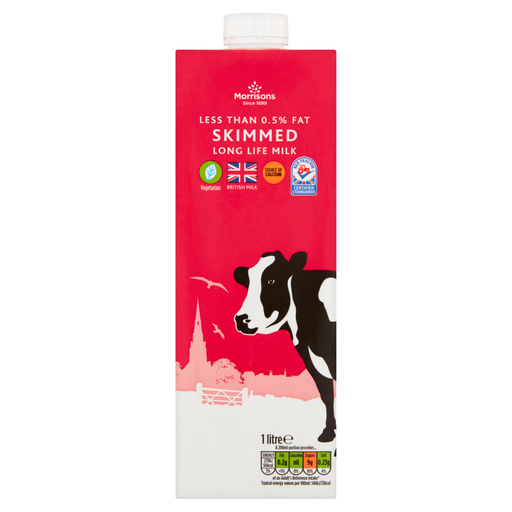 No image available
A single UHT carton offers a cupboard-standby option while you establish your shopping routine. Once opened, refrigerate and use within three days; check the carton's date before buying.
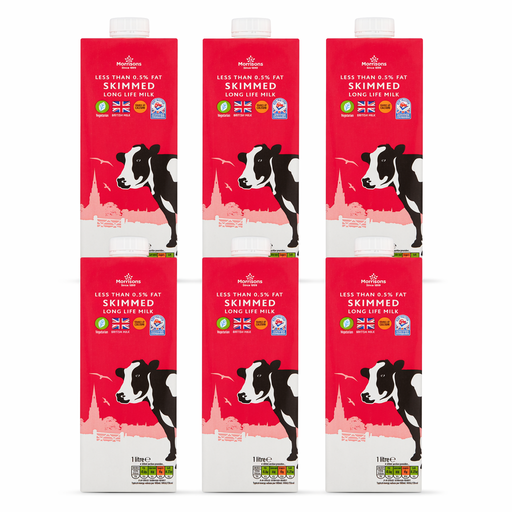 No image available
This UHT six-pack is a larger cupboard-standby quantity, so consider where the cartons will go and how quickly you will use them. Refrigerate each carton after opening and use within three days; check the dates on the cartons before buying.
The NHS says skimmed milk is lower in fat than higher-fat milk while retaining milk's important nutritional benefits. If particular nutrients matter to your choice, compare their values on the packs.
Choose a large fresh bottle if you expect to use it regularly or share it. Sainsbury's says to consume its cited fresh skimmed milk within three days of opening, while its Cravendale filtered listing states seven days; check the instructions on your chosen bottle.
Choose a product specifically labelled UHT or long life if you need an unopened cupboard standby, and follow its pack instructions. Waitrose says its Essential Long Life Skimmed Milk must be refrigerated below 5°C and consumed within five days after opening.
Follow the date mark and storage instructions on the pack rather than treating a use-by date as a flavour guide. The Food Standards Agency warns that food stored too long or at the wrong temperature can contain bacteria and cause food poisoning.