Households choosing lower-fat dairy milk
If you use milk in drinks, cereal or cooking and want to reduce dietary fat, skimmed milk is an option. The NHS says skimmed milk retains important nutritional benefits of milk while being lower in fat.


For a smaller household, ordinary fresh skimmed milk suits regular use when you can finish the bottle within its labelled opened-life period; Sainsbury’s fresh example specifies three days. If you use milk more slowly, the named Cravendale and Waitrose filtered products state seven days after opening under their chilled-storage instructions. A UHT carton offers cupboard storage before opening, but the Sainsbury’s long-life example still needs refrigeration and use within three days afterwards.
For one or two people, the useful distinction is not just fat content: how often you open milk and how quickly you finish it can determine which format fits.
If you use milk in drinks, cereal or cooking and want to reduce dietary fat, skimmed milk is an option. The NHS says skimmed milk retains important nutritional benefits of milk while being lower in fat.
If a bottle often lasts several days, compare the pack’s opened-life instruction with your usual use. Cravendale and Waitrose state seven days for their named filtered products; Sainsbury’s UHT carton can be kept cool and dry before opening, but must be used within three days afterwards.
If the flavour of ordinary skimmed milk puts you off using it in tea, coffee or cereal, you could compare a taste-positioned product. Arla describes B.O.B as tasting like semi-skimmed milk; that is the brand’s claim, not a guarantee of how it will taste to you.
Start with how quickly your household finishes an opened pack, then check whether chilled or unopened cupboard storage fits the way you shop.
Consider it: When you use milk regularly and can finish the bottle within its labelled period after opening.
Bear in mind: Sainsbury’s fresh example requires refrigeration below 5°C and use within three days of opening, so a larger bottle may not suit occasional use.
Consider it: When you want chilled milk but usually need more than a few days to finish an opened bottle.
Bear in mind: The named Cravendale and Waitrose products state seven days after opening; check the individual pack’s refrigeration instructions and whether its size suits your use.
Consider it: When you want an unopened carton available as a cupboard backup.
Bear in mind: Cupboard storage does not continue after opening: Sainsbury’s 1L UHT example then requires refrigeration and use within three days.
| Priority | What to check | Your needs |
|---|---|---|
| Opened pack | Read the number of days allowed after opening and the refrigeration instruction. The named Sainsbury’s fresh and UHT products say three days; the named Cravendale and Waitrose filtered products say seven days. | I use only a little milk at a time, so I want a pack I can finish within its stated opened-life period. |
| Unopened storage | Check whether the unopened pack needs refrigeration or can be stored in a cool, dry place. Read its date separately from its after-opening instruction. | A carton kept unopened in the cupboard would be useful when I do not need milk every day. |
| Pack size | Compare the total volume with what you normally use before the opened-life limit. For a multipack, check both the number of cartons and the size of each one. | A smaller bottle or individual carton may fit my routine better than opening a large bottle for occasional drinks. |
| Nutrition label | Compare fat and saturates on the same per-100ml basis; check protein and calcium declarations if those figures matter to your comparison. The NHS identifies skimmed milk as a lower-fat milk that retains important nutritional benefits. | I want dairy milk with less fat, but I would still like to compare what each product’s nutrition panel says. |
| Flavour | Distinguish the product’s nutrition figures from taste claims. Arla markets B.O.B as tasting like semi-skimmed milk; individual preference cannot be read from that claim. | If ordinary skimmed milk tastes too light to me, flavour could affect which carton I actually use. |
| Milk allergen | Check the ingredients and allergen label. The Food Standards Agency identifies milk as an allergen; removing fat does not remove milk from skimmed milk. | If someone in my household must avoid milk, a skimmed cow’s milk product does not meet that need. |
A smaller household may not finish it within the labelled period after opening. Sainsbury’s fresh skimmed milk, for example, says to use it within three days.
Think about how much milk you use across those days before choosing a large bottle; compare smaller packs or a format with different storage instructions.
Milk left beyond the pack’s instructed opened-life period may have to be discarded.
Sainsbury’s UHT skimmed milk can be stored cool and dry before opening, but its label requires refrigeration and use within three days afterwards. The named filtered products’ seven-day opened-life statements also depend on their chilled-storage instructions.
Read both sets of directions on the pack, and note the opening date if that helps you keep track.
Skimmed milk products can have different nutrition declarations and flavour positioning. Arla’s comparison with semi-skimmed taste is a brand claim about B.O.B, not a description of every skimmed milk.
Compare nutrition panels on the same per-100ml basis and consider taste claims separately from measured figures.
Skimmed cow’s milk still contains milk. The Food Standards Agency identifies milk as an allergen that can pose a risk to people with an allergy or intolerance to milk constituents.
Check the allergen label of any milk or alternative before choosing it for someone who needs to avoid milk.
These examples show how particular UK product lines differ in pack format and storage instructions; a brand name alone does not establish the instructions for every product it sells.
Arla’s Cravendale filtered skimmed milk is a chilled option for households comparing opened-bottle instructions.
Tesco’s British skimmed milk includes a 2.272L fresh bottle.
The named products provide a choice between fresh skimmed milk and a 1L UHT skimmed carton.
M&S skimmed milk is another chilled fresh-milk reference when comparing pack instructions.
Waitrose filtered British free-range skimmed milk offers a stated freshness window for shoppers considering chilled filtered milk.
These Morrisons UHT cartons suit the cupboard-backup route: choose between one 1-litre carton and a six-carton pack according to how much unopened milk you want to store. Each carton still has an after-opening use limit.
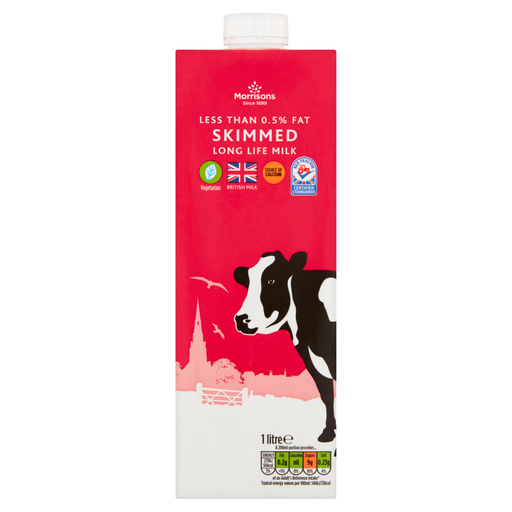 Image unavailable
A single carton may suit an occasional milk user who wants an unopened cupboard backup. The listing states 0.1g fat per 100ml and cool, dry storage before opening; once opened, refrigerate and use within three days. Check the carton’s best-before date.
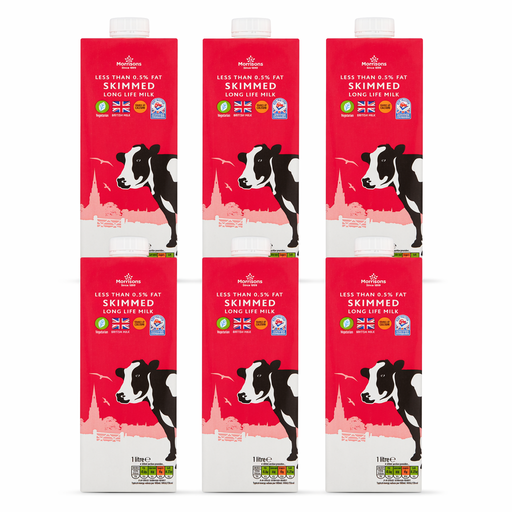 Image unavailable
Six individual cartons give you more unopened milk to keep in a cool, dry place, provided you have room to store them. The listing states 0.1g fat per 100ml; refrigerate each carton once opened and use it within three days. Check the cartons’ best-before dates against how quickly you expect to use the pack.
Yes, if you want dairy milk while reducing fat. The NHS says skimmed milk is lower in fat and retains important nutritional benefits of milk; for a smaller household, also choose a pack you can use within its labelled storage period.
Consider it when you use chilled milk slowly enough that the opened-life instruction matters. The named Cravendale and Waitrose filtered products state seven days after opening under their storage conditions, while Sainsbury’s ordinary fresh example specifies three days; check the size and instructions on the particular pack.
No. Sainsbury’s 1L UHT skimmed milk can be kept in a cool, dry place unopened, but its instructions say to refrigerate it and use it within three days once opened.
Follow the particular bottle’s refrigeration, use-by and after-opening instructions. Sainsbury’s named fresh product specifies storage below 5°C and use within three days of opening; other products may carry different instructions.
No: removing fat does not remove the milk allergen. The Food Standards Agency identifies milk-containing products as a potential risk for people with an allergy or intolerance to milk constituents, so check the allergen label of any alternative too.