Older adults maintaining their weight
If meals are adequate and lower fat is the aim, skimmed milk is one way to keep milk in the diet. Compare the protein and calcium on the label as well as the fat content.


Skimmed milk can suit an older adult who is eating enough, maintaining weight and wants less fat while still getting protein and calcium from milk. If appetite is poor or weight loss is unplanned, do not make low fat the default: the Malnutrition Task Force describes ways to increase the energy in food without increasing portion size, and NHS inform identifies poor appetite and unplanned weight loss as signs that need attention.
If meals are adequate and lower fat is the aim, skimmed milk is one way to keep milk in the diet. Compare the protein and calcium on the label as well as the fat content.
A protein-enriched milk may provide more protein in the same volume, but products labelled as protein milk are not necessarily skimmed. Check the exact product’s fat and protein figures.
Low fat should not be the automatic priority when someone is eating little or losing weight unintentionally. NHS inform lists these as possible signs of malnutrition; seek individual healthcare advice rather than relying on a change of milk alone.
Start with appetite and weight: that determines whether reducing fat is the relevant aim. Then compare nutrition using the same serving size and choose a pack that fits how quickly it will be used.
| Priority | What to check | Your needs |
|---|---|---|
| Fat and protein | Compare fat and protein per 100ml, then calculate them for the amount usually drunk. Tesco Groceries lists 0.1g fat and 3.6g protein per 100ml for Tesco British Skimmed Milk; its Arla B.O.B listing gives 0.4g and 4.5g respectively. | I want less fat, but I also want to know how much protein my usual glass provides. |
| Calcium | Check calcium per 100ml or per serving and consider other foods in the diet. Tesco Groceries lists 130mg per 100ml for Tesco British Skimmed Milk; the NHS advises considering calcium as part of a varied, balanced diet. | Milk is one of my sources of calcium, so the amount I actually drink matters more than the figure on the front of the pack. |
| Appetite and weight | Consider whether the person is eating enough and maintaining weight before choosing lower-fat milk. The Malnutrition Task Force describes increasing the energy in food without increasing portion size when appetite is reduced. | If meals are small or weight is falling unintentionally, I need advice on overall food intake rather than choosing milk by fat content alone. |
| Pack and storage | Check pack volume, refrigeration directions and the stated time after opening. Marks & Spencer says its 568ml skimmed milk is best consumed within three days of opening; Waitrose & Partners lists seven days for the reviewed Cravendale semi-skimmed milk. | Only a little milk is used each day in my household, so I want a pack we can finish within its stated opened life. |
When appetite is reduced or weight loss is unplanned, getting enough food in a manageable volume may matter more than reducing fat.
Take changes in appetite and weight seriously and ask a healthcare professional about suitable food choices. The Malnutrition Task Force describes food fortification for people with reduced appetites.
Low-fat milks can have different protein and calcium figures. Tesco Groceries lists 3.6g protein and 130mg calcium per 100ml for Tesco British Skimmed Milk, compared with 4.5g and 146mg for Arla B.O.B.
Compare products per 100ml first, then use the usual serving size to judge what each drink contributes.
Opened-life directions differ by product: Marks & Spencer advises consuming its reviewed skimmed milk within three days, while Waitrose & Partners states seven days for the reviewed Cravendale semi-skimmed milk.
Match pack size to household use and follow the storage directions on the specific pack.
More protein on a milk label does not address every reason someone may be eating too little or losing weight.
If poor appetite or unplanned weight loss is present, seek a healthcare assessment rather than relying on one enriched product.
These examples show why the exact product label matters: the lines include both skimmed and semi-skimmed milk, with different nutrition figures and storage directions.
Tesco British Skimmed Milk is a standard skimmed-milk reference for comparing labels.
A skimmed-milk line to compare when protein per serving is a priority.
The reviewed protein-enriched product is semi-skimmed, not skimmed milk.
The reviewed filtered fresh milk is a semi-skimmed option for comparing storage directions.
The reviewed 568ml fresh skimmed milk offers a smaller-pack reference.
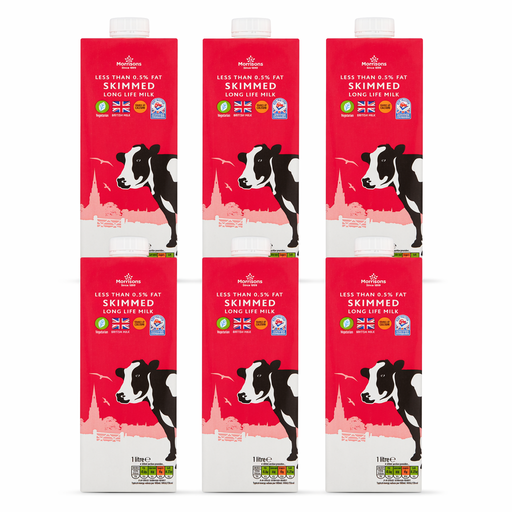
These UHT skimmed-milk options are for shoppers choosing lower-fat milk when the older person is eating adequately and maintaining weight. Check the bundle quantity and the nutrition and storage details on the product page before ordering.
 No image available
A skimmed-milk option to consider when lower fat fits the older person’s overall food intake. The title describes a 1 litre, 6 Packs listing; confirm the carton count and total volume before buying.
 No image available
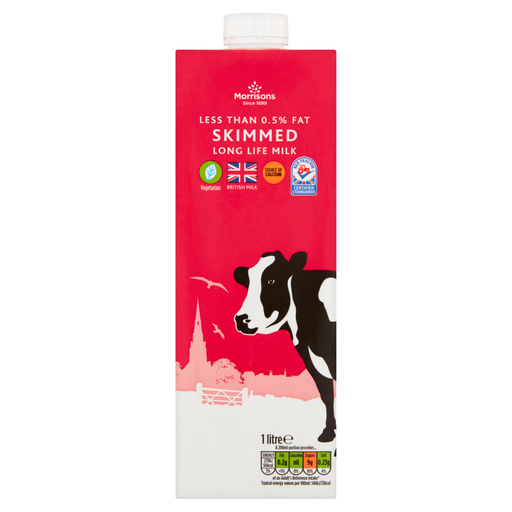
A 1 litre UHT skimmed-milk option for someone who is eating adequately and wants lower-fat milk. Check the product’s nutrition panel and directions for storage after opening.
No. It can fit a preference for less fat when someone is eating enough and maintaining weight, but poor appetite or unplanned weight loss calls for a broader look at food intake. NHS inform identifies both as possible signs of malnutrition, and the Malnutrition Task Force describes increasing the energy in food without increasing portion size.
Yes. Tesco Groceries lists 130mg calcium per 100ml for its reviewed British Skimmed Milk, equivalent to 260mg in 200ml of that product. The NHS advises considering calcium across a varied, balanced diet rather than relying on one drink.
Follow the directions on the particular pack. Marks & Spencer says its reviewed fresh skimmed milk should be refrigerated at 0°C to +5°C and is best consumed within three days of opening; other products can have different instructions.
No. The Food Standards Agency identifies milk as an allergen that can pose a risk to someone with a milk allergy. Check the ingredients and allergen information on the product and seek individual clinical advice if an allergy is suspected.