Households that use milk throughout the week
A four-pint bottle can suit regular baking alongside drinks, cereal or cooking, provided you can finish it within that bottle’s instructions after opening.


Choose a four-pint bottle if baking and everyday use will finish it within its labelled period after opening; a smaller bottle may leave less unused milk after a single recipe. For occasional baking, compare the pack instructions: Arla says its Cravendale filtered skimmed milk keeps for up to seven days once opened, while Sainsbury’s says to use its standard four-pint bottle within three days. Fresh milk still needs refrigeration, whatever the bottle size.
How often you use milk matters as much as the amount needed for one bake.
A four-pint bottle can suit regular baking alongside drinks, cereal or cooking, provided you can finish it within that bottle’s instructions after opening.
If an opened bottle may sit between bakes, compare its labelled storage period. Arla and Waitrose describe up to seven days after opening for their filtered 2L skimmed milks; Sainsbury’s specifies three days for its standard four-pint bottle.
A 568ml bottle may be easier to finish when a recipe needs little milk and there are few other uses for the remainder. Tesco lists a one-pint skimmed-milk bottle in that size.
Start with the recipe quantity, then consider how the remaining milk will be stored and used.
| Priority | What to check | Your needs |
|---|---|---|
| Pack size | Compare the recipe quantity with the amount you will use afterwards. Examples include Tesco’s 568ml one-pint bottle and 2.272L four-pint bottle. | I only need milk for one bake, so I would rather have a smaller bottle than leave much of a large one unused. |
| Time after opening | Read the individual pack instruction. Sainsbury’s specifies three days for its standard four-pint milk; Arla and Waitrose state up to seven days for their respective filtered 2L products. | My baking is spread out over the week, so the time allowed after opening affects which pack I can finish. |
| Recipe ingredient | Check whether the recipe names skimmed milk or calls for whole milk, buttermilk or cream. King Arthur Baking notes that milk’s fat, protein and sugar can affect a bake’s structure, mouthfeel, flavour and browning. | For a bake where texture matters, I want to know whether the recipe allows a skimmed-milk substitution. |
| Storage format | Distinguish refrigerated fresh milk from UHT milk labelled for storage without refrigeration before opening. Check each product’s instructions for storage after opening. | I need to keep unopened cartons in a cupboard, but I can refrigerate a carton once I open it. |
| Dates and allergens | Check the pack’s date and storage directions. GOV.UK distinguishes safety-related use-by dates from quality-related best-before dates; milk is an allergen to check when serving others. | If I am baking for other people, I need to check the current label and confirm that milk is suitable for everyone eating it. |
A four-pint bottle may leave milk unused if baking is infrequent. Sainsbury’s instructs shoppers to consume its standard four-pint milk within three days of opening, while the filtered products described by Arla and Waitrose state up to seven days.
Add up likely use in baking, drinks and meals, then compare pack sizes and the specific label’s opened-storage instruction.
King Arthur Baking explains that milk’s fat, protein and sugar can affect structure, mouthfeel, flavour and browning. Replacing a named dairy ingredient can therefore change a bake.
Keep the ingredient specified for a texture-sensitive recipe unless that recipe permits a substitution.
A smaller portion does not change fresh milk’s refrigeration requirement. Tesco’s one-pint listing says to keep the bottle refrigerated.
Keep fresh milk chilled in line with its label, including when taking it out of the house. If cupboard storage before opening is the aim, check a product specifically labelled as UHT instead.
Skimmed milk still contains milk. GOV.UK identifies milk as an allergen that food businesses must declare when it is an ingredient.
Check the current label and the needs of everyone who will eat the finished bake.
These examples show why the instructions on a particular milk product matter more than a general assumption about its brand.
Arla’s filtered fresh skimmed milk is a 2L option to consider when baking is occasional.
Tesco lists standard fresh skimmed milk in one-pint and four-pint sizes, giving shoppers different quantities to match their use.
Its standard 2.27L four-pint skimmed milk is an option for households that use a large bottle promptly.
Waitrose lists both a standard four-pint skimmed milk and a filtered 2L skimmed milk.
M&S describes its 2.272L product as British skimmed milk sourced from M&S Select Farms.
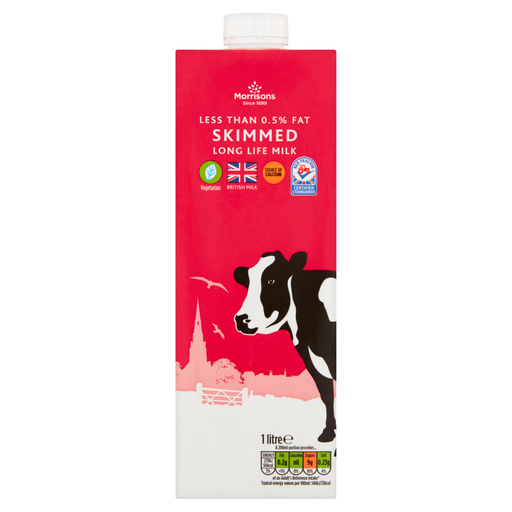
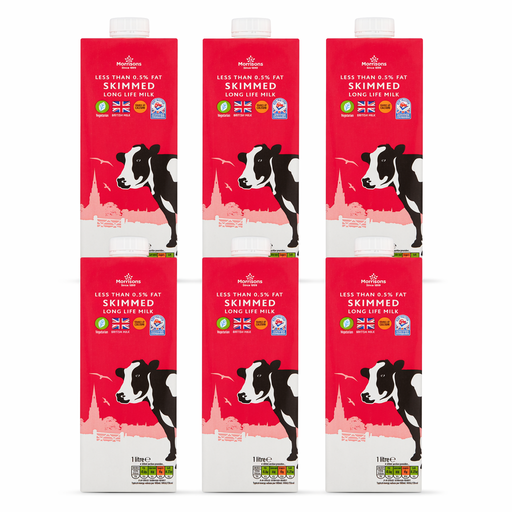
These are UHT cartons for shoppers considering skimmed milk that can be stored without refrigeration before opening. They are a different storage choice from the fresh bottles discussed above; check the recipe and the instructions for each carton.
 No image available
A single 1-litre carton may suit a recipe and other planned uses without buying a multi-carton pack. The product information says it needs no refrigeration until opened; refrigerate it after opening and use within three days.
Check the carton’s date marking and label before use. The product information identifies milk as an ingredient and says this product is not suitable for children under five.
 No image available
Six separate 1-litre cartons may suit repeated baking or other planned milk use; consider whether you will use the full pack. The product information says the cartons need no refrigeration until opened, then must be refrigerated and used within three days of opening.
Check each carton’s date marking and label. The product information identifies milk as an ingredient and says this product is not suitable for children under five.
Choose one when your baking and other milk use will finish it within its labelled period after opening. Sainsbury’s says to consume its standard four-pint skimmed milk within three days of opening; if that is unlikely, compare a smaller bottle or the instructions on a filtered option.
Do not treat fresh skimmed milk as a room-temperature lunchbox item. Tesco’s one-pint bottle and the fresh products listed by Sainsbury’s and M&S require refrigeration. Keep fresh milk chilled in line with its label; if unrefrigerated storage before opening is needed, check a specifically labelled UHT product.
Do not assume it will give an identical result when a recipe specifies whole milk, buttermilk or cream. King Arthur Baking notes that milk’s fat, protein and sugar can affect structure, mouthfeel, flavour and browning. Use skimmed milk where the recipe calls for it or permits the substitution.
No: skimmed milk contains milk. Check the current product label and all other ingredients before baking for someone with a milk allergy.
Follow the date printed on the product you buy, together with its storage instructions. GOV.UK explains that a use-by date concerns safety, whereas a best-before date concerns quality; do not assume every milk product carries the same type of date.