For roast dinner prep, choose skimmed milk by the recipe and the way you need to store it, not by ‘maturity’: the UK ranges described by Arla, Tesco, Sainsbury’s and Waitrose distinguish fat levels and formats such as fresh, filtered and UHT milk. Standard fresh skimmed milk suits near-term cooking when the milk need not add much dairy fat; filtered milk offers a longer stated refrigerated storage window for some products, while UHT milk can serve as an unopened cupboard backup. If a sauce or mash depends on the milk for richness, compare the recipe’s requirements with semi-skimmed or whole milk instead.
Who is this choice for?
Cooks using skimmed milk in roast sides
If you are making mash, batter or a white sauce, decide whether the milk is mainly a liquid ingredient or whether its dairy fat matters to the recipe. Milk.co.uk lists skimmed milk at 0.3g fat per 100ml, compared with 1.8g for semi-skimmed and 3.7g for whole milk.
Cooks shopping ahead
A planned weekend roast may call for milk that will keep until cooking day. Compare the pack’s date and storage instructions: Arla gives Cravendale filtered skimmed milk a stated refrigerated window, while Waitrose’s UHT skimmed milk offers an unopened long-life format.
Households checking milk allergens
Check the ingredients in the whole meal, not just the milk bottle. The Food Standards Agency notes that milk can occur in glazes and powdered soups and sauces.
What should you check?
Start with the recipe’s need for dairy fat, then choose a storage format and pack size that fit when you will cook and use the remaining milk.
| Priority | What to check | Your needs |
|---|
| Milk fat |
Compare fat per 100ml on the nutrition panel. Milk.co.uk lists 0.3g for skimmed, 1.8g for semi-skimmed and 3.7g for whole milk. |
I want skimmed milk where the recipe needs milk but does not depend on its fat for richness. |
| Storage format |
Distinguish standard fresh, filtered and UHT milk. Check whether the unopened pack needs refrigeration and follow its stated temperature range. |
If I am buying well before roast day, a longer refrigerated window or an unopened cupboard backup would suit my plans. |
| Dates and pack size |
Check the pack date, quantity and use-within period after opening. GOV.UK distinguishes safety-related use-by dates from quality-related best-before dates. |
I would rather choose an amount I can use within the opened pack’s instructions, including any milk left after the roast. |
| Allergens |
Read the milk pack and the ingredient information for sauces, glazes and other accompaniments. The Food Standards Agency identifies milk as an allergen. |
When cooking for someone who must avoid milk, I need to check every ingredient in the meal, not assume skimmed milk is suitable. |
What can go wrong?
-
Searching for ‘mature’ skimmed milk
The cited UK retailer ranges group milk by fat level and formats such as filtered or UHT, rather than using ‘mature’ to distinguish skimmed milk. That term does not tell you whether a carton fits your recipe or storage plans.
Choose by fat level first, then decide whether fresh, filtered or UHT storage fits when you will cook.
-
Expecting filtered skimmed milk to add richness
Filtering is a processing choice, not a higher-fat milk type. Arla lists Cravendale filtered skimmed milk at 0.3g fat per 100g.
If dairy fat is important to the recipe, compare its requirements with semi-skimmed or whole milk rather than relying on a filtered skimmed carton.
-
Overlooking the period after opening
Instructions vary by product: Sainsbury’s states three days for its British skimmed milk, Arla states seven days for Cravendale filtered skimmed milk, and Waitrose states five days for its Essential Long Life Skimmed Milk.
Choose a pack size that fits the dishes you plan to make, and follow that pack’s refrigeration and use-within instructions.
A larger pack can leave unused milk once its stated opened period has passed.
-
Checking only the milk bottle for allergens
The Food Standards Agency notes that milk can also occur in foods glazed with milk and in powdered soups and sauces.
Check the ingredient and allergen information for prepared sauces, glazes and sides as well as for the milk used in cooking.
Brand and retailer references
These examples show how milk formats and pack instructions differ; check the particular carton you intend to use.
Cravendale
A filtered skimmed-milk option for buying ahead while keeping the carton refrigerated.
- Arla states that its filtered skimmed milk stays fresh for up to three weeks unopened and seven days after opening when kept at 0°C to 5°C.
- Arla lists 0.3g fat per 100g; the stated storage window does not make it a higher-fat milk.
Tesco
Tesco lists standard, filtered and organic skimmed milk alongside branded options.
- The separate product descriptions let shoppers distinguish processing formats within its skimmed-milk range.
- Check the chosen carton’s storage and date instructions rather than applying one product’s directions to the range.
Sainsbury’s
Its British Skimmed Milk is a standard fresh option for near-term cooking.
- Sainsbury’s describes the checked product as pasteurised skimmed milk with less than 0.5g fat per 100ml.
- Its instructions say to keep it below 5°C and consume it within three days of opening.
Asda
Asda’s fresh-milk shelves distinguish skimmed and 1% fat milk from filtered milk and other fat levels.
- The categories help separate a fat-level decision from a processing-format decision.
- Select the specific product before relying on its fat content or storage instructions.
M&S
M&S describes a milk range including skimmed, semi-skimmed and whole milk.
- The range gives cooks different milk-fat levels to compare against a recipe.
- Check the chosen pack rather than treating the different fat levels as interchangeable.
Waitrose
Waitrose lists both long-life UHT skimmed milk and organic skimmed milk.
- Its Essential Long Life Skimmed Milk provides a UHT format for an unopened backup.
- Waitrose instructs shoppers to refrigerate that UHT product below 5°C after opening and consume it within five days.
Joybuy UHT skimmed milk options
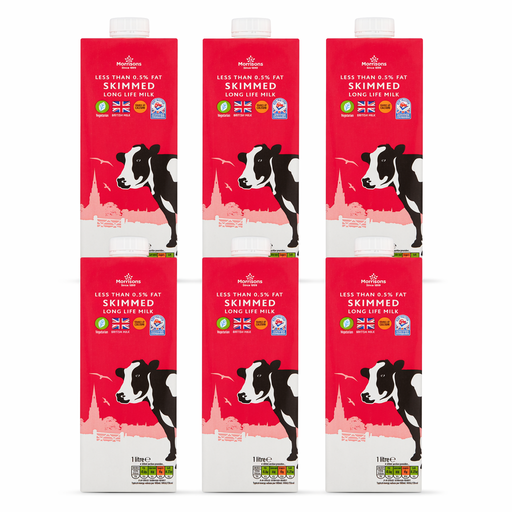
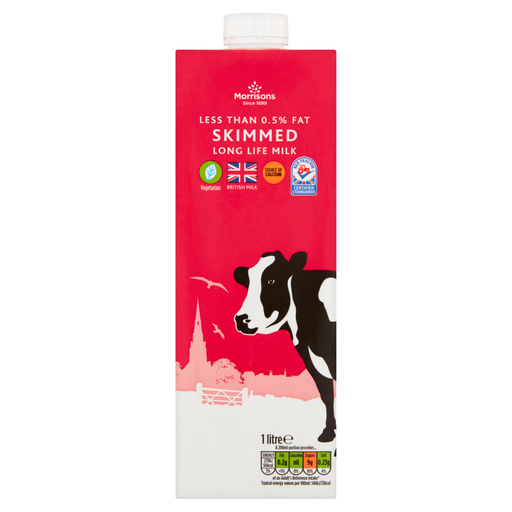
These Morrisons UHT skimmed milk cartons suit the cupboard-backup route for roast dinner prep. Choose between one 1-litre carton and six 1-litre cartons according to how much you expect to use.
 No image available
Morrisons British UHT Skimmed Milk, 6 × 1 litre
Six UHT skimmed milk cartons provide a cupboard standby if you expect to use several cartons around roast day or afterwards.
Check the cartons’ best-before dates. The listing says to refrigerate after opening and use each opened carton within three days. Milk is an ingredient, and the listing says the product is not suitable for children under 5; check the pack before serving.
Joybuy
 No image available
Morrisons British UHT Skimmed Milk, 1 litre
A single UHT skimmed milk carton offers a cupboard standby when one litre better fits the meals you have planned.
Check the carton’s best-before date. The listing says to refrigerate after opening and use it within three days. Milk is an ingredient, and the listing says the product is not suitable for children under 5; check the pack before serving.
Joybuy
Frequently asked questions
Is ‘mature’ a skimmed-milk type to look for?
The cited UK retailer and brand ranges do not use ‘mature’ as a skimmed-milk classification. For roast dinner prep, compare the milk’s fat level, whether it is fresh, filtered or UHT, and the instructions on the pack.
Can I use skimmed milk in mash or a sauce?
Yes, if the recipe does not rely on the milk for a richer dairy-fat contribution. Milk.co.uk lists 0.3g fat per 100ml for skimmed milk, against 1.8g for semi-skimmed and 3.7g for whole milk; use the recipe’s requirements to decide which fat level fits.
Should I choose filtered or UHT skimmed milk?
Choose by where the unopened milk will be kept and when you need it. Arla states that Cravendale filtered skimmed milk keeps for up to three weeks unopened at 0°C to 5°C, whereas a UHT carton can serve as an unopened cupboard backup. Follow the particular pack’s instructions once opened.
What do the date and opening instructions mean?
Follow the date and storage directions on the carton you buy. GOV.UK explains that use-by dates concern safety and best-before dates concern quality; if the pack requires refrigeration after opening, keep it at 5°C or below and observe its stated use-within period.
Is skimmed cow’s milk suitable for someone with a milk allergy?
No: skimmed cow’s milk is still milk. The Food Standards Agency identifies milk as an allergen and notes that it can also occur in glazes and powdered soups and sauces, so check the ingredients of roast accompaniments too.


