Shops with steady daily demand
A 4-pint bottle can work for regular use in tea, cereal and cooking when there is enough fridge space and a plan to finish each opened bottle within its own label instructions.


A 4-pint fresh skimmed-milk bottle suits a retirement shop that can reliably use it within the time stated on its label after opening. For less predictable demand, a filtered 2L bottle may make stock rotation easier: Arla states that Cravendale Skimmed lasts up to three weeks unopened and seven days after opening when kept at 0–5°C. A higher-protein skimmed option answers a different preference; ordinary skimmed milk should not be treated as a substitute for an individual nutrition-care plan.
A 4-pint bottle can work for regular use in tea, cereal and cooking when there is enough fridge space and a plan to finish each opened bottle within its own label instructions.
A filtered 2L bottle is worth considering when an opened 4-pint bottle may not be finished in time. Arla states that Cravendale Skimmed lasts up to seven days after opening at 0–5°C; its smaller size also changes how much milk each bottle provides.
Keep routine skimmed-milk purchasing separate from a resident’s assessed nutrition needs. Hertfordshire and West Essex Integrated Care Board guidance describes person-centred fortification for care-home residents at medium or high risk of malnutrition, rather than a blanket change to everyone’s milk.
Start with how much milk the shop uses after opening, then compare the exact pack and storage instructions; a protein-labelled option is a separate choice from deciding how to manage stock.
Consider when: Daily turnover makes a 2.272L bottle practical.
Watch for: Tesco says its bottle is best used within five days of opening, while Sainsbury’s says to consume its bottle within three days.
Consider when: Demand varies and a smaller bottle with a longer stated storage life fits the shop’s rotation plan.
Watch for: Arla’s Cravendale storage-life statements depend on keeping the milk at 0–5°C.
Consider when: A customer specifically wants a skimmed product labelled with a different protein content; Arla lists 4.6g protein per 100g for B.O.B Skimmed Milk 2L.
Watch for: Its nutrition panel does not establish suitability for someone who needs an individual nutrition-care plan.
| Priority | What to check | Your needs |
|---|---|---|
| Pack format | Compare a single 2.272L or 4-pint bottle with a filtered 2L bottle or separate smaller cartons. Check available fridge space and expected use per opened container. | We use milk steadily enough to finish a large bottle, or smaller containers would make it easier to open only what we need. |
| Opened-life instructions | Read the exact bottle’s label. Tesco states five days after opening for its 4-pint skimmed milk; Sainsbury’s states three days for its 4-pint product. | Demand changes through the week, so I need an opened container that fits our actual rate of use. |
| Chilled storage | Check the delivered product’s temperature instructions and date label. Arla states 0–5°C for Cravendale; the Food Standards Agency says a use-by date is a valid guide only when storage instructions are followed. | Our shared fridge needs enough room, and we need a clear way to keep track of opened containers. |
| Nutrition information | Compare nutrition panels using the same stated quantity and product variant. Arla lists 4.6g protein per 100g for B.O.B Skimmed Milk 2L; do not use a protein figure alone to decide individual nutrition care. | I want to distinguish an ordinary milk preference from a resident’s assessed nutrition needs. |
A 4-pint format does not guarantee that the shop will use every opened bottle in time. Tesco states five days after opening for its product, while Sainsbury’s states three days for its own.
Estimate use per opened bottle and check fridge capacity before making a larger format the regular stock choice.
Hertfordshire and West Essex Integrated Care Board guidance describes food fortification as person-centred for care-home residents assessed at medium or high malnutrition risk. Its fortified-milk recipe uses full milk with skimmed-milk powder, not ordinary skimmed milk alone.
Keep the shop’s general stock decision separate from each person’s assessed care or dietetic plan.
Opened-life and refrigeration directions differ between products. The Food Standards Agency says a use-by date is a valid guide only if the food has been stored as instructed.
Check each delivered label, follow its temperature and date directions, and mark opening dates where containers are shared.
These product lines illustrate different pack and storage instructions; check the label of the particular milk being supplied.
Tesco British Skimmed Milk is listed in a 2.272L, 4-pint fresh-milk bottle.
Sainsbury’s British Skimmed Milk is listed as a 2.27L, 4-pint fresh-milk option.
Arla Cravendale Filtered Skimmed Milk is a 2L chilled option rather than a 4-pint bottle.
Waitrose lists Essential British Free Range Skimmed Milk in a 2.272L, 4-pint format.
M&S Scottish Skimmed Milk is listed in a 2.272L, four-pint format.
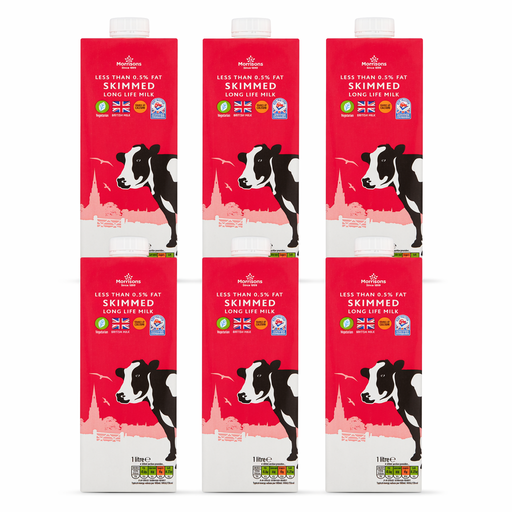
This six-pack of 1-litre UHT skimmed-milk cartons is an option for stocking separate containers, rather than buying one large fresh-milk bottle.
 No image available
For a shop that prefers separate containers for stock, this pack contains six 1-litre UHT skimmed-milk cartons rather than one large bottle. Check the dates and storage directions on the cartons delivered.
No. A 4-pint bottle makes sense when the shop can use it within the exact product’s instructions after opening. Tesco says its bottle is best used within five days; Sainsbury’s says to consume its bottle within three days.
It may fit less predictable demand if its storage instructions work for the shop. Arla states that Cravendale Filtered Skimmed Milk lasts up to three weeks unopened and seven days after opening at 0–5°C; it is a smaller bottle than a 2.272L, 4-pint option.
No. Hertfordshire and West Essex Integrated Care Board guidance calls for person-centred food fortification for care-home residents assessed at medium or high risk of malnutrition. Follow the individual’s assessed care or dietetic plan rather than treating a general shop-stock choice as nutrition support.
Follow the delivered product’s temperature, use-by and after-opening directions. The Food Standards Agency says a use-by date is a valid guide only when storage instructions have been followed; recording opening dates can help staff apply the right instruction to each shared container.
Yes. Sainsbury’s and Cravendale identify milk as an allergen in their product information. Check the label of the product supplied when selecting stock or providing allergen information.