Adults cutting down on dietary fat
The NHS suggests trying 1% fat or skimmed milk when cutting down on fat. Check how much milk you use across drinks, cereal and cooking as part of your wider eating pattern.


For adults cutting down on dietary fat, skimmed milk is an option identified by the NHS, but changing milk alone does not determine a weight-management outcome. Choose standard fresh milk if you finish a chilled bottle promptly, filtered fresh milk if its stated opened life suits your routine, or UHT milk if unopened cupboard storage matters. None of these formats guarantees a mild taste, so try a small pack if flavour is decisive.
The NHS suggests trying 1% fat or skimmed milk when cutting down on fat. Check how much milk you use across drinks, cereal and cooking as part of your wider eating pattern.
If milk goes into several drinks or meals each day, a larger fresh bottle may fit your routine. Check its storage instructions and whether you will finish it in time.
Compare pack size and the instructions for unopened and opened milk. Filtered fresh milk has its own freshness claim, while UHT milk offers a different storage format before opening.
Start with the amount you use and where you can store it, then compare the exact nutrition panel and decide whether you like the flavour.
Consider it: if you use chilled milk regularly and can finish the bottle within its label instructions.
Keep in mind: match the bottle size to your use rather than choosing by size alone.
Consider it: if a longer stated freshness period would fit the way you use chilled milk. Tesco Groceries carries Cravendale’s claim of seven days after opening for its filtered skimmed milk.
Keep in mind: the claim does not establish that its taste is milder or that your household will use more of the bottle.
Consider it: if storing unopened cartons in a cupboard is useful for your household.
Keep in mind: opened UHT milk still has storage limits; Waitrose instructs buyers to refrigerate its Essential Long Life Skimmed Milk below 5°C and use it within five days.
| Priority | What to check | Your needs |
|---|---|---|
| Nutrition | Read energy, fat, protein and calcium on the exact pack, using the same per 100 ml basis when comparing labels. Account for the amount you pour. | I want to cut down on dietary fat while keeping dairy milk in my usual drinks and meals. The NHS identifies skimmed milk as an option for cutting down on fat. |
| Flavour | Do not use fresh, filtered or UHT format as a guarantee of mildness. Try a small pack of the particular milk if taste will decide whether you keep using it. | I need a flavour I will be happy to use regularly, not just a carton described as skimmed. |
| Pack and storage | Check pack size, unopened storage and the instructions after opening. Follow the period stated for the specific product. | A smaller carton may fit if I use milk occasionally; if I use it often, I may be able to finish a larger bottle within its stated period. |
| Milk ingredients | Read the allergen statement on the exact pack. Sainsbury’s identifies milk in its British Skimmed Milk listing. | If I need to avoid milk, choosing the skimmed version does not remove it from a dairy milk product. |
The NHS suggests skimmed milk as a way to cut down on dietary fat; that does not establish a weight-management result from the swap alone.
Read the nutrition panel and consider how much milk you use across drinks and meals alongside the rest of your eating pattern.
A pack that lasts longer unopened may still have a shorter period for use once opened. Unused milk can make a larger pack impractical.
Match the pack size to your usual use and follow its own storage and opened-life instructions.
Removing most of the fat does not make a dairy milk product milk-free. Sainsbury’s British Skimmed Milk listing states that it contains milk.
Check the allergen statement on the exact product rather than relying on the word skimmed.
These brand examples show differences in pack and storage format; check the label of the product you actually choose.
Filtered fresh skimmed milk with a stated longer freshness period.
Standard fresh British skimmed milk, including a 2.272 L, four-pint bottle.
Standard fresh British skimmed milk in a 1.13 L, two-pint pack.
Standard fresh British skimmed milk in a four-pint bottle.
A skimmed milk option for shoppers comparing chilled dairy milk.
Essential Long Life Skimmed Milk is a UHT option for unopened storage.
These Morrisons UHT cartons suit the unopened-storage route: choose between a six-pack of 1-litre cartons and a single 1-litre carton. Their format does not establish whether you will find the flavour mild.
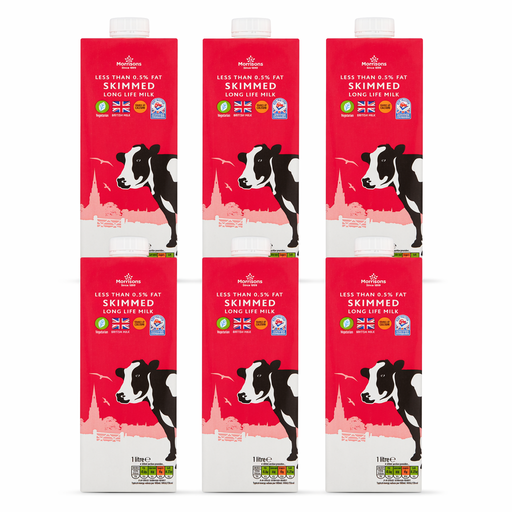 Image unavailable
The six-pack suits households that want several unopened UHT cartons on hand. Refrigerate each carton after opening and use it within three days, according to the product description. The product warning says it is not suitable for children under 5; try the milk before relying on it for a particular flavour preference.
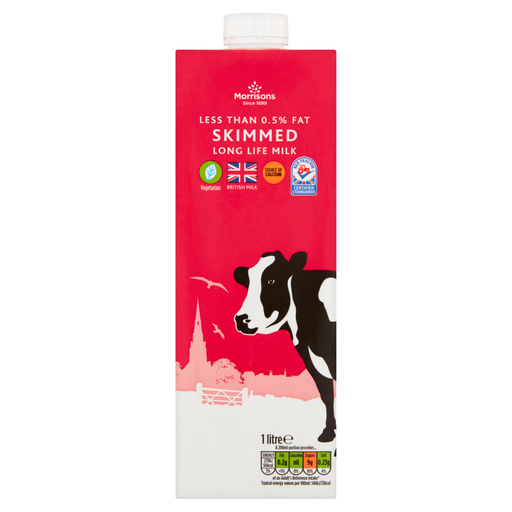 Image unavailable
The single carton offers a smaller commitment if you use milk less often or want to try its flavour. Refrigerate it after opening and use it within three days, according to the product description. The product warning says it is not suitable for children under 5.
It can: the NHS suggests trying 1% fat or skimmed milk if you are cutting down on fat. Consider the amount you use and your overall eating pattern rather than expecting a particular weight-management result from changing milk alone.
Check the specific bottle. Tesco Groceries carries Arla Cravendale’s claim of seven days after opening for its filtered skimmed milk; follow the opened-life instructions on any standard fresh bottle you compare with it.
Not the Waitrose Essential Long Life Skimmed Milk described by Waitrose: once opened, it must be refrigerated below 5°C and consumed within five days. Follow the instructions on the particular UHT carton you buy.
No. Sainsbury’s British Skimmed Milk listing explicitly says it contains milk. If you need to avoid milk, check the allergen statement on the exact product.