Older adults looking to reduce fat
For someone eating adequately who uses milk in tea, cereal, cooking or drinks, skimmed milk is a lower-fat option. The NHS says lower-fat milk retains important nutritional benefits.


Skimmed milk can suit an older adult who is eating adequately and wants to reduce dietary fat; the NHS says lower-fat milk retains important nutritional benefits. Retirement alone is not a reason to switch: NHS dietetic guidance for people with poor appetite, unintentional weight loss or malnutrition risk points towards full-fat or fortified choices, so follow individual clinical or dietetic advice in those circumstances. If skimmed milk fits, choose a pack size and storage format that suit how quickly the household uses it.
For someone eating adequately who uses milk in tea, cereal, cooking or drinks, skimmed milk is a lower-fat option. The NHS says lower-fat milk retains important nutritional benefits.
For one or two people, the useful pack size depends on how much milk they finish after opening. Check both the bottle size and its storage instructions before choosing a larger pack.
A routine switch to skimmed milk may not fit someone who is eating little or losing weight unintentionally. NHS dietetic guidance for these circumstances discusses full-fat and fortified options; follow the person’s care plan or seek individual advice.
Decide whether reducing fat fits the person’s nutritional needs, then compare labels, pack sizes and storage instructions.
| Priority | What to check | Your needs |
|---|---|---|
| Fat content | Compare fat and saturates on the same label basis, such as per 100ml. Check the current pack rather than relying on lid colour. | I’m eating adequately and want to reduce the fat in the milk I use. The NHS identifies lower-fat milk as an option for older children and adults making that change. |
| Appetite and weight | Consider poor appetite, unintentional weight loss or a known malnutrition risk before switching to a lower-fat milk. Follow any individual care plan. | If eating enough is a concern, I need advice suited to that situation, not a general low-fat rule. NHS dietetic guidance for low appetite and malnutrition risk discusses full-fat or fortified choices. |
| Nutrition label | Read protein and calcium alongside fat, using the same per-100ml basis where the labels allow. Check the exact product and pack. | I want to compare what the milks provide, not just their low-fat descriptions. Tesco and Sainsbury’s each list 3.6g protein and 130mg calcium per 100ml for the named skimmed-milk bottles. |
| Pack and storage | Match bottle size to use after opening. Follow the stated refrigeration temperature and opened-life; these differ between products. | Milk is used slowly in my household, so a smaller bottle or a suitable longer-storage format may avoid an unfinished pack. The named Sainsbury’s and Waitrose Essential bottles state 3 days after opening, Tesco states 5 days, and Arla states up to 7 days for Cravendale filtered skimmed milk under its storage conditions. |
| Milk allergen | Read the current ingredient and allergen information on the pack, especially if buying a different product or format. | Someone in my household needs to avoid milk, so a low-fat description does not answer the allergen question. The Food Standards Agency identifies milk as an allergen that must be declared when present as an ingredient. |
For a person with poor appetite, unintentional weight loss or malnutrition risk, reducing the fat in milk may conflict with a plan to increase dietary energy. NHS dietetic guidance addresses these situations differently from routine lower-fat choices.
Check the person’s care plan or ask their clinician or dietitian before changing milk type.
Opened-life depends on the product and its refrigeration conditions. The named Sainsbury’s and Waitrose Essential bottles state 3 days, Tesco states 5 days, and Arla states up to 7 days for Cravendale filtered skimmed milk.
Choose a size the household is likely to finish within the period printed on its current pack.
That description does not tell you the pack size, storage instructions or the full nutrition information needed for a particular household. Skimmed milk also remains a milk product.
Compare the current labels for fat, saturates, protein and calcium, and read the allergen and storage information.
These examples illustrate differences between named skimmed-milk products; their labels and storage instructions apply to those products, not every milk sold under the same brand.
Arla’s filtered fresh-milk line includes a 2L skimmed bottle.
Tesco British Skimmed Milk is listed in a 1.136L, 2-pint bottle.
Sainsbury’s British Skimmed Milk includes a 1.136L, 2-pint fresh bottle.
M&S lists a 568ml skimmed-milk bottle.
Waitrose lists Essential British Free Range Skimmed Milk in a 568ml bottle.
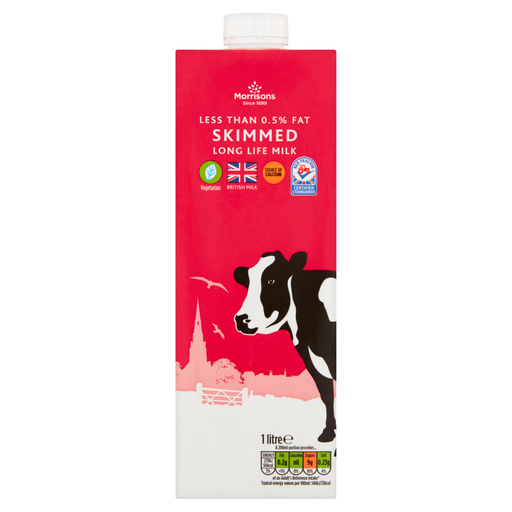
This UHT skimmed-milk option is a different format from the fresh bottles above. For a household considering it, check the pack’s storage directions and whether a 1-litre carton suits its rate of use.
 No image available
A 1-litre UHT skimmed-milk option for someone choosing a lower-fat milk and eating adequately. Check the carton’s instructions for storage before and after opening, and how soon it must be used. It contains milk; if appetite or unintentional weight loss is a concern, follow individual clinical or dietetic advice before making a lower-fat switch.
No. The NHS describes lower-fat milk as an option for older adults seeking to reduce fat, but NHS dietetic guidance for poor appetite, unintentional weight loss or malnutrition risk discusses full-fat or fortified choices. Follow the person’s care plan or seek individual advice in those circumstances.
Yes, the named Tesco, Sainsbury’s and Waitrose Essential skimmed-milk bottles each list 3.6g protein and 130mg calcium per 100ml. Check the current label of the product you intend to buy rather than assuming every variant has identical figures.
Follow the period and refrigeration instructions on the bottle. The named Sainsbury’s and Waitrose Essential products state 3 days after opening, Tesco states best within 5 days, and Arla states up to 7 days for Cravendale filtered skimmed milk kept at 0°C to 5°C.
Read the current pack’s ingredient and allergen information; skimmed milk is still milk. The Food Standards Agency identifies milk as an allergen that food businesses must declare when it is present as an ingredient.