Canteens with predictable lunch demand
If opened bottles are used steadily, a four-pint fresh pack may suit the service. Match the number of bottles ordered to actual usage and the dates on the delivered packs.


For a workplace canteen that uses milk steadily at lunch, a four-pint fresh skimmed-milk bottle is a practical choice if it can be finished within its pack instructions. Filtered fresh milk offers more flexibility before opening when attendance or deliveries vary, but its opened-pack instructions still matter. If staff object to the flavour of ordinary skimmed milk, consider trialling a taste-oriented option rather than assuming the brand’s flavour claim will hold for everyone.
If opened bottles are used steadily, a four-pint fresh pack may suit the service. Match the number of bottles ordered to actual usage and the dates on the delivered packs.
Filtered fresh skimmed milk is worth considering when unopened bottles may wait between deliveries. Check each bottle’s date, then plan separately for its use after opening.
Arla positions B.O.B as a skimmed milk with a flavour resembling semi-skimmed milk. A small workplace trial can establish whether the people using the canteen prefer it; the brand’s claim cannot establish that for them.
Start with how quickly milk is used, then check the unopened date and the instructions that apply once a container is opened. A six-carton UHT pack is a different format from the larger fresh bottles.
| Priority | What to check | Your needs |
|---|---|---|
| Pack format | Compare one four-pint bottle with separate cartons. Check how many containers lunch service is likely to open and whether there is space to store them. | We use milk steadily at lunch, so one larger bottle may be manageable. If demand varies, I would rather open cartons individually. |
| Before-opening flexibility | Check the date on the delivered pack and the conditions attached to any unopened-life claim. Sainsbury’s listing states up to three weeks unopened for Cravendale filtered skimmed milk; Waitrose states up to one month for its filtered skimmed milk. | Deliveries are infrequent, or attendance changes enough that unopened bottles could remain in the fridge for longer. |
| After-opening storage | Read each pack’s refrigeration and opened-use instructions. The Cravendale and Waitrose filtered listings each state seven days after opening; that period is not their unopened life. | I need a clear way to track when a bottle was opened and use it within the period printed on its pack. |
| Staff acceptance | If ordinary skimmed milk is unpopular, assess an alternative with the people who will use it. Arla markets B.O.B as tasting like semi-skimmed milk; that is a brand claim, not a prediction of staff preference. | Milk is mainly used in tea, coffee or cereal, and staff feedback matters when deciding what to order again. |
| Allergen controls | Check the delivered pack’s ingredient and allergen label. Food Standards Agency guidance calls for control of allergen-containing ingredients and protection of other foods from cross-contact. | We also serve dairy-free alternatives, so containers and service areas need clear identification. |
A bottle that is opened but not used within its labelled period may have to be discarded, even if most of it remains.
Use recent lunch-service demand to decide how many bottles to open at a time. Consider separate containers if attendance is uncertain.
Discarded milk also creates a restocking and disposal burden.
The Cravendale and Waitrose filtered listings describe longer periods before opening, but each states seven days after opening.
Record when a bottle is opened if that fits the canteen’s food-safety procedure, keep it refrigerated and follow its own pack instructions.
The Waitrose filtered product was temporarily unavailable online when the retailer information was checked. A listing alone cannot confirm supply for a particular order.
Confirm availability with the intended supplier before relying on a product for recurring lunch service.
Storage dates and allergen information need to match the milk actually received. Cross-contact also matters where dairy-free alternatives are served.
Check the physical pack before service and keep product identification clear. Follow the canteen’s controls for allergen-containing ingredients.
These examples illustrate different fresh-milk formats and brand positions; they do not establish what a particular supplier can deliver to your canteen.
Tesco Groceries lists British Skimmed Milk in a 2.272L four-pint bottle alongside a 2L filtered skimmed option.
Arla Cravendale offers a 2L filtered fresh skimmed milk for buyers seeking more flexibility before opening.
Arla positions its 2L B.O.B skimmed milk around a flavour resembling semi-skimmed milk.
Waitrose lists a 2L filtered British free-range skimmed milk with stated refrigeration instructions.
M&S describes fresh milk in sizes from one to four pints and presents its milk sourcing through its Milk Pledge.
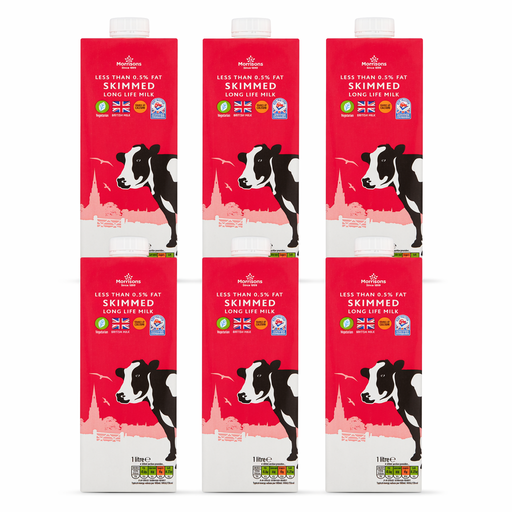
The option below is a six-carton UHT skimmed-milk pack, rather than one of the large fresh-milk bottles discussed above. Consider whether opening cartons separately suits your lunch-service pattern, and follow the directions on the cartons you receive.
 No image available
Six separate 1-litre UHT skimmed-milk cartons may suit a canteen that prefers to open one container at a time rather than a larger bottle. Check each carton’s date and storage directions; the supplied product information calls for refrigeration and use within three days after opening.
Choose a four-pint bottle when lunch demand is steady enough to use an opened bottle within its pack instructions. If demand varies, separate containers let the canteen open them as needed; check the storage and opened-use directions for the particular product.
No. The Cravendale and Waitrose filtered listings both state seven days after opening, although they describe longer unopened periods. Follow the delivered bottle’s date, refrigeration and opened-use instructions.
Follow the individual pack’s storage directions. The Waitrose filtered listing specifies refrigeration below 5°C, while GOV.UK guidance says food labelled for refrigeration after opening should be kept in a fridge at 5°C or below.
No. GOV.UK distinguishes a use-by date, which concerns food safety, from a best-before date, which concerns quality. Check the date mark and storage instructions on the milk rather than using smell or taste to override a use-by date.
Identify each product clearly and use the delivered packs for current ingredient and allergen information. Food Standards Agency guidance says allergen-containing ingredients should be controlled and other foods protected from cross-contact.