
24/7 Customer Support

Free returns

Same-day & Next-day Delivery

Quality Guaranteed

Unlock Your Welcome Offers: FREE Delivery | Up to 80% OFF | Free 30-day JoyPlus trial
Download the APP
As a dog owner in the UK, particularly if you share your home with a breed known for its magnificent but shed-prone coat, you understand the constant battle against pet hair. A high-quality slicker brush for dogs is an indispensable part of your grooming arsenal. However, the market is flooded with options, and it's easy to choose a tool that is either ineffective or, worse, uncomfortable for your pet.
My role as a Joybuy Product Recommendation Officer is to help you navigate past the marketing clutter. Before you buy, be aware of these common purchasing pitfalls that lead to wasted money and a frustrating grooming experience.
To avoid these issues, focus on a few core features that define a well-made, effective and safe dog grooming brush.
The "business end" of a slicker brush is its bed of fine wire pins. Their design dictates performance and safety. Look for brushes with pins that have coated or rounded tips. This small detail is non-negotiable; it's the primary feature that protects your dog's skin from scratches, transforming the tool into a gentle slicker brush. The density and flexibility of the pins are also important. Denser, more flexible pins are generally better for working through thick undercoats to remove loose fur, making it an effective dog brush for shedding.
Grooming a medium or large dog can take time, and a poorly designed handle will lead to wrist fatigue. Look for an ergonomic handle, often with a non-slip rubberised grip. This provides better control, especially when working on stubborn tangles or mats. The overall construction should feel sturdy, ensuring the brush head and handle can cope with the pressure of regular grooming, making it feel like a professional dog brush that will last.
Slicker brushes come in various sizes for a reason. A large brush head covers more area quickly, which is ideal for a German Shepherd or Husky. A small brush offers the precision needed to groom the legs, face and delicate areas of smaller breeds or even larger dogs. Using the wrong size is inefficient and can be awkward for both you and your pet.
Based on these practical criteria, here are a few options from our catalogue, matched to specific types of dog owners in the UK.
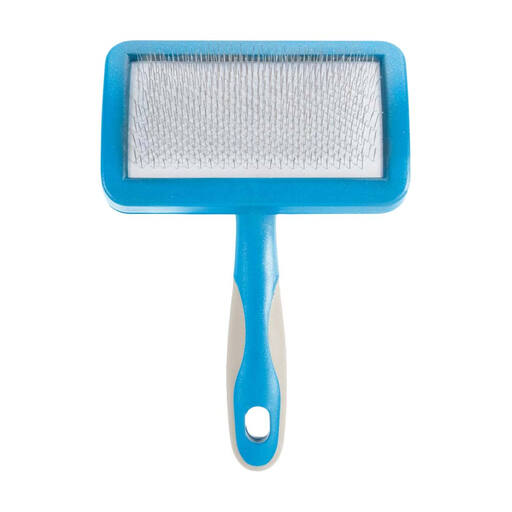
Why This Fits Their Persona: Perfect for owners of small dogs like Chihuahuas, Pomeranians or Yorkshire Terriers. Its compact size allows for precise grooming around the face, paws and ears, areas where a larger brush would be clumsy and intimidating.
It directly counters the "one-size-fits-all" myth by being specifically designed for small pets. The ultra-fine, rounded-tip bristles avoid the "bare-pin hazard," ensuring a gentle touch on delicate skin.
The lightweight (approx. 60g) and ergonomic non-slip handle reduces wrist fatigue, while the flexible bristle pad conforms to a small dog's body contours for thorough grooming.
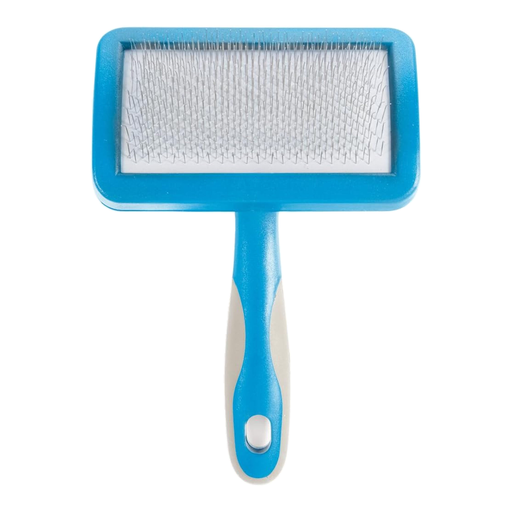
Why This Fits Their Persona: An excellent all-rounder for owners of medium-sized breeds like Cocker Spaniels, Beagles or Border Collies. It's built for regular, comfortable grooming sessions to maintain a healthy coat and manage moderate shedding.
This brush avoids the "flimsy build trap" with its sturdy construction and ergonomic, non-slip rubber grip, designed to withstand extended use without causing hand strain. The rounded-tip bristles prevent skin scratching.
Its universal design is genuinely effective for most medium-length coats, removing loose hair and dander efficiently. The flexible bristle pad adapts to the dog's body for a more comfortable experience.
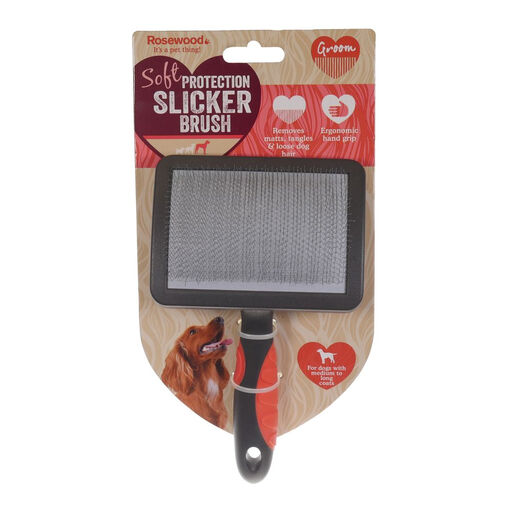
Why This Fits Their Persona: Designed for owners of large breeds with long or double coats, such as German Shepherds, Huskies or Golden Retrievers. This brush is built to handle high-volume shedding and prevent the formation of painful mats in thick fur.
Its large size provides the efficiency needed for big dogs, while the fine, flexible pins are designed to be gentle, avoiding the "bare-pin hazard." The robust, soft-grip handle prevents it from becoming another victim of the "flimsy build trap."
This is an effective de-shedding tool for dogs, efficiently removing loose undercoat fur to reduce shedding around the home. Regular use helps stimulate natural oils for a healthier, shinier coat.
We have compiled a complete, real-time list of products that fully satisfy these strict selection criteria and UK safety regulations.
The frequency depends on your dog's coat type, length and the time of year. For long-haired or double-coated breeds, grooming 2-3 times a week is a good baseline to prevent mats and manage shedding. During heavy shedding seasons like spring and autumn, you may need to brush them daily. For shorter coats, once a week is often sufficient.
Yes, if used improperly or if it's a poor-quality brush. Always use gentle pressure and brush in the direction of hair growth. Never press down hard or repeatedly go over the same spot, as this can cause skin irritation. Be extra careful over bony areas like hips and shoulders. Most importantly, choose a brush with protected pin tips to minimise any risk of scratching.
While both are valuable pet grooming tools, they serve different primary functions. A slicker brush is a versatile tool for everyday grooming. It's great for removing loose fur from the topcoat and shallow undercoat, detangling minor knots and leaving the coat smooth. An undercoat rake, on the other hand, is a more specialised de-matting comb and de-shedding tool for dogs. It has long, sturdy tines designed to penetrate deep into a dense double coat to remove large quantities of dead, packed-in undercoat fur, which is the main culprit behind heavy shedding.