
24/7 Customer Support

Free returns

Same-day & Next-day Delivery

Quality Guaranteed

Unlock Your Welcome Offers: FREE Delivery | Up to 80% OFF | Free 30-day JoyPlus trial
Download the APP
Owning a long-haired dog in the UK brings a unique joy, from their majestic appearance on a countryside walk to their soft coat on a cosy evening. However, maintaining that beautiful coat can be a challenge. Tangles, stubborn mats and a seemingly endless amount of shedding can quickly become overwhelming for both you and your pet.
A high-quality slicker brush is an essential tool in any long-haired dog owner's grooming kit. It's designed to navigate through dense fur, remove loose undercoat and prevent painful knots from forming. This guide is here to help you understand what to look for in a slicker brush for long haired dogs and to present some carefully selected options that can make grooming a more pleasant and effective experience.
Before you choose a brush, it helps to know what features make a real difference. Here are a few key points to consider to ensure you find a comfortable and effective tool for your dog.
The "business end" of a slicker brush consists of many fine, bent wire pins. For long-haired breeds, it's important that these pins are both long enough to penetrate the coat and flexible enough not to scratch or irritate your dog's skin. A gentle slicker brush with protected or flexible tips can make the experience much more comfortable for your pet, turning grooming from a chore into a bonding moment. This design is also crucial for its function as a dematting brush for dogs, as it allows you to gently work through tangles without pulling.
A one-size-fits-all approach rarely works in dog grooming. The head of the brush should be proportionate to the size of your dog. A large brush on a small dog can be clumsy and intimidating, while a small brush on a giant breed will make grooming sessions unnecessarily long. Furthermore, a long haired dog grooming brush with an ergonomic, non-slip handle will provide you with better control and reduce hand fatigue, which is especially important for dogs with thick, demanding coats.
One of the primary benefits of regular brushing is managing shedding. An effective dog brush for shedding will efficiently capture loose fur from the undercoat before it has a chance to end up on your furniture and clothes. Regular use stimulates blood circulation in the skin and distributes natural oils, which promotes a healthier, stronger coat that is less prone to excessive moulting.
Based on features that prioritise pet comfort and grooming efficiency, here are our recommendations. Each Rosewood dog brush in this selection is designed with specific needs in mind, from the smallest companions to the largest breeds.
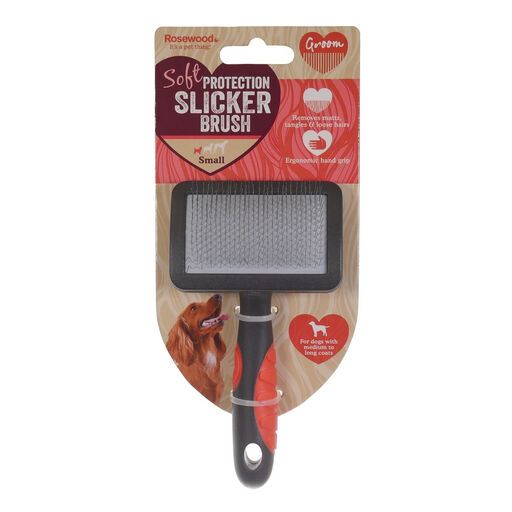
Why It Stands Out: This brush is specifically scaled for precision and gentleness. Its compact head allows you to groom small dogs or navigate delicate and hard-to-reach areas on larger pets, such as behind the ears and under the legs, where mats often form.
Pros:
Who is it for: Perfect for owners of small breeds like Yorkshire Terriers, Pomeranians, Shih Tzus or even long-haired cats and rabbits who require a delicate touch.
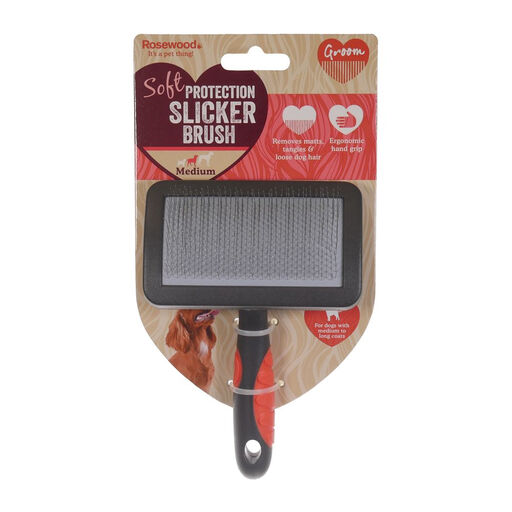
Why It Stands Out: This is a versatile, all-purpose tool that strikes a great balance between coverage and manageability. It’s robust enough to handle the thick coats of medium-sized dogs while remaining gentle on their skin, making it an excellent choice for regular maintenance.
Pros:
Who is it for: An ideal choice for owners of medium-sized dogs with substantial coats, such as Border Collies, Cocker Spaniels and Australian Shepherds.
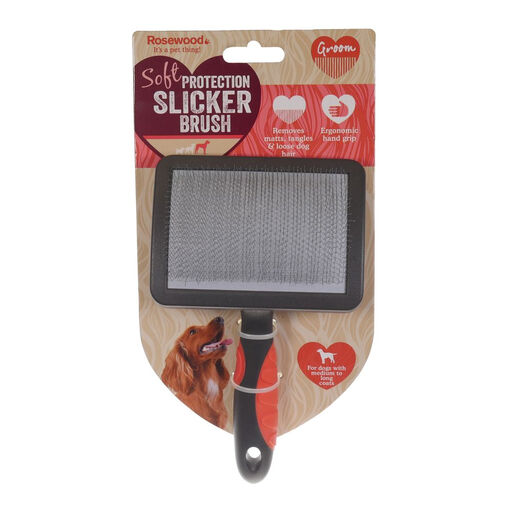
Why It Stands Out: Designed for maximum efficiency, this large brush covers significant surface area with each stroke, drastically cutting down grooming time for big dogs. Its fine, flexible pins are engineered to penetrate deep double coats to remove loose fur and prevent tangles without causing discomfort.
Pros:
Who is it for: A must-have for owners of large, heavy-coated breeds like Golden Retrievers, German Shepherds, Bernese Mountain Dogs and Newfoundlands.
While the slicker brushes featured here are excellent for managing long coats, we understand every pet's grooming needs are unique. To explore a wider variety of grooming tools and accessories, from combs to specialty brushes, take a look at our comprehensive collection.
For most long-haired dogs, brushing two to three times a week is a good routine to prevent matting and control shedding. However, for breeds with particularly thick or tangle-prone coats, daily brushing may be beneficial, especially during seasonal moulting periods in spring and autumn.
When used correctly, a gentle slicker brush is a safe and effective tool. The key is to use light pressure and brush in the direction of hair growth. Never try to rip through a large mat; instead, work on it gently from the edges. Avoid scraping the pins directly against the skin, particularly in sensitive areas like the stomach and under the legs.
A slicker brush is a multi-purpose tool for daily or weekly grooming. Its primary functions are to remove loose fur, detangle minor knots and keep the coat smooth. A dedicated dematting brush for dogs, on the other hand, is a more specialised tool, often with sharp, curved tines designed to cut through severe, established mats. Many owners use a slicker brush for regular maintenance to prevent mats from forming in the first place.