Small-kitchen breakfast-load households
A narrow appliance space and a regular load of bowls, mugs and cutlery make physical fit the starting point. Check the space behind the machine and the open-door path as well as its width.


Choose a slimline dishwasher for breakfast bowls only after checking the full installation space, pipework allowance and room for the door to open. For frequent small loads, look closely at basket flexibility and the stated conditions for quick or half-load programmes, then compare the exact models’ eco-programme figures. A freestanding model suits an exposed appliance space; a fully integrated model needs compatible kitchen furniture and door fittings.
A narrow appliance space and a regular load of bowls, mugs and cutlery make physical fit the starting point. Check the space behind the machine and the open-door path as well as its width.
Deep breakfast bowls, tall mugs and occasional larger items make the basket layout more useful to inspect than the place-setting figure alone.
Regular smaller loads make programme conditions, eco-cycle water and energy figures, and stated noise worth comparing between exact models.
Decide how the appliance will fit into the kitchen before comparing loading features and programmes. The installation routes differ even when both appliances are described as slimline.
Choose when: The dishwasher will occupy an exposed appliance space rather than sit behind a matching cabinet door.
Bear in mind: The appliance remains visible, and the full space and connections still need checking.
Choose when: A fitted-kitchen appearance matters and the opening, furniture door and hinges suit the exact model.
Bear in mind: Fitting depends on compatible kitchen furniture, and the controls are concealed when the door is shut.
| Concern | What to check | Who this matters to |
|---|---|---|
| Kitchen fit | Measure the opening’s height, width and depth, allowing for rear pipework and the open door. | If my kitchen has a narrow appliance space, I need to know the dishwasher can be installed and opened without obstruction. Around 33% of consumers put fit and installation first. |
| Flexible loading | Inspect the basket layout and look for adjustable racks or a movable cutlery basket that suit your bowls and mugs. | Deep bowls and tall mugs can be awkward to load together, so I want an interior that accommodates the dishes I actually use. Roughly 27% of consumers prioritise loading flexibility. |
| Small-load turnaround | Check quick-cycle soil and load conditions, plus whether the exact model has a half-load option. | When lightly soiled breakfast dishes need washing sooner, I want a programme that suits that load. Around 20% of consumers make quicker small-load handling their main concern. |
| Ongoing use | Compare the exact models’ energy class, kWh per 100 eco cycles, litres per eco cycle, eco duration and stated noise. | With frequent use, I want to compare the resource figures and noise before choosing, without assuming they describe a quick cycle. Approximately 20% of consumers put this comparison first. |
A nominal width does not tell you whether the appliance clears the worktop, rear hoses or nearby cabinets when its door is open.
Measure the complete installation space and compare it with the exact model’s dimensions before ordering.
A place setting is a standard capacity measure; it does not show how your particular bowls and mugs will sit in the racks.
Inspect interior images or loading instructions, especially if deep bowls or tall mugs are part of the usual load.
Quick-programme descriptions can specify lightly soiled dishes or a particular load size. Eco-label consumption figures describe the eco programme instead.
Match the programme’s stated conditions to your dishes, and compare eco water, energy and duration separately.
A fully integrated appliance needs a compatible opening, furniture door and hinge arrangement; the appliance’s dimensions alone cannot establish that fit.
Check the exact door-fitting requirements and what installation work is needed before choosing an integrated model.
Bosch has 45 cm freestanding and fully integrated models relevant to exposed and fitted-kitchen installations.
Beko’s slimline range includes freestanding and integrated options for compact kitchens.
Hotpoint’s 45 cm freestanding models are worth considering where adjustable loading and a rapid programme matter.
Miele has 45 cm freestanding and integrated models with differing loading and drying features.
These models include freestanding choices for an exposed appliance space and fully integrated choices for a compatible fitted kitchen. Compare the loading arrangement, programme instructions and installation requirements against your own breakfast dishes and kitchen.
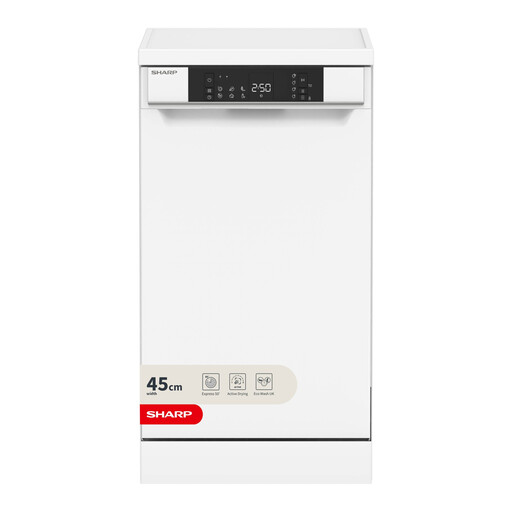 Image unavailable
For regular smaller loads, check whether its programme instructions suit your breakfast dishes. The listed noise figure is 49 dB; confirm the exact energy label and installation clearances before comparing models.
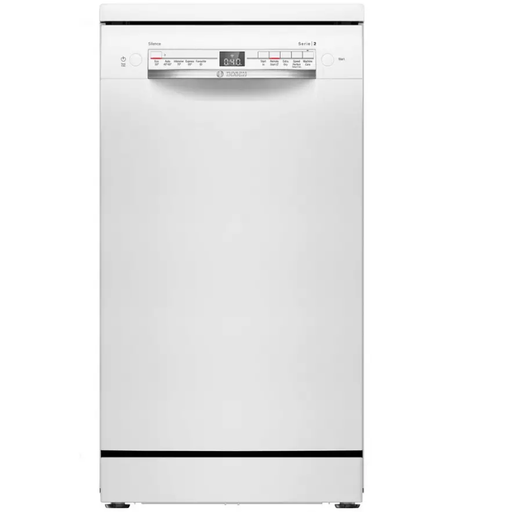 Image unavailable
This freestanding model suits an exposed appliance space if the full opening and door swing allow it. Check its basket layout against your bowls, confirm the exact energy label and consult the programme instructions if shorter cycles matter.
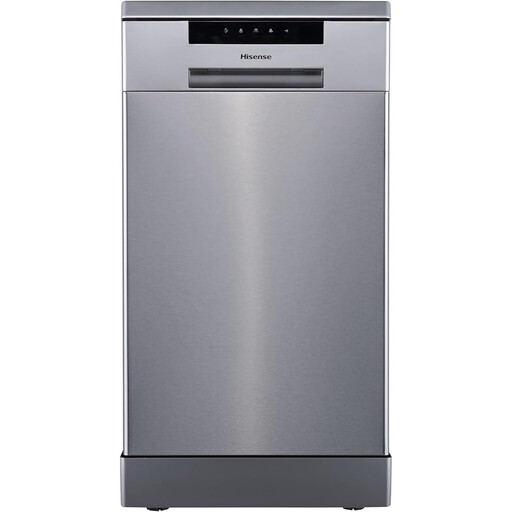 Image unavailable
If bowls, mugs and cutlery need adaptable space, inspect the rack arrangement before choosing. The model is listed with 9 place settings and an E energy class; check quick-wash conditions and installation clearance for your kitchen.
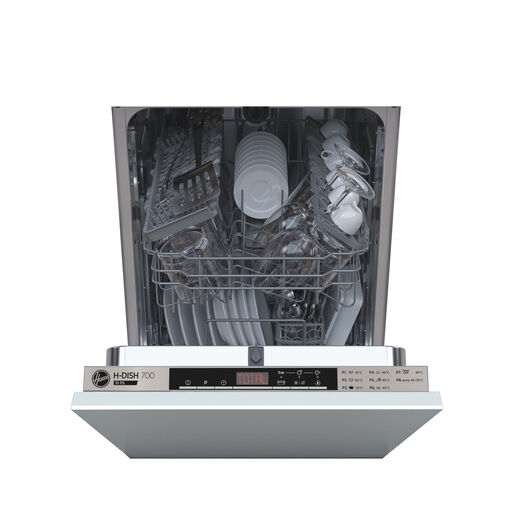 Image unavailable
This integrated model is a choice for a fitted kitchen if its opening, furniture door and hinges are compatible. It is listed with an E energy class; check the exact eco energy figure and Rapid-cycle load conditions when comparing everyday use.
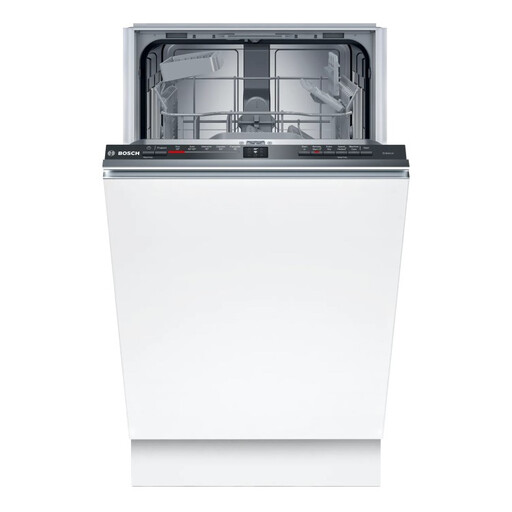 Image unavailable
Consider this model where a concealed appliance suits the kitchen and the furniture-door arrangement can accommodate it. Check what fitting components are included, confirm the exact eco water and energy figures, and review programme options if you often wash small breakfast loads.
Measure the opening’s height, width and depth, then account for pipework and the space needed to open the door and load the racks. The product information describes slimline models as usually around 45 cm wide, but the exact appliance dimensions determine whether a model fits.
A quick programme can suit lightly soiled breakfast dishes when the model’s stated load conditions match. Beko describes its Mini 30' programme as a 30-minute wash for a full load of slightly dirty dishes, while Hotpoint describes its Rapid Wash as a 30-minute wash for a small, lightly soiled load; check the programme instructions if food has dried on.
Not necessarily: place settings indicate standardised capacity rather than the fit of a particular bowl shape. The description of a place setting includes a bowl alongside plates, a glass, a cup, a saucer and cutlery, so inspect the racks if deep bowls and tall mugs dominate your loads.
Compare the exact models’ A–G energy class, energy per 100 eco cycles, water per eco cycle, eco duration and stated noise. Energy Saving Trust explains the rating scale, while the eco-programme figures should not be assumed to describe a quick wash.
A fully integrated model is designed to sit behind a matching furniture door, provided the opening, door and hinges are compatible. The product information distinguishes this arrangement from a freestanding dishwasher, whose appliance front remains visible.