Cottage owners with a narrow kitchen bay
Measure more than the appliance width: the opening also needs to accommodate its depth, rear hoses and fully open door.


Choose a 45 cm slimline dishwasher if a measured cottage kitchen can accommodate its installation type, pipework and open door, but not a standard-width model. For dishwasher-safe lunchboxes, check the actual basket layout and each container’s care instructions before weighing up quick programmes, noise and Eco-cycle consumption.
Measure more than the appliance width: the opening also needs to accommodate its depth, rear hoses and fully open door.
Look for a basket layout that takes the containers and lids you use, plus a documented short programme for lightly soiled loads. Keep another suitable programme in mind for heavier residue.
Compare the exact models’ declared noise, energy information and Eco-cycle water use, especially if guests spend time near the kitchen.
Decide whether the kitchen calls for a freestanding or integrated appliance before comparing baskets and programmes: the two installation types need different spaces and fittings.
Choose when: The cottage has a suitable measured gap and water and electrical connections without a built-in appliance bay.
Trade-off: The appliance remains visible, and its depth, hoses and open door still need room.
Choose when: An existing or planned appliance bay has a compatible furniture door and installation arrangement.
Trade-off: The concealed finish brings additional panel, hinge and niche requirements; it is not a drop-in replacement for a freestanding machine.
| Concern | What to check | Who this matters to |
|---|---|---|
| Fit and installation | Measure the opening’s height, width and usable depth, then check hose space and the open-door path against the exact installation instructions. | If my cottage has a tight kitchen bay, I need to know the appliance and its connections will fit before choosing features; around 33% of consumers put fit and installation first. |
| Lunchbox loading and turnaround | Compare a representative box and lid with the basket layout; check the programme conditions and each container’s care marking. | When lunchboxes need washing between activities, I want their awkward shapes to load properly and a suitable cycle for light residue. Around 25% of consumers prioritise loading and turnaround. |
| Noise during guest stays | Compare declared noise for the exact models and consider when the dishwasher would run near living or sleeping areas. | If guests spend time close to the kitchen, I would plan washes around them rather than assume every slimline machine sounds alike; for around 25% of consumers, quiet operation is the primary concern. |
| Energy and water use | Read the exact model’s energy label and Eco-cycle consumption alongside its capacity and the loads you expect to wash. | For repeated cottage loads, I want to compare the stated energy and water use without judging a machine by its size alone; around 17% of consumers put operating consumption first. |
Nominal width does not account for appliance depth, rear pipework or the space taken by an open door.
Measure the whole installation space and compare it with the chosen model’s installation instructions before ordering.
A mismatched space may require cabinet alterations or another installer visit.
A place setting represents standard crockery and cutlery, not a guarantee that deep boxes and separate lids will fit efficiently.
Check a representative set against the baskets, including any adjustable supports or cutlery storage you intend to move.
Beko describes the Mini 30' programme on its DVS05C20 as a wash for lightly soiled dishes; that condition does not establish suitability for dried-on food or every lunchbox.
Follow the lunchbox maker’s care instructions and choose a programme appropriate to the residue as well as the container.
The class does not replace the exact model’s consumption, capacity and noise information.
Compare like-for-like label figures and Eco-cycle details for the machines on your shortlist.
These model examples show which specifications are worth checking; their features do not apply to every dishwasher from the same brand.
Beko UK describes 45 cm slimline models in both freestanding and integrated ranges.
Bosch GB’s SPS4HMW14G is an example for comparing declared noise, basket flexibility and Eco-cycle water use.
Miele UK’s G 5740 SC SL provides another 45 cm freestanding example for checking basket design, drying and wash scheduling.
These slimline options cover freestanding gaps and kitchens prepared for a fully integrated appliance. Match the installation type first, then check the lunchboxes against the baskets and care instructions.
 No image available
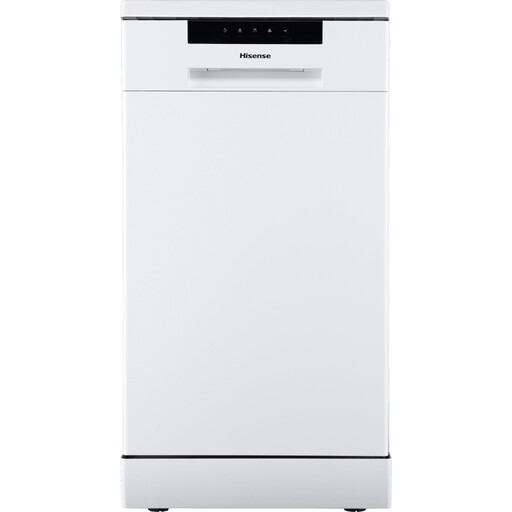
Consider this freestanding model for a measured cottage gap, then check whether its baskets take your lunchboxes and lids.
Listed with 9 place settings and energy class E. Allow for hoses and the open door when checking installation space.
 No image available
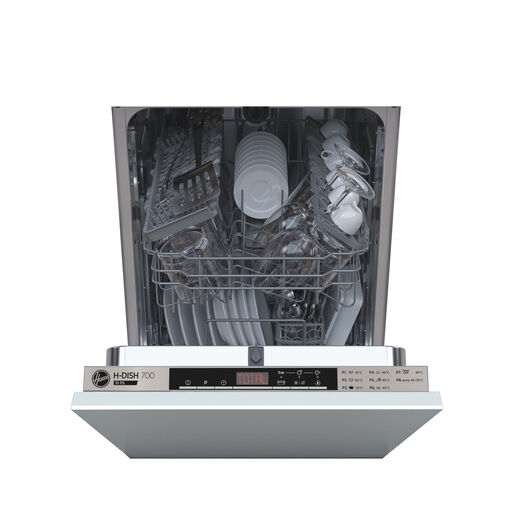
Consider this integrated model only if the cottage has a compatible appliance niche and furniture-door arrangement.
Listed with 10 place settings and energy class E. Confirm the installation requirements and basket fit before choosing it for lunchboxes.
 No image available
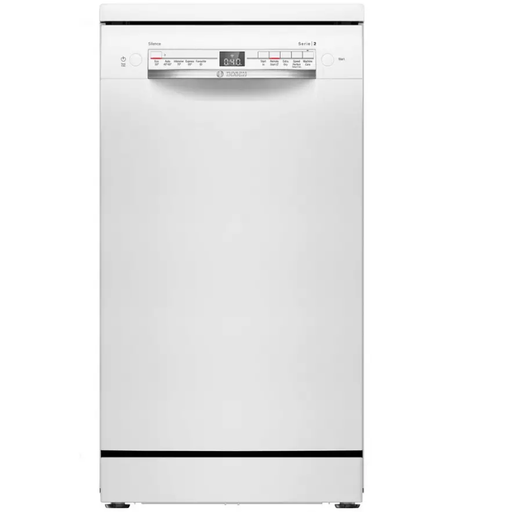
Consider this freestanding model where the measured kitchen space suits it; compare your actual lunchboxes with the rack layout.
Listed with 9 place settings, Home Connect and ExtraDry. Check the exact product label for its energy class before comparing running use.
 No image available
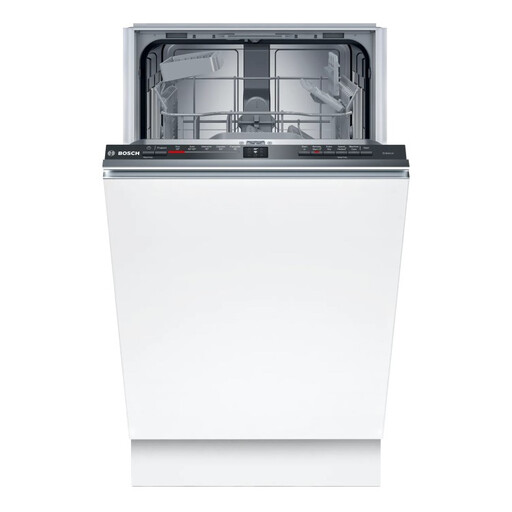
Consider this model for a compatible integrated bay, not an ordinary freestanding gap.
The title lists a fixed-door hinge kit, Wi-Fi connectivity and energy class E. Check the niche, furniture panel and hinge requirements, and confirm a suitable programme for the lunchboxes you use.
Allow for the exact appliance dimensions plus its required connections and door-opening space, not just a nominal 45 cm width. Dishwasher measurement guidance recommends checking space behind the machine for pipework; follow the selected model’s installation instructions for its required clearances.
No: place settings describe a standard crockery-and-cutlery load, not the space taken by particular containers. Compare the bases, lids and removable compartments you use with the actual baskets and adjustable supports.
Use a short programme only when the lunchbox maker permits that wash and the load meets the programme’s conditions. Beko describes the Mini 30' programme on its DVS05C20 as suitable for lightly soiled dishes; dried-on residue may call for a different programme.
For a self-catering holiday home in England, GOV.UK guidance current in October 2026 says owners must follow Health and Safety Executive electrical-safety guidance. Rules depend on the property and jurisdiction, so check the applicable nation, local authority and installation arrangements; guidance for residential tenancies where someone occupies a property as their only or main residence should not automatically be applied to every short holiday stay.
No: compare the exact dishwasher labels and Eco-cycle figures alongside capacity and likely loading. Energy Saving Trust explains the A-to-G efficiency scale, while a model’s stated water and energy consumption gives further context for the loads you expect to run.