For guests avoiding alcohol, choose a clearly labelled alcohol-free ready-to-drink serve rather than assuming a light tonic makes a mixed drink alcohol-free. For guests having spirits, choose a mixer by flavour and serving format, then measure the spirit: the NHS calculates alcohol units from its strength and the amount poured. Individual portions simplify self-service, while larger bottles work where opened drinks can be kept chilled.
Who are the drinks for?
Plan the alcohol-free choice separately from any drinks mixed with spirits, so guests can tell what they are being served.
Hosts serving drinkers and non-drinkers
Set out a clearly labelled alcohol-free ready-to-drink option as well as mixers for alcoholic drinks. Keep the spirits separate so a guest does not have to judge alcohol content from the drink’s appearance or flavour.
Guests choosing a smaller spirit pour
Light or slimline tonic can address a calorie or sugar preference, but it does not change the alcohol supplied by an added spirit. A measured pour makes the amount of alcohol easier to assess.
Hosts managing a larger drinks table
Individual mixer portions make self-service straightforward. Larger tonic bottles may suit repeated serves when there is space to chill them and follow the storage instructions after opening.
What should you check before buying?
Alcohol-free ready-to-drink serve
Choose when: A guest wants a complete drink without an added spirit; check the exact pack’s alcohol information before serving.
Trade-off: A prepared serve offers less control over the mixer and flavour than combining separate ingredients.
Tonic with a measured spirit
Choose when: Guests want an alcoholic mixed drink and the person serving can control the spirit pour.
Trade-off: A light mixer does not remove the alcohol units supplied by the spirit.
| Priority |
What to check |
Your needs |
| Alcohol in the finished drink |
Check the ABV on any alcoholic base and measure the pour. The NHS calculates units as ABV × volume in ml ÷ 1,000; a mixer does not cancel units from a spirit. |
I want guests to know which drinks have no added spirit and how much spirit goes into the alcoholic serves. |
| Label wording |
The Department of Health and Social Care’s UK guidance on voluntary descriptors, published in December 2018, describes an alcohol-substitute drink labelled ‘low alcohol’ as 1.2% ABV or below, with its maximum ABV shown. That guidance does not apply to ordinary soft-drink mixers generally. |
If I’m looking for a low-alcohol drink, I need to check its alcohol label rather than treating ‘light’ or ‘slimline’ tonic as an ABV claim. |
| Nutrition and ingredients |
Compare calories and sugars on the same volume basis, such as per 100 ml. Read sweetener ingredients and any phenylalanine-source declaration on the exact pack. |
Some guests may prefer a particular sugar or sweetener profile; I want to offer a choice without assuming it changes the drink’s alcohol content. |
| Serving format |
Match individual mixer portions or larger bottles to the way drinks will be served. Check chilling and opened-bottle instructions; Tesco and Sainsbury’s advise refrigerating their listed 1-litre tonics after opening and using them within 3 days. |
For self-service, I may want portions guests can pick up individually. If I open larger bottles, I need somewhere to keep them chilled. |
| Flavour |
Check the named tonic variety and ingredients. Botanical or flavoured wording does not establish a product’s ABV, sugar content or suitability for a particular guest. |
I’d like more than one flavour available, with alcoholic and alcohol-free drinks clearly identified. |
What can cause confusion?
-
Reading ‘slimline’ as ‘low alcohol’
Slimline and light describe a mixer choice, not the alcohol units contributed by a spirit. The NHS bases units on the alcoholic drink’s ABV and volume.
Measure the alcoholic base for mixed drinks, and choose a separately labelled alcohol-free serve when no spirit should be added.
-
Leaving non-drinkers with only tonic
A mixer can be served on its own, but it is not necessarily the complete drink a guest expects. Adding a spirit also changes what that guest is being offered.
Provide a clearly marked alcohol-free ready-to-drink choice and keep alcoholic bases away from its serving area.
-
Overlooking the ingredient panel
Sweeteners differ between tonics. Joybuy’s listing for Schweppes Slimline Tonic Water, for example, identifies aspartame and a source of phenylalanine.
Check the exact pack when an ingredient matters to a guest, and consider another mixer type for guests with different preferences or requirements.
-
Opening every large bottle at once
Large bottles need chilled storage after opening. Tesco and Sainsbury’s each advise using their listed 1-litre tonic within 3 days of opening.
Open bottles as needed, or use individual portions where guests are serving themselves at different times.
Brand ranges to consider
A brand’s range can suggest flavours and formats to explore, but the exact drink and pack determine its ingredients, nutrition and alcohol information.
Fever-Tree
Fever-Tree offers tonic varieties and markets a Non-Alcoholic Mediterranean G&T as a prepared botanical serve.
- Fever-Tree says its Refreshingly Light Indian Tonic Water has 50% fewer calories than its own Premium Indian Tonic Water.
- The tonic and the prepared G&T are different products; check the chosen pack’s nutrition, ingredients and alcohol information.
Schweppes
Its Slimline Tonic Water is one option for individual mixer portions.
- Joybuy lists the 12 × 150 ml pack at 2 kcal and 0 g sugars per 100 ml.
- That listing identifies aspartame and a source of phenylalanine. Slimline tonic does not reduce alcohol from an added spirit.
Fentimans
Fentimans lists several tonic varieties, including Premium Indian and Naturally Light, and presents recipes for both cocktails and non-alcoholic cocktails.
- The range provides different named tonic styles to consider for a drinks menu.
- Check each product’s label rather than inferring alcohol or nutrition information from botanical positioning.
Britvic / The London Essence Company
Britvic identifies London Essence as part of its portfolio and describes the range in terms of distilled botanicals and layered flavours.
- Britvic says London Essence tonics and mixers contain no artificial colours, flavourings, sweeteners or preservatives.
- That company statement does not establish the alcohol content or nutrition of an individual serve; check its pack.
Tesco
Tesco’s Low Calorie Indian Tonic Water is a 1-litre bottle option for a drinks table.
- Tesco lists 4 kcal and 0 g sugars per 250 ml serving.
- Tesco advises refrigerating it after opening and using it within 3 days; check the bottle you buy for current details.
Sainsbury's
Sainsbury's lists a 1-litre Diet Indian Tonic Water for serving mixed drinks.
- Its listing gives 4 kcal and less than 0.5 g sugars per 250 ml serving.
- The tonic contains sweeteners, and Sainsbury's advises refrigeration after opening and use within 3 days.
Joybuy tonic options
These are portioned tonic mixers for a garden party, including slimline, light and flavoured varieties. Choose any spirit separately and measure its pour; a tonic selection alone is not a ready-to-drink alcohol-free G&T.
 No image available
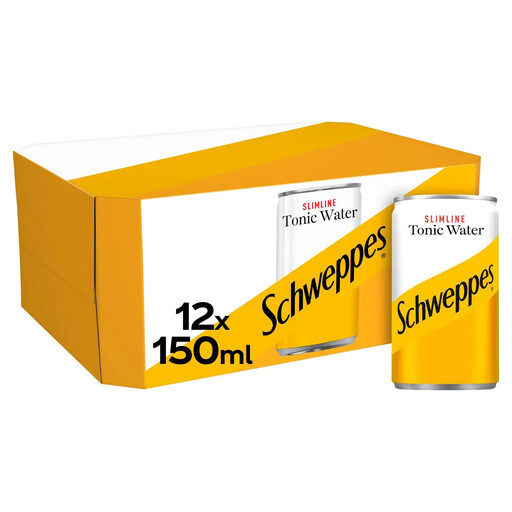
Schweppes Slimline Tonic Water 12 × 150 ml
The 150 ml cans offer individual mixer portions for a drinks table. Joybuy lists 2 kcal and 0 g sugars per 100 ml, and identifies aspartame and a source of phenylalanine. An added spirit still contributes alcohol units.
View on Joybuy
 No image available
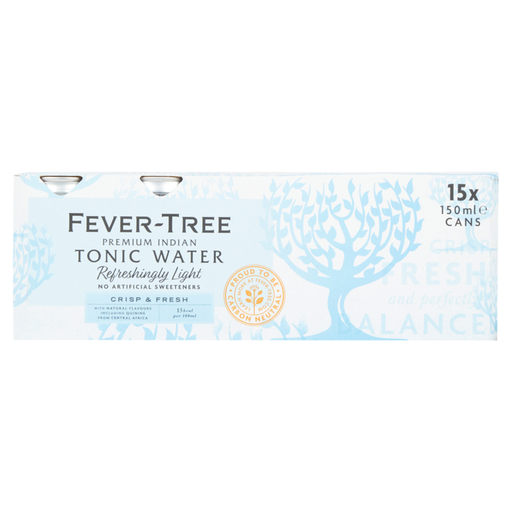
Fever-Tree Refreshingly Light Premium Indian Tonic Water 15 × 150 ml
This 15-can pack provides individual portions of Indian tonic for mixed drinks. Joybuy lists 15 kcal and 3.8 g sugars per 100 ml, so it is not a no-sugar choice. Measure any spirit added; ‘light’ does not describe the finished drink’s alcohol content.
View on Joybuy
 No image available
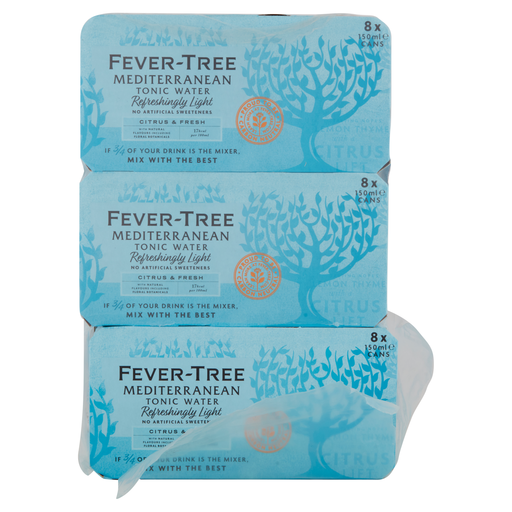
Fever-Tree Refreshingly Light Mediterranean Tonic Water 8 × 150 ml
The 8 × 150 ml pack offers portioned Mediterranean tonic for guests who want a different variety alongside Indian tonic. Check the pack’s ingredients and nutrition for the chosen serve, and measure any alcoholic base separately.
View on Joybuy
 No image available
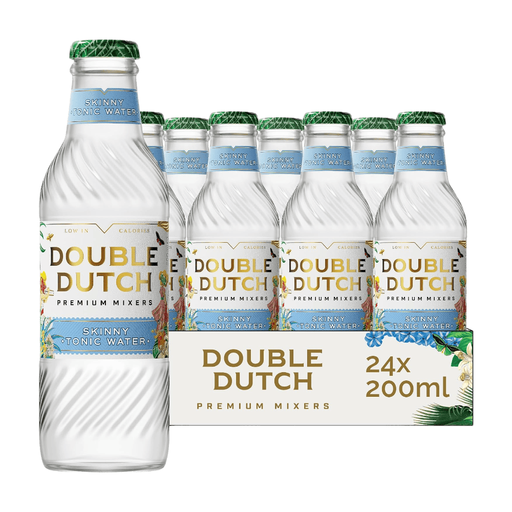
Double Dutch Skinny Tonic 200 ml × 24
This pack provides 24 individual 200 ml tonic portions for a larger drinks table. ‘Skinny’ is not an alcohol-content measure: check the exact pack’s label for guests avoiding alcohol, and remember that adding a spirit makes the finished drink alcoholic.
View on Joybuy
Garden party drinks FAQs
Does slimline tonic make a gin and tonic low alcohol?
No. Slimline tonic does not reduce the alcohol supplied by gin. The NHS calculates units as ABV × volume in ml ÷ 1,000: a 25 ml measure of 40% spirit contains 1 unit before the mixer is added.
What does ‘low alcohol’ mean on a UK drink label?
The Department of Health and Social Care’s UK guidance on voluntary descriptors, published in December 2018, describes an alcohol-substitute drink using ‘low alcohol’ as one at 1.2% ABV or below, with its maximum ABV shown on the label. The guidance is for alcohol-substitute drinks, not ordinary soft-drink mixers generally.
How can I keep alcoholic and alcohol-free serves distinct?
Offer a clearly labelled alcohol-free ready-to-drink choice separately from drinks made with spirits. Keep alcoholic bases apart from the alcohol-free serving area, and use a measured pour when preparing alcoholic mixed drinks.
How should I store an opened large tonic bottle?
Follow the instructions on the bottle you serve. Tesco and Sainsbury’s advise refrigerating their listed 1-litre tonic products after opening and using them within 3 days; instructions for another product may differ.
Do slimline tonics contain sweeteners?
Some do. Joybuy’s listing for Schweppes Slimline Tonic Water identifies aspartame and a source of phenylalanine. Check the exact tonic’s ingredients and safety information if either matters to a guest.


