Shared kitchens short on space
If the available gap is narrow, decide whether an integrated appliance can fit the cabinetry or a freestanding one can stand in the available floor space. Either way, check more than the stated width.


A slimline dishwasher makes sense when a full-size machine will not fit and the shared kitchen can manage its mug loads within a smaller rack layout. Which? describes slimline machines as around 45 cm wide, compared with around 60 cm for full-size models. Settle the installation format first, then check the exact model’s loading space, rapid-programme conditions, noise and eco-cycle figures.
If the available gap is narrow, decide whether an integrated appliance can fit the cabinetry or a freestanding one can stand in the available floor space. Either way, check more than the stated width.
A short programme may help return lightly soiled, dishwasher-safe mugs to use sooner. Check its stated load and soil conditions rather than assuming the shortest cycle suits every wash.
When the kitchen is close to work or living space, compare noise figures for the exact models. Check their drying features too if mugs need to be put away soon after a cycle.
Start with the available space and whether the kitchen can accommodate an integrated or freestanding appliance. Then judge how the racks and programmes will handle the mugs and other dishes that share each load.
| Concern | What to check | Who this matters to |
|---|---|---|
| Fit and usable capacity | Measure height, depth and door clearance as well as width; check the installation format and actual rack layout. | If the machine must fit a narrow gap while taking mugs alongside other dishes, I need the installation and loading space to work together. Around 36% of consumers put fit and usable capacity first. |
| Mug turnaround | Check the short programme’s duration and its stated load and soil conditions. | When lightly soiled mugs are needed again soon, I want a suitable short cycle without assuming it will handle every load. Returning mugs to use is the main concern for around 29% of consumers. |
| Noise and drying | Compare each model’s stated noise figure and the conditions of any drying feature. | If the kitchen sits near a shared workspace, I want a cycle that causes less disruption and mugs I can put away afterwards. Around 21% of consumers chiefly prioritise noise and drying. |
| Eco-cycle information | Compare water use, energy use and duration for the same eco-cycle basis on each model’s product information. | Where the dishwasher may run often, I want comparable figures before deciding how its eco programme fits our routine. Eco-cycle information comes first for around 14% of consumers. |
A 45 cm description does not establish whether the height, depth, door arrangement or connections suit the kitchen.
Measure the full installation space and door clearance, then compare them with the exact model’s dimensions and installation instructions.
Beko and Hotpoint describe the cited rapid programmes for lightly or slightly soiled loads. That condition matters when mugs are washed with dirtier dishes.
Choose a programme according to the actual load and the model’s guidance, rather than treating its shortest cycle as a substitute for every normal or eco wash.
An energy class does not by itself show the water use, energy use or duration of the programme you plan to run. Beko’s DIS15020 product information, for example, states 11.9 L of water for its eco cycle.
Compare the exact models’ eco-cycle figures on the same basis, and keep rapid and eco programme figures separate.
The machine’s ability to wash mugs does not establish that a particular mug’s material or decoration is dishwasher-safe.
Follow the mug maker’s care instructions and the dishwasher manual’s loading guidance.
These brands offer relevant slimline models; features and figures below apply to the named models or specified ranges, not every dishwasher bearing the brand.
The integrated DIS15020 is worth examining if a compatible cabinet is available and short programmes for lightly soiled loads matter.
Bosch has both freestanding and fully integrated 45 cm lines, making installation format a useful starting point.
Hotpoint’s slimline range includes integrated and freestanding options; check individual models for basket and programme features.
AEG’s 45 cm range offers different capacities and noise figures, so the exact model matters more than the range name.
These 45 cm models include freestanding choices for available floor space and integrated choices for compatible cabinetry. Compare the exact installation requirements and mug-loading arrangement before selecting one.
 No image available
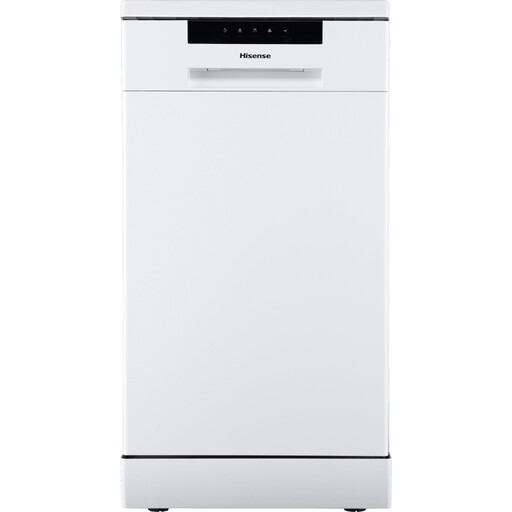
Consider this freestanding model where a narrow floor space is available and mugs will share the load with other dishes.
Its stated capacity is 9 place settings. Check the quick-wash programme details for your intended mug load, as well as door clearance and connections.
 No image available
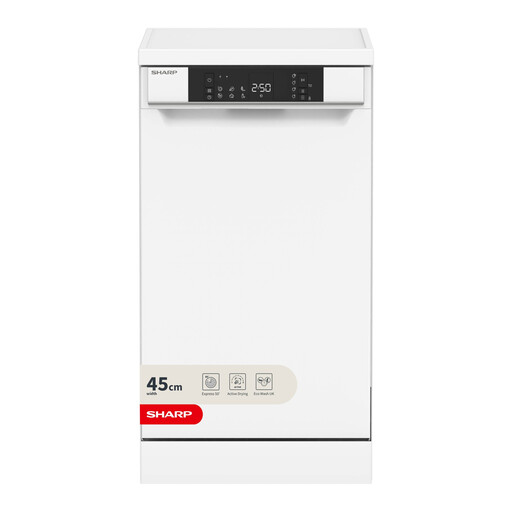
This freestanding option is relevant when the kitchen has floor space rather than a suitable integrated cabinet.
The product name states a 49 dB noise figure. Check whether its Quick 30 programme suits the intended mug load and confirm the full installation space.
 No image available
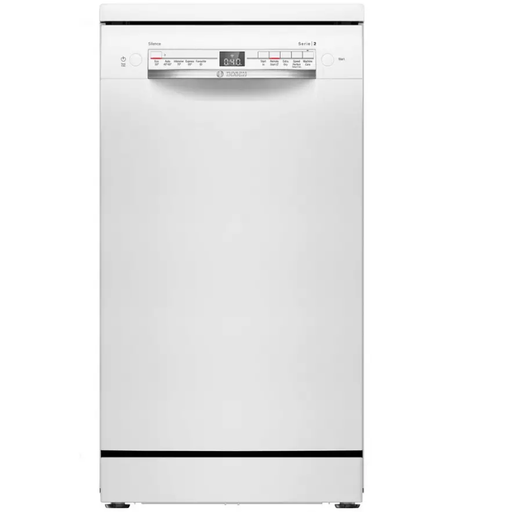
Consider this model for a freestanding installation where mugs and everyday dishes need to share the racks.
The product name specifies 9 place settings, Home Connect and ExtraDry. Check the duration and suitable loads for its SpeedPerfect option before relying on it for mug turnaround.
 No image available
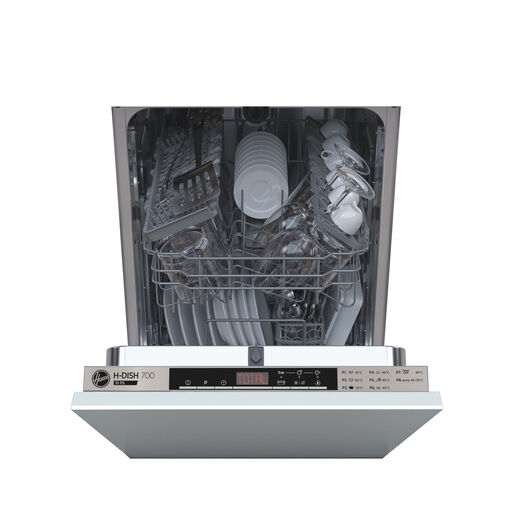
This 45 cm integrated model is a choice to assess when the shared kitchen has a compatible cabinet opening.
Its stated capacity is 10 place settings. Confirm the niche and door arrangement, and check the load and soil conditions for its Rapid 29' programme.
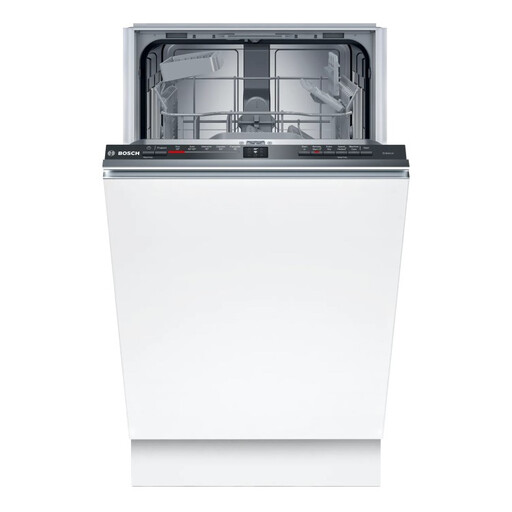 No image available
Consider this slimline model where a fully integrated installation and the specified fixed-door arrangement suit the kitchen.
The product name identifies Wi-Fi connectivity. Confirm the cabinet-door requirements and consult the exact model’s product information for eco-cycle figures if those drive your choice.
It can if the available rack space suits the number and shape of mugs washed together, and the group can manage the resulting cycle frequency. Check the actual basket layout rather than relying on place settings alone; if space permits, also consider whether a full-size machine would reduce the need for frequent loads.
Choose an integrated model only when the cabinet opening and furniture-door arrangement suit the exact appliance; a freestanding model needs suitable floor space instead. For either format, confirm height, width, depth, door clearance and water, drain and electrical connections before ordering.
No: the cited Beko and Hotpoint short programmes are described for lightly or slightly soiled loads. Follow the chosen model’s programme guidance for the number of mugs, other dishes and level of soiling.
Compare the exact models’ eco-cycle water use, energy use and duration on a like-for-like basis, alongside their stated noise figures. GOV.UK says products within the applicable UK energy-labelling rules must be supplied with an accurate printed energy label; use the model’s product information when comparing programme figures.