
24/7 Customer Support

Free returns

Same-day & Next-day Delivery

Quality Guaranteed

Unlock Your Welcome Offers: FREE Delivery | Up to 80% OFF | Free 30-day JoyPlus trial
Download the APP
A well-equipped kitchen is a joy to cook in, but choosing the right utensils can feel overwhelming. You want tools that not only perform well but also complement the style of your home. The humble slotted turner is a perfect example. It’s a workhorse for flipping, lifting and serving, yet the wrong one can scratch your favourite non-stick pan or feel awkward in your hand.
This guide is designed to help you navigate the options. We will explore the key differences between materials and designs, helping you find a durable, stylish and functional kitchen turner that suits your cooking habits and protects your cookware.
Before you decide, consider a few practical points. Focusing on material, design and safety will ensure you select a tool that lasts and makes cooking more enjoyable.
The material of your turner head is arguably the most important factor, as it dictates which pots and pans it can be used with.
Silicone Turner: If your kitchen is stocked with non-stick cookware, a silicone turner is an essential. The soft, flexible material is gentle on delicate surfaces, preventing the scratches that can ruin a non-stick coating. Look for a high-quality, heat resistant spatula head that won’t warp or melt under normal cooking temperatures. They are ideal for flipping eggs, pancakes and delicate fish fillets.
Stainless Steel Turner: For those who frequently cook with cast iron or stainless steel pans, a metal turner is a robust and durable choice. A stainless steel turner, often called a fish slice, has a thin, firm edge that can easily slide under food, helping to create a perfect crust on burgers or sear on scallops. They are built for longevity and can handle high heat with ease.
Functionality should not come at the expense of form. A well-designed turner feels balanced in your hand and looks great in your kitchen.
Here are our recommendations for slotted turners that balance performance, style and practicality for the modern UK kitchen.
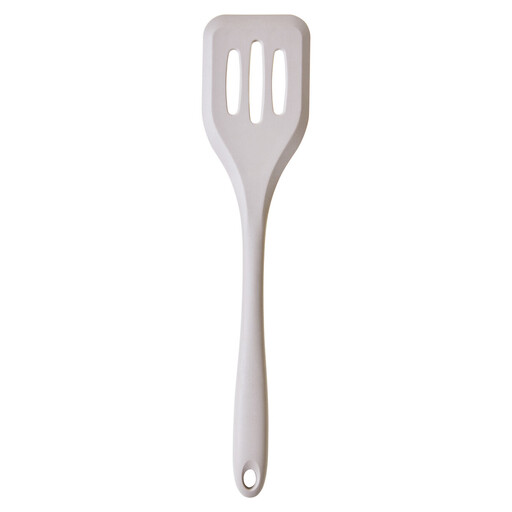
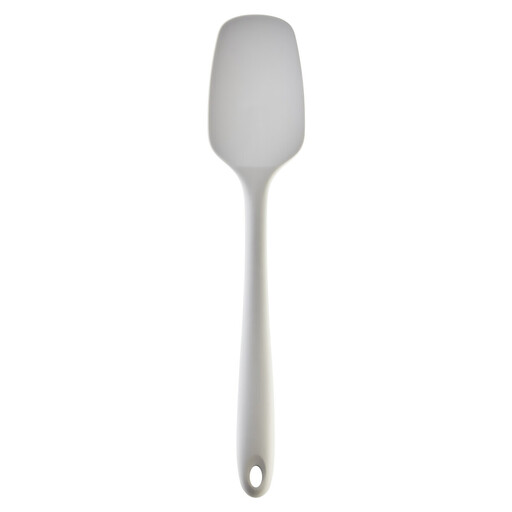
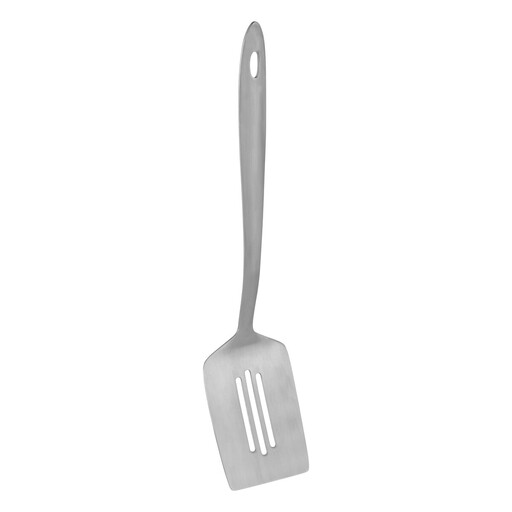
A cooking turner is a versatile tool, but some tasks require more precision. For delicate work like lifting biscuits from a baking tray, serving intricate pastries or spreading icing smoothly onto a cake, a different tool may be more suitable.
For these specific needs, we recommend exploring our range of offset spatulas. Their thin, flexible blades and angled handles are designed for maximum control and precision.
1. What is a slotted turner used for? A slotted turner is designed for lifting and flipping foods while allowing liquids to drain away. This makes it perfect for retrieving poached eggs from water, lifting fried fish from oil or serving steamed vegetables.
2. Can you use a stainless steel turner on a non-stick pan? It is generally not recommended. The hard edge of a stainless steel utensil can easily scratch and damage the delicate coating on non-stick pans. This can reduce the pan's effectiveness and potentially cause parts of the coating to flake off. For non-stick cookware, a silicone turner is a much safer option.
3. What is the difference between a spatula and a turner? In many UK kitchens, the terms are used interchangeably. However, a kitchen turner or fish slice specifically refers to the tool used for flipping hot food in a pan. The word "spatula" can also describe a flexible, rubber-headed tool used for scraping mixture from a bowl or a long, thin metal tool for spreading icing on a cake. This guide focuses on the cooking turner used for flipping and lifting.