Small-batch compote makers
If you usually cook for one or two people, a smaller bowl and removable parts may matter more than capacity for a household-sized batch. Crock-Pot positions its 1.8L CSC080 for individuals and couples.


For modest batches of apple compote, start with a compact 1.8L slow cooker; choose 3.5L if you regularly make shared portions or leftovers. In a shared kitchen, check the space and permission available for a long cooking session, then decide whether removable, easy-clean parts and a timer with automatic keep-warm justify a larger cooker.
If you usually cook for one or two people, a smaller bowl and removable parts may matter more than capacity for a household-sized batch. Crock-Pot positions its 1.8L CSC080 for individuals and couples.
If several people need the worktop, a predictable finish time can make handover easier. Check what a cooker does when its timer ends; a keep-warm setting is not a reheating programme.
If you make portions to share or keep for later, look for enough bowl capacity without overlooking clean-up. Check the pot and lid separately for dishwasher suitability.
Decide how much compote you will usually make before choosing controls: Crock-Pot positions its 1.8L CSC080 for small households, while Morphy Richards describes its 3.5L models as suitable for small families or batch cooking. Then check how the cooker will fit into your shared kitchen’s schedule and available space.
| Concern | What to check | Who this matters to |
|---|---|---|
| Batch size and space | Compare bowl capacity with your usual batch, then check the cooker’s external dimensions and a suitable place to use it. | If I make compote mainly for myself or one other person, I would rather keep worktop and cupboard space free than buy capacity I rarely use. Around 33% of consumers would put batch size and space first. |
| Timing and handover | Check whether the exact model has a timer and what happens when cooking ends; do not assume keep-warm reheats food. | When other people need the kitchen, I want to know when my batch will finish so I can clear the worktop. Timing would be the primary concern for around 25% of consumers. |
| Cleaning | Check whether the removable pot and lid are each dishwasher-safe; this does not apply to the electrical base. | I want to clear the cooker promptly after making a shared batch, without leaving awkward washing-up for the next person. For around 25% of consumers, clean-up would come first. |
| Electrical and heat safety | Check placement, clearance, plug and cable condition, and any shared-kitchen rules before a long cooking session. | If the cooker will run for hours in a communal space, I need a suitable position and permission to use it there. Around 17% of consumers would make safe placement and use their primary concern. |
Crock-Pot positions its 4.7L SCCPRC507B for 4–5 servings, but its 1.8L CSC080 for individuals and couples. A larger bowl also needs more shared worktop and storage space.
Start with the amount of compote you normally make. Consider 3.5L when shared portions or planned leftovers are a regular need, rather than choosing a larger capacity solely for an occasional batch.
Morphy Richards lists a built-in timer and automatic keep-warm for the 460021; those controls should not be assumed from the 3.5L capacity or brand name alone.
Check the exact model number and what its controls do when the cooking period ends, especially if another kitchen user will need the space.
The Russell Hobbs 23200 manual says its warm setting is for food already cooked to readiness and warns against using its low setting to heat food up.
Follow the instructions for your cooker and appropriate food-safety guidance for cooling, storing and reheating compote; do not rely on keep-warm to do the reheating.
A long cooking session still needs a suitable surface and sound electrical equipment. The Russell Hobbs 23200 manual specifies at least 50mm of clearance around that model; Electrical Safety First warns against overloaded or daisy-chained extension leads.
Check the clearance required by your model, inspect the plug and cable, and confirm the shared kitchen’s rules before switching the cooker on or leaving it running.
Worth considering across two different batch sizes: the compact CSC080 and the larger SCCPRC507B.
Its cited 3.5L models offer a choice between straightforward controls and timed cooking.
The 23200 is a 3.5L option with low, high and keep-warm settings and model-specific use instructions.
These choices focus on 3.5L cookers for shared portions, alongside larger-capacity options for more substantial batches. For apple compote, compare the space each takes and the controls you will actually use; a larger capacity alone is not a reason to choose it.
 No image available
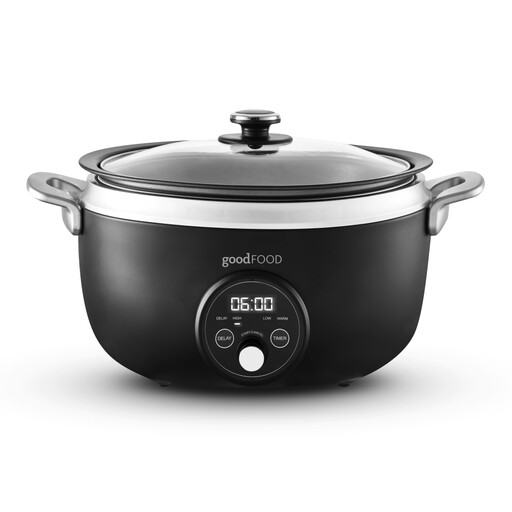
Consider this for shared-size compote batches if a timer is useful for planning kitchen time. The title specifies a 3.5L removable aluminium pot, 170W rating, LED display, delay function and timer. Check what happens when the timer ends before relying on it for handover; the pot is stated to be unsuitable for induction hobs.
 No image available
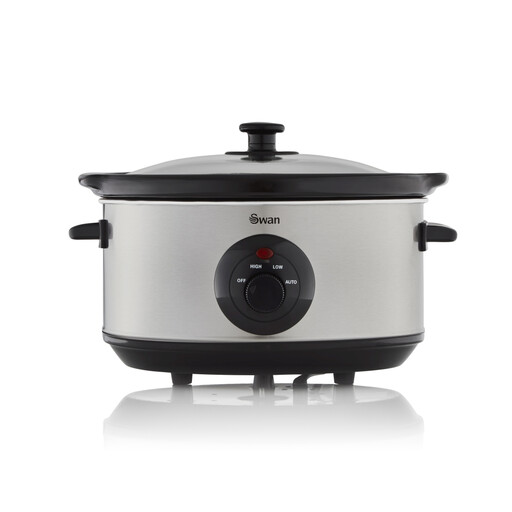
The 3.5L capacity suits a planned shared batch rather than the smallest personal portion. The title specifies a 200W rating and three cooking settings. Check its external dimensions for your worktop, and confirm the controls if a timed finish is important.
 No image available
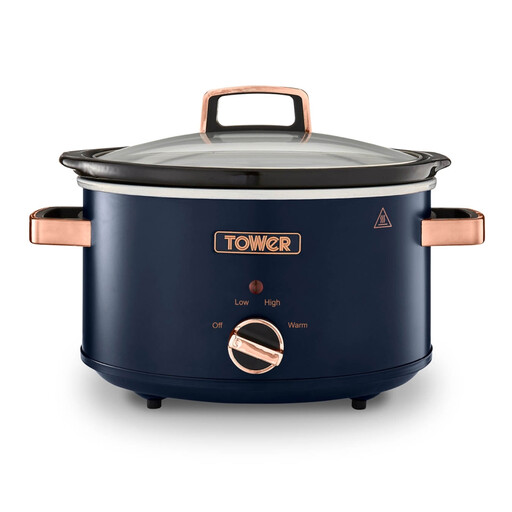
This is another 3.5L option for shared compote portions. Its title lists three heat settings, a removable pot and cool-touch handles. The product information says not to leave it unattended while powered on: check that this restriction fits your intended cooking arrangements before choosing it.
 No image available
Consider the 5L capacity if you expect larger shared batches and would also use a multi-cooker. Slow cooking is listed among its functions, but check the slow-cook programme instructions against your compote recipe and confirm what the appliance does when that programme ends.
 No image available
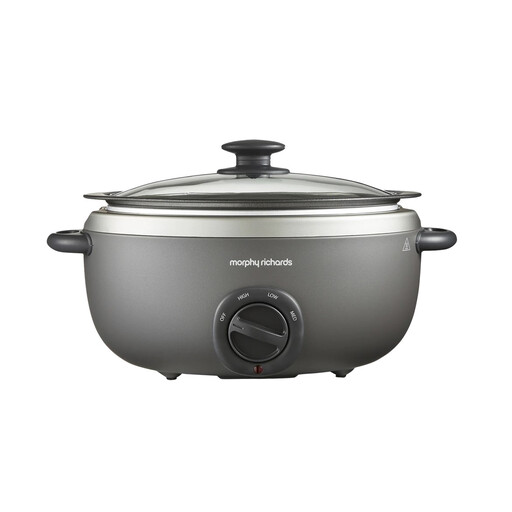
The 6.5L capacity is more relevant to regular large shared batches than modest compote portions, and it needs suitable kitchen space. Check the exact controls and end-of-cook behaviour if handover matters, and confirm whether the lid meets your cleaning needs.
A 1.8L cooker is a compact starting point for modest batches for one or two people; consider 3.5L for regular shared portions or leftovers. Crock-Pot positions its 1.8L CSC080 for individuals and couples, while Morphy Richards describes its cited 3.5L models as suitable for small families or batch cooking. Check the appliance’s dimensions as well as its bowl capacity.
Do not rely on those settings for reheating without checking your model’s instructions. The Russell Hobbs 23200 manual reserves warm for food already cooked to readiness and warns against using low to heat food up. Follow appropriate food-safety guidance when cooling, storing and reheating compote.
Check the removable pot and lid separately if dishwasher cleaning would make kitchen handover easier. Crock-Pot lists both parts as dishwasher-safe for its CSC080 and SCCPRC507B, and Morphy Richards does so for the cited 460017 and 460021. Do not put the electrical base in a dishwasher.
Confirm that appliance use is permitted and that the cooker, supply and planned position are suitable. For electrical equipment used at work, the Health and Safety Executive advises checks appropriate to its use and condition; your employer or facilities manager can explain the arrangements for that kitchen. Also follow the cooker’s instructions on placement and supervision.
Use one only if it is suitable for the connected appliances and your kitchen’s rules allow it; a direct wall socket is preferable where practical. Electrical Safety First advises against overloading or daisy-chaining extension leads and says cable reels must be fully unwound to achieve their rated current.