What matters when choosing?
Decide whether you need to heat one can now or prepare other meals during the stay. That distinction matters more than a slow cooker’s list of controls.
Cottage hob or microwave
Choose when: You only need the canned beans for a meal now, and the cottage appliance is suitable and available for use.
Bear in mind: Follow the appliance instructions, stir as appropriate and check that the beans are hot throughout.
Compact 1.5–1.8L slow cooker
Choose when: One or two people will also make small slow-cooked meals and kitchen space is limited.
Bear in mind: A high setting does not establish that the cooker can reheat a can promptly.
3.5L slow cooker
Choose when: The meal plan calls for several servings or batch cooking, rather than one can.
Bear in mind: Allow more room for the cooker and check any hob-use restrictions on its removable pot.
| Concern |
What to check |
Who this matters to |
| Heating one can promptly |
Check whether a suitable cottage hob or microwave is available; heat the beans until hot throughout. |
If I want to eat soon after arriving, I need the beans heated without planning a slow-cooked meal. Around 40% of consumers put that immediate need first. |
| Compact, multi-meal use |
For small slow-cooked meals, consider 1.5–1.8L capacity and check the exact cooker’s dimensions and controls. |
With only one or two people to feed, I want an appliance I can use for other meals without giving up too much kitchen space. Around 30% of consumers prioritise that combination. |
| Several servings |
Check capacity, exterior dimensions and cleaning arrangements before choosing a 3.5L model. |
When I am cooking for a small group or preparing more than one meal, room for several portions matters more to me than compactness. That is the primary concern for around 20% of consumers. |
| Keeping food warm |
Confirm that the exact model has the required setting and follow its instructions for holding food. |
If serving times may vary, I want a way to hold an already heated meal until everyone is ready. Around 10% of consumers place that need first. |
Joybuy slow cookers for larger meals
These 3.5L Tower models are options for several servings or planned slow-cooked meals during a cottage stay, rather than buying an appliance solely to heat one can promptly.
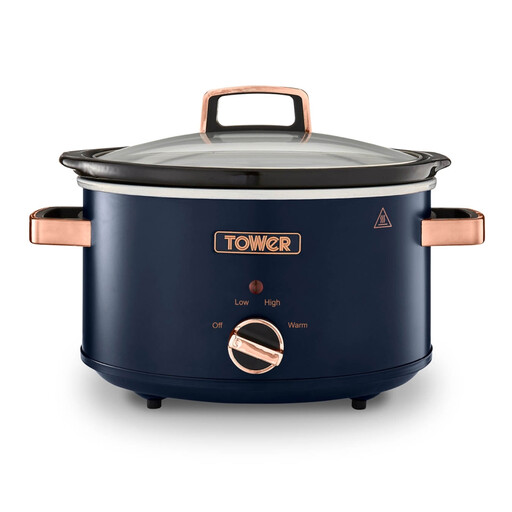 Image unavailable
Tower Cavaletto T16042MNB 3.5L Slow Cooker, Midnight Blue & Rose Gold
Consider this model if you plan several servings or other slow-cooked meals, rather than only one can of beans.
The product name specifies three heat settings, a removable pot and cool-touch handles. Check its dimensions and plug suitability before travelling.
View on Joybuy
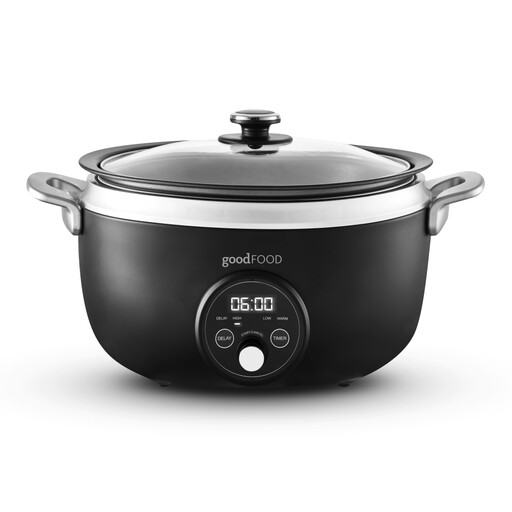 Image unavailable
Tower GF16010 Digital 3.5L Slow Cooker, Black/Stainless Steel
This model is relevant if you will prepare several portions and want time controls for slow-cooked meals.
Its product name specifies 170W, an LED display, a delay function, a timer and a removable aluminium pot. The pot is not suitable for induction hobs; check the cottage hob type if you plan to use it there. Confirm whether the exact model has a keep-warm setting if that matters to you.
View on Joybuy
Common questions
Is a slow cooker worth buying just to heat canned butter beans?
Not solely for an immediate can if the cottage has a suitable hob or microwave you can use. Lakeland and Crock-Pot position their compact cookers for small slow-cooked meals; their descriptions do not establish a rapid-reheating benefit.
What slow-cooker size suits one or two people?
A 1.5–1.8L model is a relevant compact option if you will also prepare slow-cooked meals. Lakeland describes its 1.5L cooker for one or two people, and Crock-Pot positions its 1.8L CSC080 for small households; check the exact model’s exterior dimensions before travelling.
How should I check the beans before serving?
Stir where appropriate and check that the beans are hot throughout. NHS guidance on reheating baby food calls for food to be steaming hot all the way through; follow the instructions for the appliance you are using.
Can a hob-safe slow-cooker pot go on an induction hob?
Not necessarily. Morphy Richards states that the pot on its Sear & Stew 3.5L model is not suitable for induction hobs. Check the instructions for the exact pot and identify the cottage’s hob type before using that feature.
What should I check before using my cooker in a cottage?
Check that use is permitted, inspect the cooker, plug and lead for damage, and follow the appliance instructions on placement and operation. Do not use damaged equipment. Health and Safety Executive guidance addresses maintaining portable electrical equipment to prevent danger; it does not, by itself, establish a guest-specific approval rule.


