Small-batch cabbage-soup cooks
If you usually cook for one or two people, you may want some leftovers without finding space for an unnecessarily large bowl. Ease of cleaning matters too.


Choose the bowl size around the portions of cabbage soup you usually make: a 3.5L cooker is a starting point for smaller batches, while a larger bowl makes more sense for regular household batches or repeated leftovers. After that, look for scheduled cooking if mealtime matters, or a pot approved for your hob if you want to sauté ingredients in the same vessel; extra multi-cooker modes are worth considering only if you will use them.
If you usually cook for one or two people, you may want some leftovers without finding space for an unnecessarily large bowl. Ease of cleaning matters too.
If you prepare ingredients earlier in the day, check whether the cooker can finish near your chosen mealtime and switch to keep-warm automatically. Those are separate features, so look for both if you need both.
If you make soup for a household or several future meals, compare bowl capacities. A hob-compatible pot or additional cooking modes may also matter if you plan to use the appliance for more than slow cooking.
Start with your usual soup quantity, then decide whether timing, one-pot preparation or other cooking functions would change how you use the appliance.
| Concern | What to check | Who this matters to |
|---|---|---|
| Batch size and storage | Compare bowl capacity with your usual portions, the appliance dimensions and its filling guidance. NHS Borders advises filling the bowl between half and three-quarters full in its slow-cooker recipe booklet. | If I want leftovers but have limited cupboard space, I need a bowl that fits the batch I actually cook. Around 36% of consumers put batch size and storage first. |
| Mealtime control | Check separately for scheduled cooking, a timer and automatic keep-warm; a digital display alone does not establish how these work. | When dinner needs to be ready around a fixed weekday schedule, I want controls that fit that mealtime. Roughly 29% of consumers make timing their primary concern. |
| One-pot preparation | Confirm that the removable pot is approved for your specific hob type, and check its cleaning instructions. | If I sauté vegetables before adding the soup liquid, using the same pot could save washing-up. For around 21% of consumers, one-pot preparation comes first. |
| Additional functions | Check which cooking modes the exact model offers and whether you would use them beyond soup. | If I also want to steam, roast or prepare other dishes, those modes may justify a multi-cooker. Additional functions are the leading need for about 14% of consumers. |
A pot that can sauté ingredients will only replace a separate pan if it works on your hob. Morphy Richards specifies that the pot in its Sear & Stew 3.5L is not suitable for induction hobs.
Check hob compatibility for the exact model before buying, particularly if you use induction.
The number of portions varies with the recipe and serving size. NHS Borders uses a 3.5L cooker for recipes yielding 4–6 portions and advises filling its bowl between half and three-quarters full.
Work out your usual portions and leftovers, then compare capacity, bowl dimensions and the appliance’s filling instructions.
For the Russell Hobbs 23200, the manufacturer says warm is for food already cooked and warns against using low to heat food up. Do not assume similarly named settings work identically across models.
Follow the reheating directions in the manual for your exact appliance.
Which? reports differences in ease of use and casing temperature among the slow cookers it tested.
Consider independent test findings where available, and check the manual’s instructions for handles, lid handling and safe placement.
Its range includes programmable slow cookers for larger batches and multi-cookers with additional cooking modes.
Its Sear & Stew 3.5L offers a smaller bowl and a removable pot for hob preparation before slow cooking.
Its 23200 is a 3.5L conventional slow cooker with manual settings.
These choices span smaller and larger slow-cooker bowls, a model with a stated delay function, and a multi-cooker with a slow-cook function. Match the capacity and controls of the exact variant to your cabbage-soup routine.
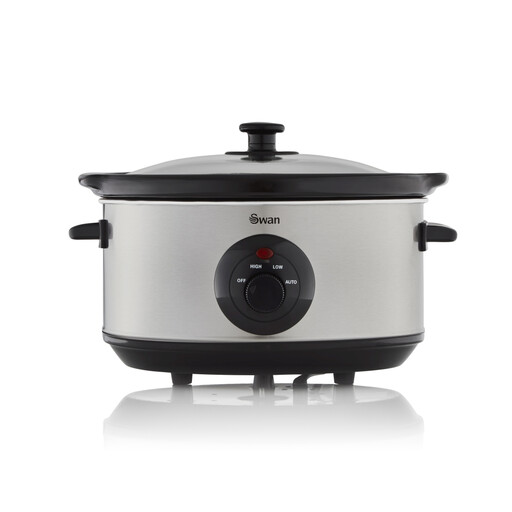 Image unavailable
Consider this for a smaller soup batch, and check the bowl’s filling guidance against your recipe. The listed variant is 3.5L and 200W, with three cooking settings; confirm its exact timing controls if you need soup ready at a set time.
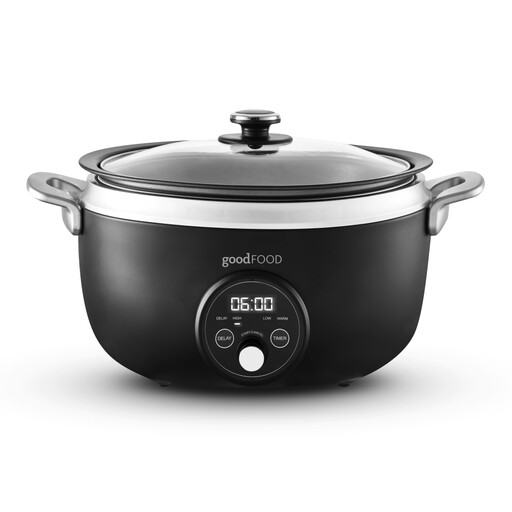 Image unavailable
Consider this if a smaller batch and planned mealtime both matter. The listed variant is 3.5L and 170W, with a removable aluminium pot, delay function and timer. Check how the delay operates and whether the pot is approved for your hob before relying on either feature.
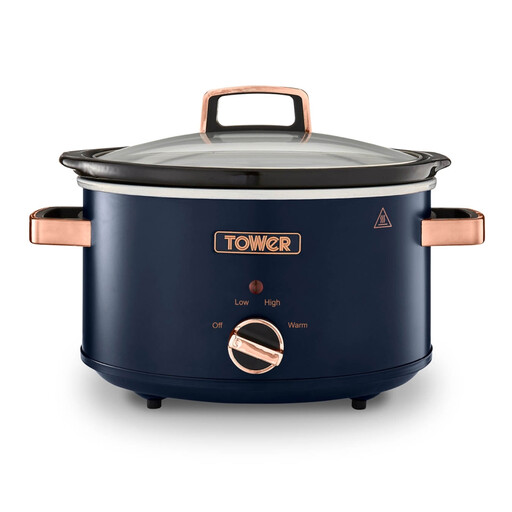 Image unavailable
Consider this for a smaller cabbage-soup batch when straightforward heat controls are the priority. The listed variant has a 3.5L removable pot and three heat settings. Check the filling guidance and exact controls if you need cooking to finish at a chosen time.
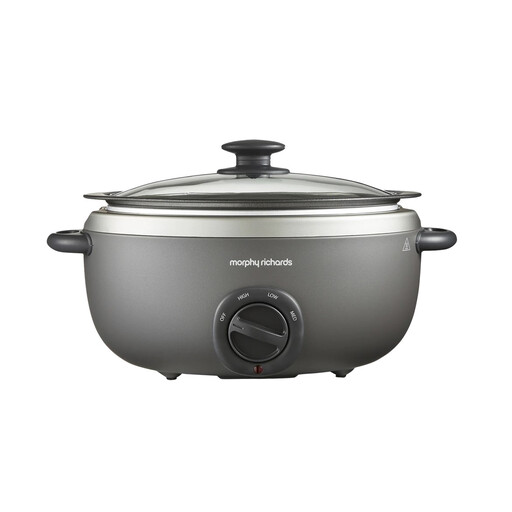 Image unavailable
Consider the 6.5L bowl if you routinely make larger soup batches. If you intend to prepare vegetables on the hob in its pot, confirm compatibility with your hob: this variant is identified as unsuitable for induction. Check the exact controls if keep-warm or scheduled cooking matters to you.
 Image unavailable
Consider this if you want a 6L appliance for soup and will also use other cooking methods. The listed variant has 10 programmes and is described as a pressure cooker, slow cooker, rice cooker and steamer. Check its slow-cook controls and dimensions against your routine and storage space.
Start with a 3.5L model for smaller batches and compare larger bowls if you regularly need more portions or repeated leftovers. NHS Borders bases recipes yielding 4–6 portions on a 3.5L cooker; Crock-Pot describes its 5.6L TimeSelect CSC093 as serving 7 or more. Your soup’s yield will still depend on the recipe and serving size.
Follow the instructions for your exact cooker and ingredients rather than assuming they can. The Russell Hobbs 23200 manual directs users to thaw frozen food completely before adding it to the pot.
Do not treat those settings as universal reheating modes. The Russell Hobbs 23200 manual says warm is for food already cooked and warns against using low to heat food up; check the reheating instructions for your exact appliance.
Follow your cooker’s manual for its filling limits. As recipe guidance, NHS Borders advises filling a slow-cooker bowl between half and three-quarters full and keeping the lid on during cooking.
Check the guarantee and its conditions, the retailer’s return terms, and whether a replacement bowl or lid is available for the precise model. Review those terms for the product you intend to buy rather than assuming they apply across a brand’s range.