Who is each approach for?
The deciding factor is whether heating one can is the whole task or part of the meals you normally cook.
One- or two-portion shared-kitchen users
A compact cooker may suit occasional beans, soups or stews when worktop and cupboard space are limited. Morphy Richards positions its 1.5L slow cooker for one or two people; check the exact model’s dimensions and cleaning instructions against your kitchen arrangements.
Planned slow-meal cooks
A conventional slow cooker suits people using canned beans in longer-cooking stews, curries or batch meals, rather than seeking a quick single-can heat-up. Morphy Richards describes slow cooking as low-temperature cooking over a longer period.
Short-notice hot-food users
If the main task is getting beans hot promptly, compare appliances that explicitly offer a boil function. Russell Hobbs lists boil and slow cook as separate functions on its Good to Go Multi-Cooker; check the capacity and controls of any model you consider.
What matters when choosing?
For canned butter beans in a shared kitchen, decide whether heating time, available space, meal size or food handling is your primary concern before comparing features.
| Concern |
What to check |
Who this matters to |
| Prompt heating |
Look for an explicitly stated boil function if you need short-notice heating. Do not treat keep-warm as a reheating mode. |
When I need one can heated between other people’s use of the kitchen, I cannot plan a slow-cooked meal around it; around 36% of consumers would put prompt heating first. |
| Space and cleaning |
Check external dimensions, storage space and which parts the exact model’s instructions permit you to wash in a dishwasher. |
A cooker used on a shared worktop needs to fit without getting in everyone’s way and be practical to clean afterwards; roughly 29% of consumers would make space and cleaning their primary concern. |
| Meal capacity |
Choose capacity for your usual portions: compare compact 1.5L models with larger cookers when you regularly prepare shared or batch meals. |
If beans are going into stews for several people, I need a bowl sized for those meals rather than for one can; around 21% of consumers would put batch capacity first. |
| Food handling |
Read the can’s heating and storage instructions, agree who handles cleaning and leftovers, and check the rules for using appliances in the kitchen. |
Where food is shared or kept ready to serve, I want clear arrangements for heating, holding and leftovers; roughly 14% of consumers would prioritise food handling and shared-use control. |
Brands to consider for comparison
These ranges illustrate different capacities and functions; compare the instructions for the particular model you might buy rather than assuming a feature applies across a brand.
Morphy Richards
Its Ceramic 1.5L slow cooker is positioned for one or two people, making it relevant to smaller planned meals.
- Morphy Richards lists low, medium and high settings, plus a dishwasher-safe pot and lid, for model 460300.
- That model is a conventional slow cooker; if prompt heating is your priority, compare it with an appliance that explicitly offers boiling.
Russell Hobbs
Its range includes conventional slow cookers in different capacities and the Good to Go 28270 multi-cooker, which lists both boil and slow cook functions.
- Russell Hobbs lists low, high and warm settings for its 7L slow cooker; the 6.5L Good to Go model offers a different set of cooking functions.
- For model 23200, check the exact manual before relying on dishwasher cleaning, as its product information is inconsistent on that point.
Crock-Pot
Its listed slow-cooker range spans a compact 1.8L model and larger capacities, giving planned-meal cooks sizes to compare.
- Crock-Pot lists 1.8L, 3.5L, 4.7L, 5.6L, 6.5L and 7.5L options in its slow-cooker range.
- Check dimensions, cleaning instructions and heat settings for the particular model rather than applying one model’s features to the whole range.
Joybuy electric hot pots to consider
These Plodon electric hot pots offer a different route from a compact conventional slow cooker. Their product descriptions refer to boiling, while their 5L and 7L capacities are more relevant if you also prepare larger portions. Check each model’s heating instructions, dimensions and cleaning requirements before choosing it for a shared kitchen.
 No image available
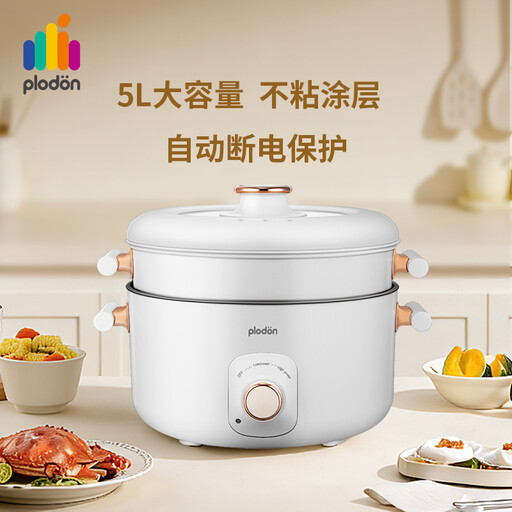
Plodon 1200W 5L electric hot pot with steamer
Consider this model if you want to compare a boiling appliance with a slow cooker and may also cook more than one portion. Its named features include a non-stick cooking pot and dual power control; check the heating instructions, dimensions and pot-cleaning guidance for your shared kitchen.
View on Joybuy
 No image available
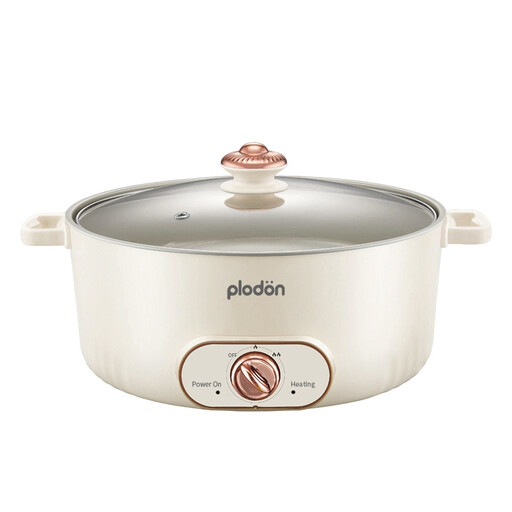
Plodon 1600W 7L electric hot pot, UK plug
Consider this capacity if group meals are also a regular use; it may be more appliance than you need for one can. The product name specifies a non-stick cooking pot. Check the heating instructions, worktop and storage fit, and cleaning guidance before buying.
View on Joybuy
Questions about heating canned butter beans
Does a slow cooker make sense just for heating one can?
Not if getting the beans hot promptly is the main reason for buying it. A conventional slow cooker is designed for cooking at a low temperature over a longer period; compare an appliance with an explicit boil function for short-notice use, and follow the can’s heating instructions.
What slow-cooker size suits one or two people?
A 1.5L model is a compact option to compare for planned meals for one or two. Morphy Richards positions its 1.5L slow cooker for that use and lists dimensions of L20.3 × H23.9 × W21.2 cm; check both worktop and storage space before buying.
When would a 3.5L or 7L slow cooker be worthwhile?
Consider those capacities when you regularly make larger recipes, shared portions or batch meals, rather than heating one can. Russell Hobbs describes its 3.5L model as family-sized and its 7L model as serving up to eight people; compare the bowl size with your usual meals and available space.
Can a removable slow-cooker bowl go in the dishwasher?
Check the exact model’s manual before putting it in the dishwasher. Morphy Richards states that its 1.5L model’s pot and lid are dishwasher-safe, but Russell Hobbs gives conflicting dishwasher-safe information for model 23200.
Can keep-warm replace reheating when food is shared?
No: keep-warm is not a substitute for reheating. The Food Standards Agency’s food-business guidance says food should be properly reheated before hot holding; follow the can’s instructions and the rules that apply to your kitchen.


