Small-batch stock makers
If you make stock for a few meals, you need to clear the shared sink and store the cooker between uses. A compact bowl and parts that are straightforward to wash matter more than capacity you rarely use.


For a modest batch of chicken stock in a shared kitchen, start with a 3.5L slow cooker whose removable bowl and lid you can clean conveniently, then check whether its controls fit your routine. Consider a larger pot only if you regularly make stock to store and have room to cool and refrigerate it. A hob-safe insert is useful if you brown ingredients first, but its compatibility depends on the hob and the exact model.
If you make stock for a few meals, you need to clear the shared sink and store the cooker between uses. A compact bowl and parts that are straightforward to wash matter more than capacity you rarely use.
If you brown ingredients before slow cooking, a compatible hob-safe insert can save a transfer to another pan. Check the exact bowl against your shared kitchen's hob before relying on that feature.
If you make stock for later meals, work back from the containers and fridge or freezer space available for portions. The larger cooker itself also needs a place on the shared worktop and in storage.
Decide how much finished stock you can store, then check cleaning, timing and any browning feature against the space and equipment you share.
| Concern | What to check | Who this matters to |
|---|---|---|
| Cleaning and shared space | Check whether the exact model's bowl and lid are removable and dishwasher-safe, and whether the cooker fits its intended worktop position. | I need to wash up and clear the shared sink soon after portioning stock. Roughly 31% of consumers would put cleaning and shared space first. |
| Cooking schedule | Check the timer range and what the cooker does when cooking ends; a Keep-Warm setting is not a storage plan. | If my routine makes the finish time important, I want controls I can plan around. Around 31% of consumers would make timing their primary concern. |
| Batch size and storage | Match capacity to portions you can cool and refrigerate; allow space for both the appliance and filled containers. | I make stock for several later meals, but I need somewhere to put every portion. Roughly 23% of consumers would prioritise batch size and storage. |
| One-pot preparation | If you brown ingredients first, check whether the insert is hob-safe for your hob type; hob-safe does not necessarily mean induction-compatible. | I would rather brown ingredients without occupying another pan in the shared kitchen. For around 15% of consumers, one-pot preparation would come first. |
A 6.5L cooker is intended for larger batches, which can mean more stock to portion and more containers competing for shared fridge or freezer space.
Choose capacity around the amount you can cool and store after cooking. Keep a larger model for batches you expect to make regularly.
Morphy Richards states that the cited 3.5L and 6.5L Sear & Stew bowls are not suitable for induction hobs.
Check your hob and the instructions for the exact insert before choosing a cooker for browning.
On an induction hob, a separate compatible pan may still be needed for browning.
Keep-Warm can accommodate a delay after cooking, but finished stock still needs a plan for portioning, cooling and refrigerated storage.
Arrange containers and fridge space before cooking, then cool and store the stock promptly when you are finished.
NHS Borders' slow-cooker guidance advises against cooking frozen meat in the appliance.
Thaw chicken thoroughly in the fridge before starting, keeping it covered and separate from ready-to-eat food.
Crock-Pot offers both digital and manual slow cookers relevant to modest stock batches.
The cited 3.5L and 6.5L Sear & Stew models suit cooks considering browning in a removable pot before slow cooking.
Ninja's cited 6L PossibleCooker is an alternative when slow cooking is one of several functions you want in an appliance.
These choices include 3.5L slow cookers for modest batches, a 6.5L Sear & Stew model for larger batches and a 5L multi-cooker with a slow-cook function. Compare their stated controls and cleaning requirements with your kitchen routine.
 No image available
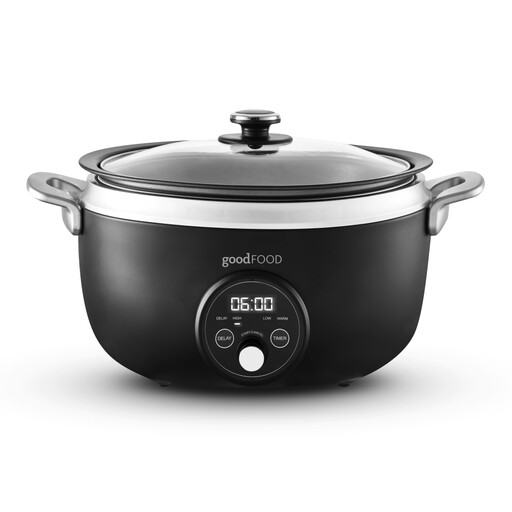
Consider this 3.5L model for modest stock batches if a delay function and timer suit your schedule.
Its title specifies a removable aluminium pot, LED display and 170W rating. Check how the timer ends cooking if you need a defined finish.
If you intend to brown ingredients in the pot, note the stated restriction against using it on an induction hob.
 No image available
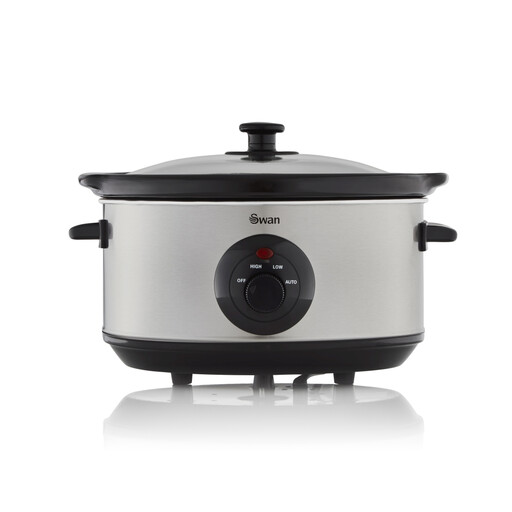
This 3.5L oval cooker is a choice to consider for smaller stock batches.
Its title specifies three cooking settings and a 200W rating. If quick clearing-up or timed finishing is important, check the lid-cleaning instructions and the exact controls.
 No image available
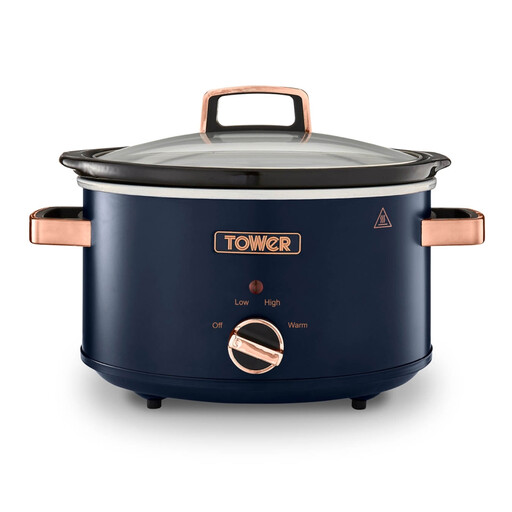
Consider this removable-pot model when modest batch size matters more than a confirmed timed finish.
Its title lists three heat settings and cool-touch handles; the variant is Midnight Blue and Rose Gold. Check the glass lid's cleaning instructions and whether the controls fit your routine.
The product information says not to leave the appliance unattended while it is powered on.
 No image available
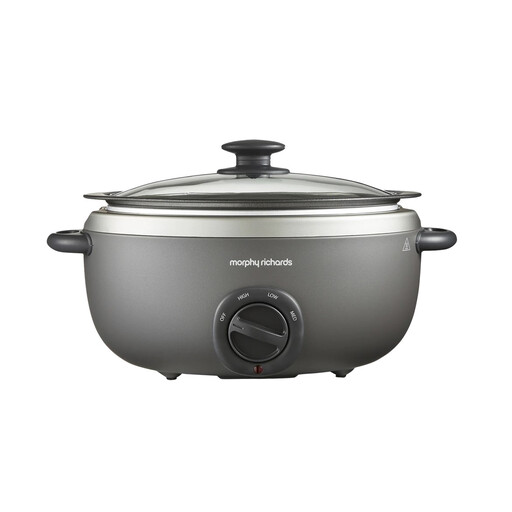
Consider this larger pot if you regularly make stock to portion and have space to cool and store it.
Its title identifies a 6.5L Sear & Stew model. The stated pot restriction excludes induction hob use, so check your hob before planning to sear in it.
Check the exact controls and lid-cleaning instructions if Keep-Warm or dishwasher cleaning of the lid matters to you.
 No image available
Consider this model if you want slow cooking alongside other listed functions rather than a dedicated stock cooker.
Its title lists a 5L capacity and functions including Slow Cook, Steam, Rice and Soup Maker. Check the slow-cook timing and lid-cleaning instructions against your routine.
No: NHS Borders' slow-cooker guidance advises against cooking frozen meat in the appliance. Thaw chicken thoroughly in the fridge before cooking, keeping it covered and separate from ready-to-eat food.
A 3.5L cooker is a starting point for modest batches, provided the amount of finished stock suits your needs. NHS Borders bases its slow-cooker recipes on a 3.5L appliance for four to six portions, though the amount of stock you make depends on your recipe. Choose a larger pot only if you can manage the resulting batch and store its portions.
No; it is useful if you want to brown ingredients in the insert before slow cooking, but browning is optional. Check the exact bowl against your hob: Morphy Richards says its cited Sear & Stew bowls are not suitable for induction.
Keep raw chicken and anything it touches separate from ready-to-eat food, and clean shared preparation surfaces and equipment after use. The Food Standards Agency identifies chicken as a common vehicle for Campylobacter infection; its guidance on shared facilities calls for identifying and controlling points where raw and ready-to-eat foods could cross-contaminate.