Weekly bean-stew batch cooks
If you cook several portions for later meals, pot capacity, handling and the routine of portioning and storing the stew matter more than extra cooking modes.


For several portions of canned haricot bean stew, start by comparing the amount your recipe makes with the capacity of the cooker: Morphy Richards positions its 6.5L models for batch cooking, while Crock-Pot describes its 5.6L TimeSelect as serving seven or more people. Choose a timer and automatic keep-warm function if serving time varies; if you manage the finish yourself, simpler controls may suffice. A hob-safe pot matters chiefly when you sauté ingredients before slow cooking, and its compatibility with your hob needs checking.
If you cook several portions for later meals, pot capacity, handling and the routine of portioning and storing the stew matter more than extra cooking modes.
If your return time varies, a programmable timer and automatic keep-warm function can help you plan when the stew is ready to serve. Portions for later meals still need cooling and storage.
If you sauté vegetables or spices before adding the beans, a pot suitable for your hob can avoid a transfer from a separate frying pan. Check the exact pot’s hob compatibility.
Decide how many portions you will store before choosing a capacity, then consider whether your finishing time and preparation method justify additional controls or a hob-safe pot.
| Concern | What to check | Who this matters to |
|---|---|---|
| Batch capacity and storage | Compare the stated litre capacity and external dimensions with your usual recipe and storage containers; check whether the pot and lid are dishwasher-safe. Morphy Richards positions its 6.5L models for batch cooking, while Crock-Pot describes its 5.6L TimeSelect as serving seven or more people. | I want enough stew for later meals without choosing a cooker that overwhelms my worktop; around 40% of consumers put making and storing several portions first. |
| Finish-time control | Check what the exact model’s timer controls and whether keep-warm starts automatically. Keep-warm is a serving feature, not a storage routine. | When I cannot predict when I will get home, I need the cooking end point to fit my schedule; roughly 30% of consumers prioritise timing control. |
| One-pot preparation | Confirm that the cooking pot is approved for your hob type and check its care instructions. Morphy Richards says the Easy Time pot is hob-safe but unsuitable for induction hobs. | If I sauté ingredients before adding the beans, I would rather not transfer them between pans; about 20% of consumers put one-pot preparation first. |
| Size and simple controls | Compare pot capacity, appliance dimensions and control type with the batch you actually make. Lakeland lists smaller-capacity cookers alongside its larger models. | For a modest batch in a small kitchen, I would rather manage a straightforward cooker than make room for capacity I will not use; approximately 10% of consumers prioritise a proportionate size and simple controls. |
Keep-warm can hold a finished stew for serving, but portions intended for later meals need a separate cooling and storage routine.
NHS guidance on batch-cooking baby food advises cooling food ideally within one to two hours, then refrigerating or freezing it. Treat that as cautious storage guidance rather than a slow-cooker-specific rule.
A removable pot is not necessarily hob-safe. Morphy Richards states that its Easy Time pot can be used on a hob but is not suitable for induction.
If sautéing in the slow-cooker pot matters to you, confirm the exact model’s permitted hob types before buying.
An incompatible pot means using a separate frying pan for that preparation step.
The amount you want to portion for later meals may differ from a manufacturer’s suggested serving count. A larger cooker also needs more worktop and storage space.
Compare your usual recipe volume with the stated pot capacity, then check the appliance’s external dimensions.
A wattage figure does not, by itself, establish how a particular cooker will handle your recipe or how easy its controls will be to use.
Confirm the exact model’s capacity and functions first; if heat control and ease of use will decide your purchase, look for independent assessments of that model.
Its 6.5L models provide a comparison between straightforward controls and additional timing or pot features.
Its 5.6L TimeSelect CSC066 is relevant if scheduling a meal matters alongside batch capacity.
Its listed slow-cooker sizes offer a useful starting point for comparing modest batches with larger ones.
Consider the exact model if you are comparing a multicooker with a dedicated slow cooker.
These choices include dedicated slow cookers and multicookers with a slow-cook function. Compare each stated capacity with the portions you plan to store, especially for the 3.5L and 5L options.
 No image available
Consider this multicooker for a moderate batch if you also want cooking functions beyond slow cooking.
The product name lists a 5L capacity and slow-cook and stew functions. Check that 5L fits your usual number of portions, and confirm how its timing controls work for slow cooking if you need a scheduled finish.
 No image available
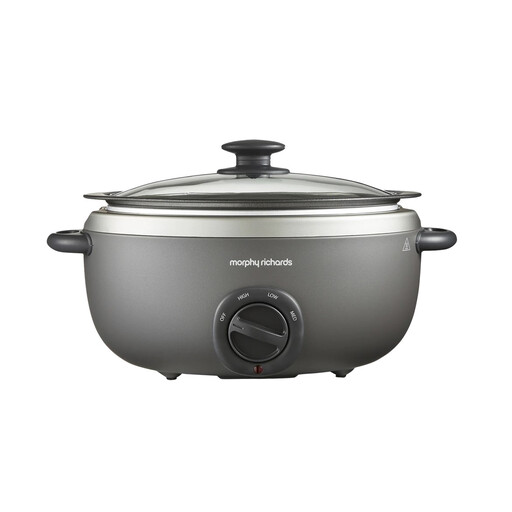
The stated 6.5L capacity makes this a model to compare when you want several portions from one cook.
The product name identifies it as a Sear & Stew slow cooker. Do not use its pot on an induction hob; if same-pot hob preparation or scheduled cooking matters, confirm the exact pot instructions and timing controls.
 No image available
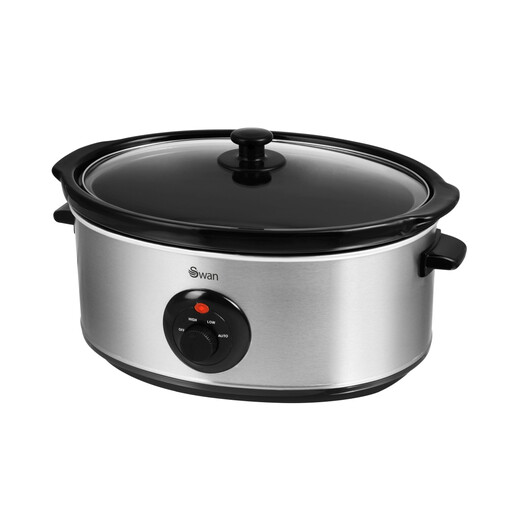
Compare this 6.5L slow cooker with your usual batch volume if making several portions at once is the priority.
Check its exact timer and pot-care instructions if planned finish times or washing-up will affect your choice. Keep-warm, where available, does not replace cooling and storing portions for later meals.
 No image available
Consider this multicooker if you want a stated 5.7L capacity and a slow-cook option alongside other cooking functions.
Its product name also lists a sauté function. Check the slow-cook timing controls for your schedule; if using its separate pressure-cooking function, follow the model’s fill-limit and pressure-release instructions.
 No image available
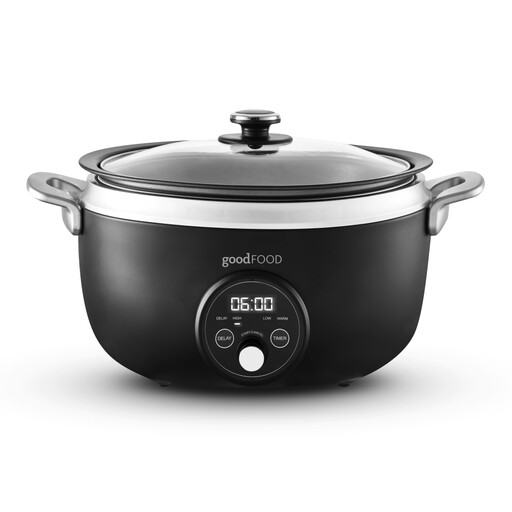
This smaller cooker is worth comparing if your planned batches fit 3.5L but you still want digital timing controls.
The product name lists a delay function and timer. Its aluminium pot is not suitable for induction hobs; check the pot instructions before using it for hob preparation, and confirm keep-warm behaviour if serving time may change.
Start with the volume your usual recipe makes and the number of portions you intend to store. For a larger batch, Morphy Richards positions its 6.5L models for batch cooking, while Crock-Pot describes its 5.6L TimeSelect as serving seven or more people; also check the cooker’s external dimensions.
A timer is useful when you cannot reliably manage the end of cooking yourself. Check what the exact model’s timer controls and whether keep-warm starts automatically; neither feature replaces cooling and storing portions intended for later meals.
Only use the pot on a hob if the instructions for that exact model permit it and include your hob type. Morphy Richards says its 461021 Easy Time pot is hob-safe but unsuitable for induction; do not assume the same instructions apply to another model.
Portion and cool the stew before refrigerating or freezing it. NHS guidance on batch-cooking baby food advises cooling food ideally within one to two hours before storage; it is a cautious household reference, not a slow-cooker-specific rule.
Check the identity of the cooker and seller and the applicable product-safety information before buying. The Office for Product Safety and Standards states that the Electrical Equipment (Safety) Regulations 2016 set requirements for electrical equipment placed on the Great Britain market; do not apply that GB-specific statement unchanged to Northern Ireland.