Weekly soup batch cooks
If one pot of minestrone needs to cover several meals, consider the cooker’s capacity alongside the space and containers needed to store the finished soup.


For several portions of canned-bean minestrone, compare removable-pot slow cookers around 6–7.5L, then decide whether a timer matters for your serving time. If you regularly soften onion, celery and carrot before slow cooking, consider a hob-safe pot or a built-in sauté function; otherwise, a straightforward large cooker avoids controls you may not use. Keep-warm helps with serving, but soup saved for later meals still needs prompt cooling and cold storage.
If one pot of minestrone needs to cover several meals, consider the cooker’s capacity alongside the space and containers needed to store the finished soup.
If you like to soften onion, celery and carrot before adding the rest of the soup, a suitable hob-safe pot or built-in sauté function may save a transfer from a separate pan.
If dinner time moves, check whether a model’s timer and keep-warm controls suit the way you serve freshly cooked soup. Plan separately for portions you intend to keep.
For batch-cooked minestrone with canned beans, settle on a manageable batch size first. Then choose between simpler timed cooking and a pot that also suits your vegetable-preparation routine.
Choose it when: You want a sizeable soup batch and straightforward slow-cooking controls; Crock-Pot describes its 7.5L CSC063 with a timer and automatic keep-warm.
Trade-off: If you sauté vegetables first, you may need a separate pan, and a larger cooker takes more storage space.
Choose it when: You want to sauté vegetables in a removable pot before slow cooking; Morphy Richards describes this approach for its 6.5L Sear & Stew Hinged Lid model.
Trade-off: Check your hob type against the exact pot: Morphy Richards says that cited model’s pot is not suitable for induction hobs.
Choose it when: You expect to use functions beyond slow cooking; Instant Pot lists slow cook, steam, sauté/sear and keep-warm on its 7.1L Superior Slow Cooker.
Trade-off: Extra functions and controls may be unnecessary if canned-bean minestrone is your main use.
| Concern | What to check | Who this matters to |
|---|---|---|
| Batch size and storage | Compare stated capacity and removable-pot handling; plan containers for the portions you will keep. | If I make several meals at once, I need enough room for the soup and somewhere to chill the portions afterwards. Around 46% of consumers would put batch size and storage first. |
| Serving-time flexibility | Check the exact model’s timer range and whether it switches to keep-warm after cooking. | When dinner time changes, I want the soup ready to serve without treating keep-warm as storage for the rest. Roughly 27% of consumers would prioritise serving-time flexibility. |
| One-pot preparation | Check for a built-in sauté function or a removable pot compatible with your hob; confirm cleaning instructions. | I prefer to soften vegetables without washing another pan, provided the pot works with my hob. About 27% of consumers would make one-pot preparation their main concern. |
A large cooker can make more soup, but it also needs cupboard space and leaves more portions to handle once cooking finishes.
Choose a capacity that fits both your intended batch and the fridge or freezer containers you can use. Have containers ready before the soup finishes cooking.
A removable pot only saves a pan if it is compatible with the hob on which you plan to sauté.
Check the exact model’s instructions before buying. Morphy Richards specifies that the hob-safe pot on its cited 6.5L Sear & Stew Hinged Lid model is not suitable for induction hobs.
Keep-warm is a serving feature, not a plan for soup intended for later meals.
For households in England, Northern Ireland and Wales, GOV.UK advises cooling cooked food and refrigerating it within one to two hours. Eat refrigerated leftovers within 48 hours or freeze them if you will not use them by then.
Heating more soup than you will eat creates another cooling and reheating cycle for the remaining portions.
Reheat the portion you need until it is steaming hot throughout. The Food Standards Agency advises reheating leftovers only once.
Its 7.5L CSC063 is a conventional digital slow cooker that Crock-Pot UK positions for batch cooking.
Its 6.5L Sear & Stew Hinged Lid model is relevant to cooks who want to prepare vegetables in a removable pot before slow cooking.
Its 7.1L Superior Slow Cooker is an option to examine if you want functions beyond conventional slow cooking.
Its 6L model 22750 is relevant if scheduling the start of a family-sized batch matters to you.
These models cover larger pots for several portions and smaller pots to consider when your intended batch is more modest. Compare each model’s controls and pot instructions with the way you prepare your minestrone.
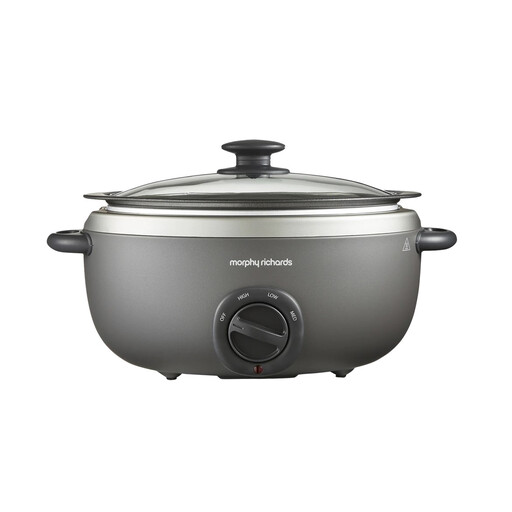 Image unavailable
Consider this 6.5L model if you want a larger soup batch and are interested in preparing vegetables before slow cooking.
Check the 461022 pot’s compatibility with your hob, particularly if you have induction, and confirm its keep-warm controls if your serving time varies.
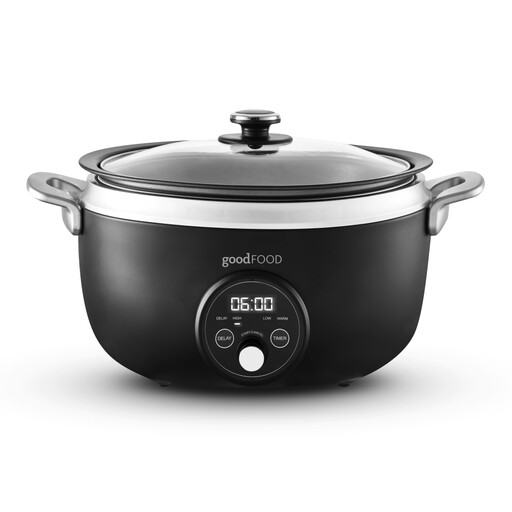 Image unavailable
This 3.5L model is worth comparing if you make a smaller batch but want scheduling controls.
Its product name specifies a delay function, timer and LED display. Check whether the pot suits your hob and whether 3.5L accommodates your planned portions.
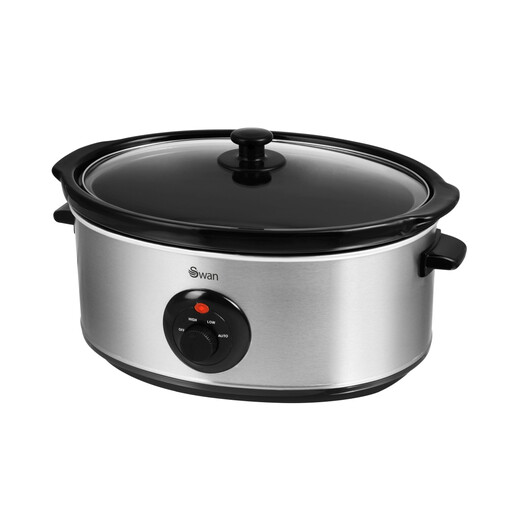 Image unavailable
The stated 6.5L capacity makes this a model to compare for several portions of minestrone.
If you plan to sauté vegetables before slow cooking or need a timer, check the exact model’s controls and pot instructions before deciding.
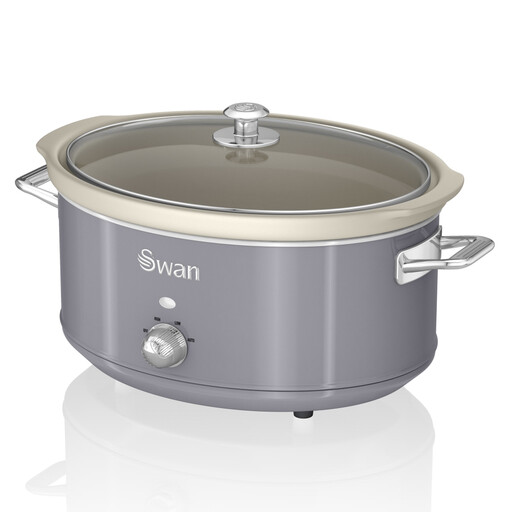 Image unavailable
Consider its 6.5L capacity if you want to make minestrone for more than one meal.
The product name specifies three temperature settings and keep-warm. Check the pot’s care instructions if dishwasher cleaning matters, and confirm whether its controls suit your cooking schedule.
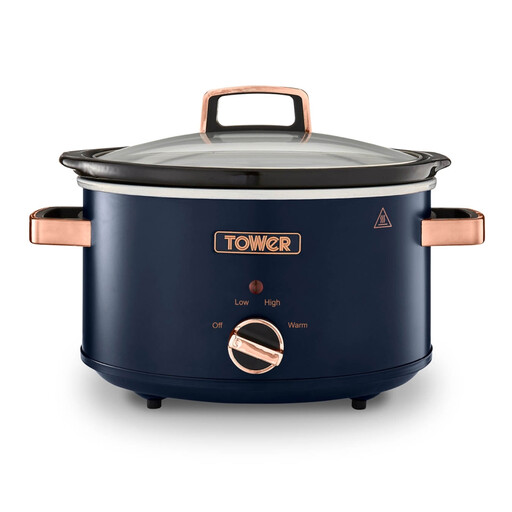 Image unavailable
This 3.5L cooker is a smaller-batch choice to compare with the 6.5L models if cupboard space or portion size matters more to you.
Its product name specifies three heat settings, a removable pot and cool-touch handles. Check whether its capacity fits the amount of soup you intend to store.
Start by comparing models around 6–7.5L if you want several meals from one batch. Crock-Pot, Morphy Richards and Instant Pot describe models in that range for larger meals or batch cooking, but stated bowl capacity is not a promise that you can fill it to the rim. Allow room to stir and check that you can store the portions you make.
No; the sauté decision is about how you prefer to prepare the vegetables, not a reason to cook canned beans from dry. A suitable hob-safe pot or built-in sauté function can avoid a separate pan. If a frying pan suits your routine, a conventional slow cooker remains an option; check hob compatibility for any removable searing pot.
Keep-warm is for serving convenience, not leftover storage. For England, Northern Ireland and Wales, GOV.UK advises cooling cooked food and putting it in the fridge within one to two hours, then eating refrigerated leftovers within 48 hours or freezing them. Divide a large batch into smaller containers rather than leaving it to cool in the full pot.
Reheat the portion you intend to eat until it is steaming hot throughout. The Food Standards Agency advises reheating leftovers only once, so portioning the batch before storage makes it easier to heat only what you need.