Weekly batch-cooking households
You want one casserole to provide several portions for later, making bowl capacity, portioning and clean-up important.


For regular pork-casserole batch cooking, start with the number of portions you want and a slow cooker that can hold the ingredients without filling the bowl to the brim. A hob-safe pot is useful if you routinely brown pork and vegetables before slow cooking; otherwise, a simpler removable bowl may suit you. Check the exact model’s hob compatibility, dimensions, controls and cleaning instructions before choosing.
You want one casserole to provide several portions for later, making bowl capacity, portioning and clean-up important.
You prefer to brown pork and vegetables before slow cooking without transferring them between pans. The cooking pot must suit your particular hob.
Your serving time can move, so the exact model’s timer and keep-warm behaviour matter alongside its capacity.
Work out how much casserole you intend to portion first. Then decide whether browning in the cooking pot, a flexible serving time or easier clean-up will make the biggest difference to your routine.
| Concern | What to check | Who this matters to |
|---|---|---|
| Batch capacity | Match the bowl and appliance dimensions to your intended portions. NHS Borders advises filling a slow-cooker bowl between half and three-quarters full. | I want enough casserole for several later meals without crowding the bowl; around 36% of consumers put usable batch capacity first. |
| One-pot browning | Check whether the exact cooking pot can be used on your hob, particularly if it is induction. | Browning pork and vegetables in the cooking pot would spare me a transfer between pans; roughly 29% of consumers make that their main concern. |
| Serving time | Check the timer range and whether keep-warm starts automatically; follow the appliance instructions for cooking and holding food. | When dinner time moves, I need to know what the cooker does after its cooking cycle; about 21% of consumers prioritise that flexibility. |
| Clean-up and storage | Check which parts are removable or dishwasher-safe and whether the appliance fits your storage space. | I need to portion the casserole and put the cooker away without an awkward clean-up; around 14% of consumers place that practical routine first. |
The stated capacity is not a target fill level. NHS Borders advises keeping a slow-cooker bowl between half and three-quarters full.
Estimate the volume of pork, vegetables and sauce for your usual batch, then check the maker’s fill instructions and the appliance dimensions.
Compatibility differs by model: Morphy Richards excludes induction for its 6.5L Sear & Stew pot, while Crock-Pot lists gas, electric and induction compatibility for the CSC112 bowl.
Check the exact model and pot against your hob rather than relying on the words ‘hob-safe’.
A keep-warm setting does not establish that pork has cooked through or that finished portions can remain in the cooker indefinitely.
Follow the recipe and appliance instructions for cooking, then cool, portion and store leftovers safely.
NHS Borders advises against cooking frozen meat in a slow cooker.
Plan ahead to thaw pork thoroughly in the fridge on a tray, keeping it separate from ready-to-eat food during preparation.
Its relevant models range from conventional large slow cookers to digital options for batch cooking.
Its 6.5L Sear & Stew model is relevant if browning ingredients in the cooking pot is part of your method.
The 7.1L Superior Slow Cooker is an option to examine for larger batches and additional cooking functions.
The PossibleCooker is relevant if you are considering a multi-cooker rather than a dedicated slow cooker.
These slow cookers offer stated capacities of 6.5L or 3.5L. Compare them against the volume of your usual pork-casserole batch; if browning, timing or a particular hob matters, check the exact model’s instructions before choosing.
 No image available
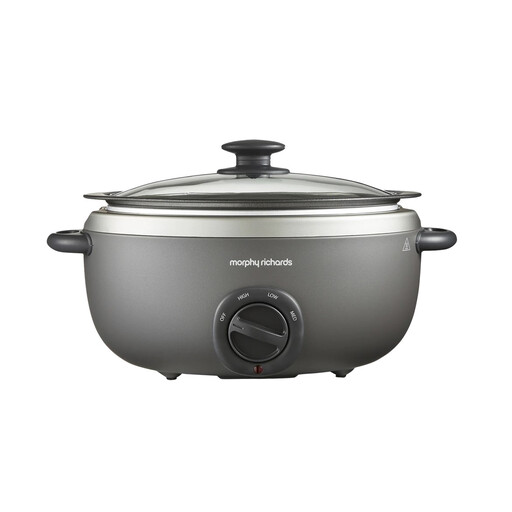
Consider this 6.5L oval model if browning before slow cooking is part of your casserole routine. Check the pot’s compatibility with your hob, especially induction, and confirm timer behaviour if you need scheduled cooking.
 No image available
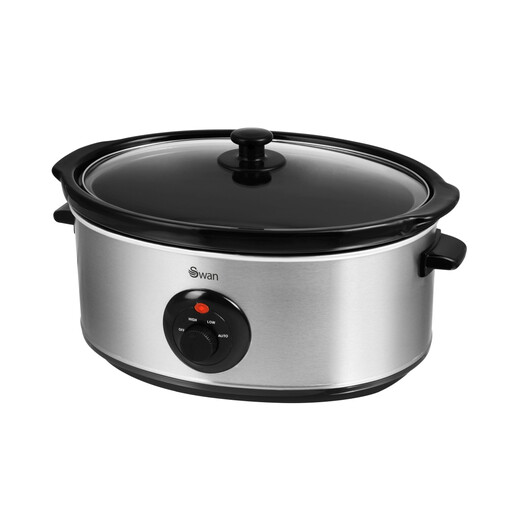
The stated 6.5L capacity makes this a model to compare with the volume of your planned casserole. If you want to brown ingredients in its pot or set a programmable cooking time, confirm those functions for this exact model before choosing.
 No image available
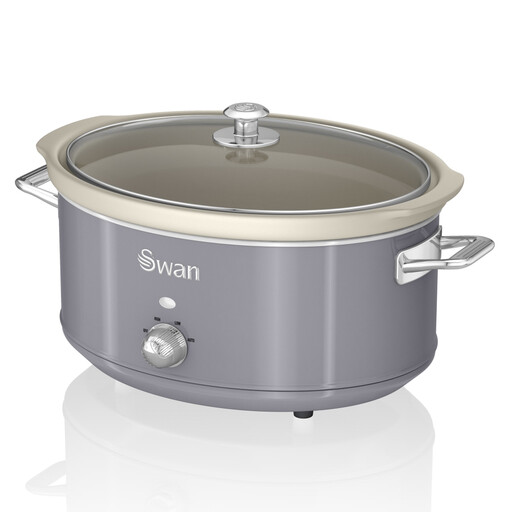
Consider this 6.5L model for a casserole batch that fits the maker’s fill guidance. Its name specifies three temperature settings and a keep-warm function; check its dimensions, cleaning instructions and timer behaviour against your routine.
 No image available
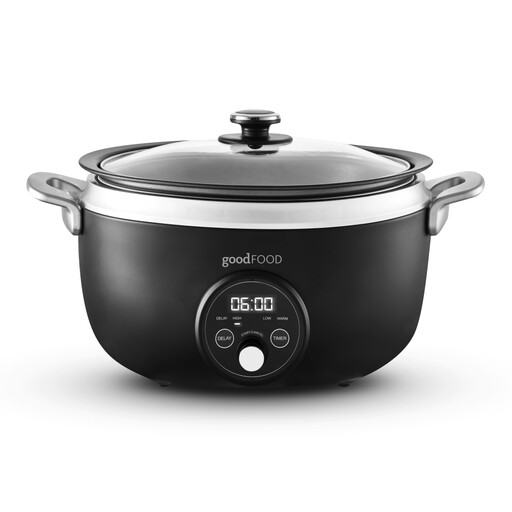
This 3.5L model is worth considering if your intended batch fits a smaller bowl. Its name specifies a removable aluminium pot, LED display, delay function and timer. Check the pot against your hob type and allow room below the maximum fill level.
Choose by the volume of your intended portions, not a fixed litre rule. Crock-Pot describes its 6.5L SCV655B as serving six or more people, while Instant Pot describes up to 10 portions for its 7.1L Superior Slow Cooker; actual portions depend on your recipe. NHS Borders advises filling a slow-cooker bowl between half and three-quarters full.
No; choose a sear-capable pot if browning in the same vessel suits your recipe and saves you a transfer between pans. Check hob compatibility by exact model: Morphy Richards excludes induction for its 6.5L Sear & Stew pot, whereas Crock-Pot lists induction compatibility for the CSC112 bowl.
Make sure the pork cooks all the way through, then cool and store the portions safely rather than relying on keep-warm for storage. GOV.UK’s food-hygiene guidance for businesses gives a standard core-temperature check of 70°C for two minutes; follow your recipe and appliance instructions when cooking at home.
Prepare and refrigerate the ingredients separately unless your appliance instructions specifically direct otherwise. NHS Borders advises against using a stoneware slow-cooker bowl for overnight preparation because it may affect heating or damage the bowl.