Compact-cottage cooks
If you are making stew mainly for one or two people, a smaller cooker may fit your luggage and available worktop more readily. Crock-Pot and Quest both position their compact models for small households.


For a modest canned haricot-bean stew for one or two people, start with a 1.5–1.8L slow cooker rather than carrying a larger pot to the cottage. Consider 3.5L when you are feeding a group or planning leftovers; a hob-safe pot is worth considering only if you will sauté ingredients first and the property has a compatible hob.
If you are making stew mainly for one or two people, a smaller cooker may fit your luggage and available worktop more readily. Crock-Pot and Quest both position their compact models for small households.
If several people will eat together, or you plan to make leftovers during the stay, compare the intended batch with a larger cooker. Morphy Richards and Russell Hobbs both list 3.5L models.
If you want to sauté onions or other ingredients before slow cooking, a suitable hob-safe pot could save a transfer between pans. Check the cottage hob first: Morphy Richards says the pot on its 460012 model is not suitable for induction hobs.
Start with the amount of stew you intend to cook. Once the capacity fits, check the controls, cleaning arrangements and kitchen setup you will actually have at the cottage.
| Concern | What to check | Who this matters to |
|---|---|---|
| Compact capacity | Compare 1.5–1.8L capacity with your planned portion and the model’s fill instructions; check its dimensions against your luggage and worktop. | If I am cooking for one or two, I want enough room for the stew without carrying an unnecessarily large appliance; around 39% of consumers put compact capacity first. |
| Controls and kitchen safety | Check the available heat settings, the condition of the lead and the property’s instructions for appliance use. Electrical Safety First advises against overloaded sockets and leaving electrical appliances on unattended. | In an unfamiliar kitchen, I need controls I understand and a safe place to use the cooker. For around 23% of consumers, those checks are the primary concern. |
| Shared-meal capacity | Compare the number of diners and planned leftovers with a 3.5L model, then follow its fill guidance. FoodSafety.gov gives a general guide of filling a slow cooker between half and two-thirds full. | When several people will eat, I need the planned batch to fit rather than choosing capacity for portability alone; around 23% of consumers prioritise shared-meal volume. |
| Preparation and cleaning | Check whether the pot and lid can be removed and washed as you intend. If you want to sauté in the pot, confirm its approved hob types. | With limited cottage cookware and a kitchen to clear before departure, I would value fewer pans to wash; one-pot preparation and cleaning come first for around 15% of consumers. |
A 3.5L cooker gives you room for a shared meal, but it takes more space to carry and store. FoodSafety.gov’s general guidance is to keep a slow cooker between half and two-thirds full.
Choose around 1.5–1.8L for a modest one- or two-person batch; consider 3.5L for guests or planned leftovers, and follow the chosen model’s fill instructions.
Morphy Richards says the hob-safe pot on its 460012 model is not suitable for induction hobs. A searing feature may therefore be of no use on the cottage’s hob.
Check both the property’s hob type and the exact pot instructions before choosing a cooker for one-pot sautéing.
A keep-warm setting does not establish that raw ingredients have cooked safely. This matters if your bean stew also contains raw meat, poultry or seafood.
Follow the recipe and appliance instructions, start cooking promptly after preparation, prevent cross-contamination and use a food thermometer where appropriate.
An unfamiliar worktop or socket may not suit the appliance. Electrical Safety First warns against damaged leads, wet hands, overloaded outlets and leaving electrical appliances on unattended.
Inspect the cooker and cable, use a dry, stable position away from the sink, and follow the property’s rules and the appliance instructions.
These brands provide useful model-specific points of comparison; check the particular cooker rather than assuming every model from a brand has the same features.
Crock-Pot positions its 1.8L CSC080 for couples and individuals.
Quest describes its 1.5L slow cooker as an option for individuals or small families.
The Sear & Stew 460012 is a 3.5L option for a larger batch and for recipes that begin with sautéing.
Russell Hobbs lists its 23200 as a 3.5L ceramic slow cooker with low, high and keep-warm settings.
These cookers and the multi-cooker range from 3.5L to 6.5L. Compare them if you expect a shared meal or leftovers; for a small one- or two-person bean stew, check whether the batch meets the chosen appliance’s fill instructions before selecting a larger pot.
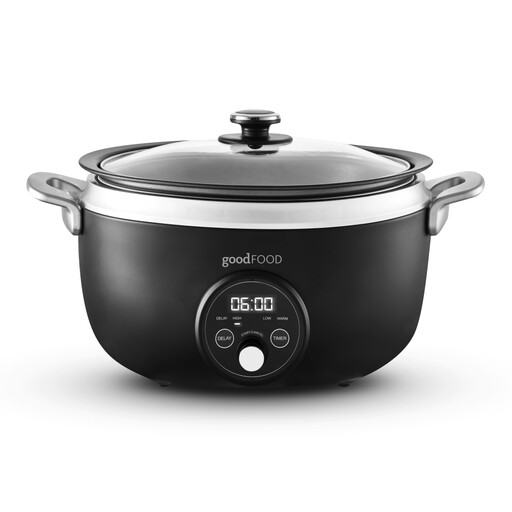 No image available
Consider this size for a shared bean stew or planned leftovers rather than a very small batch.
The product title lists a removable aluminium pot, 170W rating, LED display, delay function and timer. Check the pot instructions and cottage hob type if you intend to sear ingredients in it.
 No image available
Its larger vessel is worth considering if your cottage cooking extends beyond a small bean stew.
The product title lists stew and slow-cook functions among its cooking modes. Check the manual’s fill instructions against the amount you intend to make.
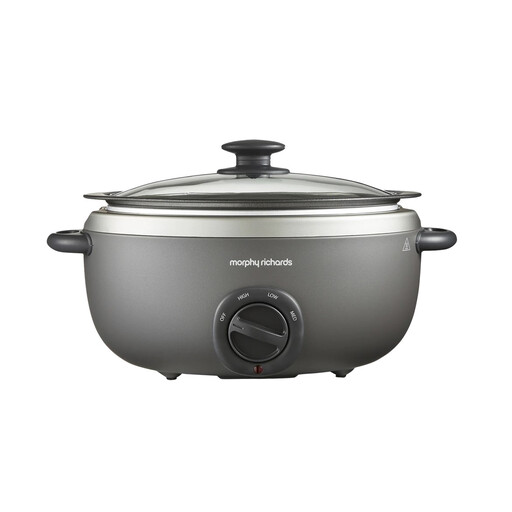 No image available
Consider this model only if your planned meal calls for a substantially larger pot than a small cottage bean stew.
Its stated capacity is 6.5L. If searing in the pot matters to you, check the instructions for this exact model and the cottage hob type; do not assume the hob guidance for another Sear & Stew model applies.
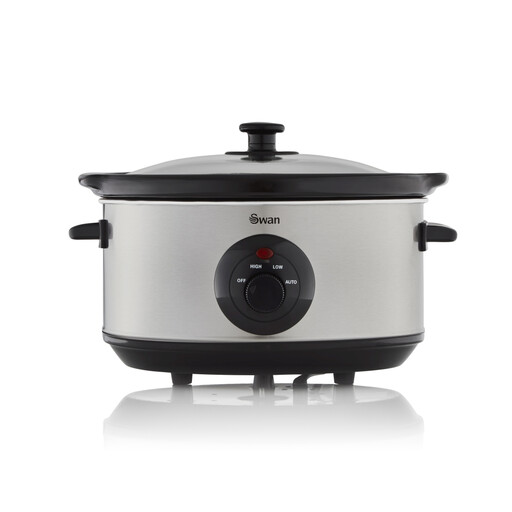 No image available
This 3.5L option is more relevant to a shared stew or planned leftovers than to a very small portion.
The product title states a 200W rating and three cooking settings. Check the manual for the settings and fill level appropriate to your recipe.
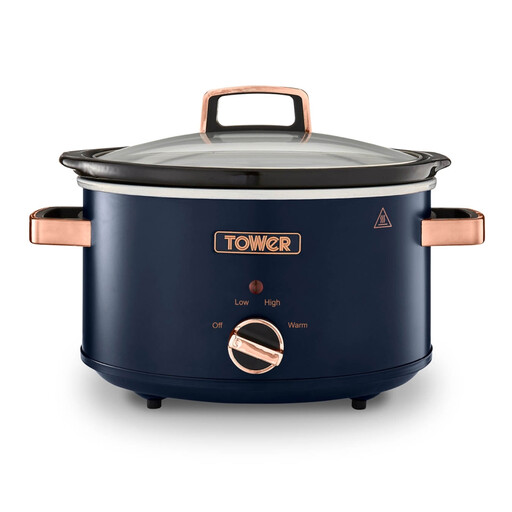 No image available
Consider this capacity when several people will share the stew or you intend to make leftovers.
The product title lists three heat settings, a removable pot and cool-touch handles. Its seller instructions say not to leave the powered cooker unattended; follow those instructions when planning your day at the cottage.
Start with 1.5–1.8L for a modest one- or two-person stew, and consider 3.5L for several diners or planned leftovers. Quest positions its 1.5L model for individuals or small families, while Crock-Pot positions its 1.8L CSC080 for couples and individuals; whichever you choose, check the manual’s fill guidance against your recipe.
No, not if you plan to combine the canned beans and other ingredients without sautéing them first. If you do want to sauté in the cooking pot, check the exact model and the cottage hob: Morphy Richards says its 460012 pot is not suitable for induction hobs.
Do not assume you can leave a cooker running unattended at a holiday cottage. Electrical Safety First advises against leaving electrical appliances on unattended; follow the property’s rules and the instructions for your cooker, and check the appliance, cable and socket before use.