For vegetable stock in a shared home, start by considering a 3.5L slow cooker with a removable bowl, and check whether the bowl and lid are dishwasher-safe if washing-up space is tight. A timer helps when people need a clear handover; a larger multicooker makes more sense if you will use its other programmes and have room to store and clean it. For a workplace kitchen, get the kitchen operator’s approval and check the exact appliance’s intended use before buying.
Who needs which features?
People making stock in a shared home
If several people use the same sink and worktop, a removable bowl makes it easier to clear the cooker after use. Check the exact model’s cleaning instructions for both bowl and lid; Crock-Pot and Tower describe dishwasher-safe parts on particular models, not across every cooker they make.
People cooking around different schedules
A cooking timer can make the planned finish time clearer when housemates come and go. Agree who will clear the cooker and refrigerate any stock being saved: keep-warm does not take care of those jobs.
People using a staff kitchen
Ask the kitchen operator whether plug-in cooking appliances are permitted, then check the exact manual’s intended-use wording. The Health and Safety Executive says employers sharing a workplace must coordinate safety measures; Tefal’s published instructions for one household multicooker exclude staff-kitchen use.
What matters when choosing?
Manual 3.5L slow cooker
Choose when: Stock is an occasional, modest batch and someone can take responsibility for switching off and clearing the cooker.
Trade-off: Manual controls do not provide a programmed finish time.
Digital 3.5L slow cooker
Choose when: A set cooking duration would help people coordinate use of the kitchen; the Crock-Pot CSC060 also has a hinged lid.
Trade-off: A timer and keep-warm function still leave someone responsible for storing leftover stock.
5L multicooker with slow cook
Choose when: You will make larger batches and also use programmes such as rice or steaming; Tefal lists these alongside slow cooking on the RK302E15.
Trade-off: Plan space for the larger bowl, its cleaning and the finished stock. Check the exact manual before considering any multicooker for a staff kitchen.
For vegetable stock in a shared kitchen, decide how much you can store and who will clear the cooker before choosing between simpler controls and a scheduled finish.
| Concern |
What to check |
Who this matters to |
| Cleaning and shared space |
Check whether the bowl is removable and whether the supplied bowl and lid are each dishwasher-safe. |
When sink and worktop space is shared, I want to clear up without leaving a bowl or wet lid in someone else’s way. Around 31% of consumers put easy cleaning and shared-space management first. |
| Batch capacity |
Compare the stated bowl capacity with the stock you can portion and store; consider where the cooker itself will go. |
I want enough stock for later meals, but only as much as I can fit into containers and shared storage. Roughly 31% of consumers make batch capacity their primary concern. |
| Timing and handover |
Check for a cooking timer and consider who will take over when cooking ends. |
If I start stock before going out, I need other kitchen users to know when the cooker is due to finish and who will deal with it. Around 23% of consumers prioritise timing and handover. |
| Simple controls |
Check the available heat settings and whether you need a programmed finish time. |
When I mainly make stock, I would rather agree a switch-off time than learn extra programmes I will rarely use. Approximately 15% of consumers put straightforward operation first. |
What can cause problems?
-
Assuming a household cooker is suitable for a staff kitchen
Intended-use restrictions can matter even when an appliance is practical at home. Tefal’s published instructions for one household multicooker exclude staff kitchens, while the Health and Safety Executive calls for coordination where employers share a workplace.
Ask the kitchen operator for approval and read the intended-use and warranty terms for the exact model before purchasing it for work.
-
Choosing a large bowl without planning where the stock will go
A bigger batch needs containers and space to chill it. A Food Standards Agency-hosted literature review reports the recommendation to refrigerate leftovers within two hours.
Choose a capacity you can portion and store promptly, and arrange shared-fridge space before cooking.
-
Leaving leftover management to the keep-warm setting
Keep-warm may help when serving is delayed, but it does not assign anyone to cool, containerise and refrigerate stock being saved.
Agree who will clear the cooker after the planned cooking period and where the remaining stock will be stored.
-
Overloading an extension lead
Electrical Safety First warns that connected appliances exceeding an extension lead’s maximum current rating can overheat it and create a fire risk.
Use a wall socket where possible. If an extension is needed, check its rating against the combined connected load and keep the cable out of shared walkways.
Brands to consider
Crock-Pot
Crock-Pot’s CSC113X and CSC060 are 3.5L digital slow-cooker examples for consumers considering a timed, dedicated appliance.
- Crock-Pot specifies a 30-minute-to-20-hour timer for both named models. The CSC060 also has a hinged lid and, according to Crock-Pot, a dishwasher-safe bowl and lid.
- Check the cleaning and lid features on the model you choose rather than assuming they apply to every Crock-Pot cooker.
Tower
Tower’s T16039Y is a 3.5L manual slow-cooker example for consumers who prefer low, high and keep-warm controls.
- Tower specifies a removable dishwasher-safe pot and a tempered-glass lid for the T16039Y.
- Manual operation needs an agreed switch-off time. Tower describes an optional warranty extension for this model that depends on online registration; check its terms if that matters to you.
Tefal
Tefal’s RK302E15 is a 5L multicooker example for consumers who want slow cooking alongside other programmes.
- Tefal specifies a removable dishwasher-safe bowl, delayed start, automatic keep-warm, hinged lid, carrying handle and removable cord for the RK302E15.
- The 5L bowl calls for suitable cleaning and storage space. Tefal’s published safety instructions for a household multicooker exclude staff kitchens; check the manual for the exact model and obtain workplace approval before use there.
Joybuy product choices
These choices cover smaller slow cookers, a 5L multicooker with a slow-cook programme and a larger 6.5L slow cooker. Match the bowl size and controls to your batch and handover plans, then check the exact model’s cleaning instructions and intended use.
 No image available
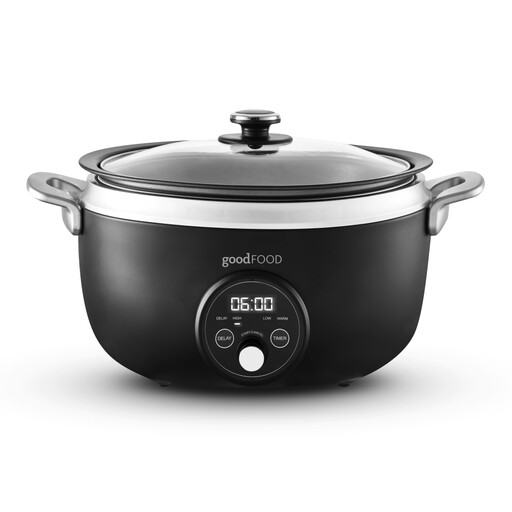
Tower GF16010 digital slow cooker, 3.5L
Consider this for a modest stock batch when a timer would help coordinate a shared kitchen.
The named variant has a removable aluminium pot, LED display and delay function; its stated rating is 170W. Check which parts are dishwasher-safe if that affects your cleaning plans, and read the exact instructions before considering workplace use.
View on Joybuy
 No image available
CleverChef 14 in 1 multicooker, 5L, charcoal
Consider the broader appliance if you will use its other cooking programmes as well as slow cook and have room for a 5L bowl.
The named variant lists slow cook, steam, rice and stew among its programmes. Check the supplied parts’ cleaning instructions and the exact model’s intended use if the kitchen is at work.
View on Joybuy
 No image available
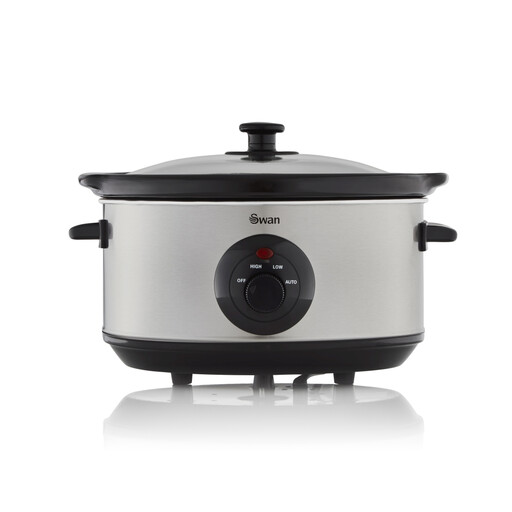
Swan SF17020N oval slow cooker, 3.5L, silver
This is a smaller-bowl option for a household that can agree when someone will switch off and clear the cooker.
The named variant states three cooking settings and a 200W rating. Check the instructions for cleaning the pot and lid, as well as intended use if you plan to cook in a staff kitchen.
View on Joybuy
 No image available
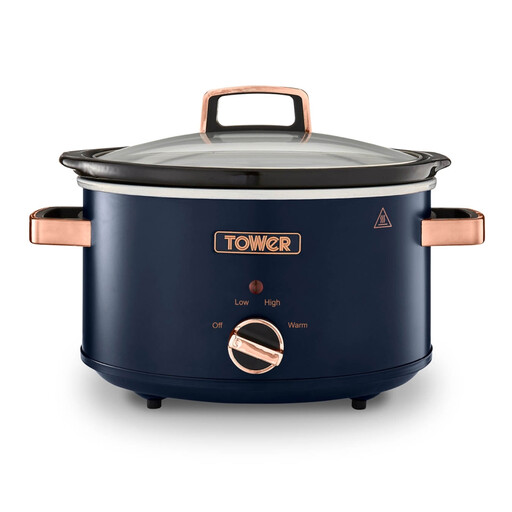
Tower Cavaletto T16042MNB slow cooker, 3.5L
Consider this for a modest stock batch when the household is comfortable coordinating the cooking finish without relying on a programmed timer.
The midnight blue and rose gold variant states three heat settings, a removable pot and cool-touch handles. Check whether the pot and lid meet your cleaning needs and whether the exact model is intended for workplace use.
View on Joybuy
 No image available
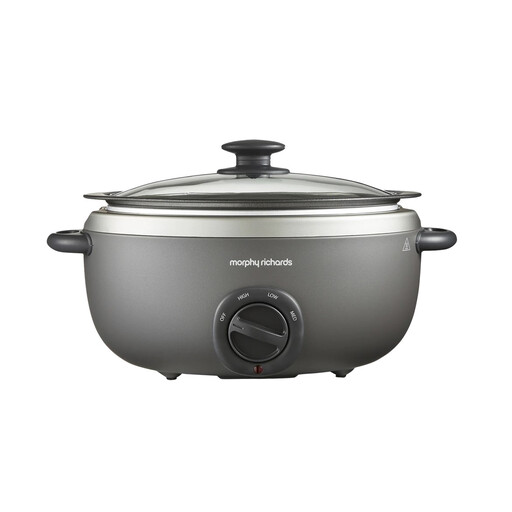
Morphy Richards 461022 Sear & Stew Titanium slow cooker, 6.5L
Consider the larger stated capacity only when you can portion, chill and store the stock without taking up more shared space than is available.
This is the 6.5L oval variant. Confirm the exact heat settings before buying, particularly if keep-warm matters to your handover plan, and check its intended use for a workplace kitchen.
View on Joybuy
Common questions
Can I use a household slow cooker in an office kitchen?
Do not assume that a household appliance is approved for a staff kitchen: get the kitchen operator’s permission and check the exact model’s intended-use instructions. The Health and Safety Executive says employers sharing a workplace must coordinate safety measures, and Tefal’s published instructions for one household multicooker exclude staff-kitchen use.
Can a slow cooker use an extension lead in a shared kitchen?
Use a wall socket where possible; if an extension is needed, check its marked rating against the combined load of connected appliances. Electrical Safety First warns against overloading extension leads, cable reels and adaptors. Keep the cable clear of shared walkways and follow the cooker’s instructions.
What should I do with vegetable stock I am saving?
Arrange containers and fridge space before making a batch, then refrigerate the leftover stock promptly. A Food Standards Agency-hosted literature review reports the recommendation to refrigerate leftovers within two hours; a cooker’s keep-warm setting does not replace a storage plan.
What if I plan to make and sell stock from a shared kitchen?
If the activity is a food business, check registration and premises requirements with the relevant local authority before starting. The Food Standards Agency registration service says to register at least 28 days before trading or food operations begin; confirm the requirements for the kitchen’s location and how it will be used.


