Weekly bean meal-preppers
If one cooking session needs to provide lunches or freezer portions, compare the pot’s capacity with your usual recipe and the space available to store the finished food.


For several bean-based meals at once, start by comparing slow cookers around 5.6L to 6.5L, then decide whether timed cooking, easier cleaning or a searing pot matters to your routine. A smaller cooker can suit more modest batches, but no slow cooker should be the only cooking step for dried red kidney beans: they need appropriate preparation before slow cooking.
If one cooking session needs to provide lunches or freezer portions, compare the pot’s capacity with your usual recipe and the space available to store the finished food.
If meals need to fit around other commitments, check the exact model’s countdown, scheduling and keep-warm controls. These features help with timing, not with preparing raw beans safely.
If you use dried red kidney beans rather than tinned beans, plan for their separate preparation before slow cooking. The Food Standards Agency warns that raw or undercooked beans, especially red kidney beans, can be risky.
Set your usual batch size first, then choose controls and cleaning features that you will use regularly. If dried red kidney beans are on the menu, decide how you will prepare them safely before considering convenience features.
| Concern | What to check | Who it matters to |
|---|---|---|
| Batch capacity | Compare stated capacity with your recipe, pot dimensions and the space needed to store portions afterwards. | If I cook several meals in one session, I need enough room without making more than I can store. Around 42% of consumers put batch capacity first. |
| Timing and cleanup | Check the exact model’s timer and keep-warm controls, and whether its pot and lid are dishwasher-safe. | When cooking has to fit around my day, manageable timing and washing-up make a regular batch routine easier; around 33% of consumers prioritise this convenience. |
| Dried-bean preparation | Identify the bean type and follow its preparation instructions. Do not rely on low-temperature slow cooking alone for dried red kidney beans. | If my batches use dried red kidney beans, preparing them safely comes before pot size or controls. This is the primary concern for around 25% of consumers. |
Low-temperature cooking may not adequately address the toxin risk in raw or undercooked red kidney beans. The Food Standards Agency flags the risk, and the Food Safety Information Council advises against cooking them at a low temperature.
Identify the beans before starting. For dried kidney beans, the Food Safety Information Council advises soaking for at least five hours, then boiling briskly in fresh water for at least 10 minutes before further cooking. Tinned beans have already been processed.
A larger pot can accommodate a bigger batch, but it also takes up worktop or cupboard space and leaves more food to portion and store. A stated serving count is not a precise yield for every bean recipe.
Compare external dimensions, removable-pot handling and your normal number of portions alongside capacity.
A removable bowl is not necessarily suitable for searing, and hob compatibility can depend on the model and hob type.
Use the pot on a hob only when the instructions for that exact cooker confirm compatibility with your hob.
Scheduling and keep-warm controls do not prepare dried red kidney beans or remove the need to handle a finished batch appropriately.
Follow the bean and recipe instructions, then portion and store leftovers using appropriate food-safety practices.
Its range includes larger slow cookers and a programmable option relevant to planned batches.
Its 3.5L and 6.5L ranges give shoppers different starting points for modest and larger batches.
The 6L model 22750 is relevant to shoppers considering timed cooking and a searing pot.
These choices include larger slow cookers, a 6L multicooker with a slow-cooking function and a smaller 3.5L timed cooker. Compare their capacities against the number of meals you actually make before choosing extra controls.
 No image available
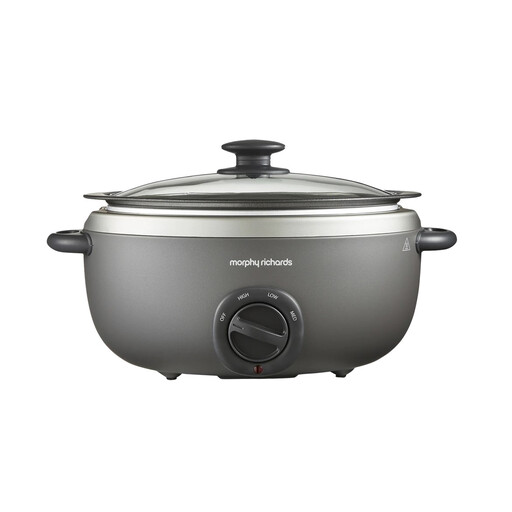
Consider this 6.5L model if you want room for several bean-based portions and are interested in searing ingredients before slow cooking.
If you intend to use the pot on a hob, confirm compatibility with your hob and check the pot details for this exact model.
 No image available
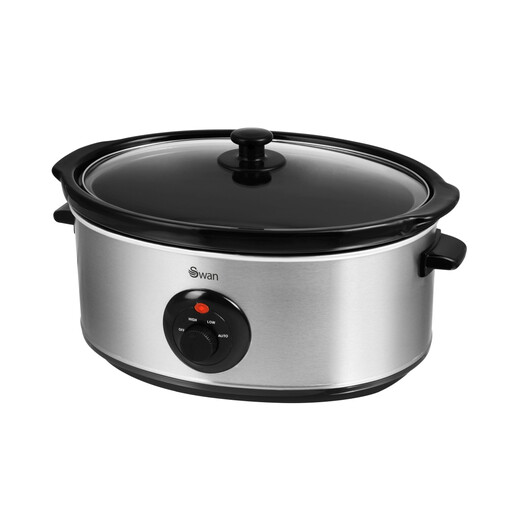
Its stated 6.5L capacity makes it a candidate when one batch needs to provide several meals.
Check its external dimensions against your worktop and storage space, and confirm the cleaning instructions if frequent batches make washing-up a deciding factor.
 No image available
Consider this 6L multicooker if you want a slow-cooking function alongside the pressure-cooking, rice-cooking and steaming functions named for this model.
Its title specifies 10 programmes. Check the instructions for the programme you intend to use, including its bean guidance, timing controls and cleaning requirements; do not assume that its slow-cooking function safely prepares raw red kidney beans.
 No image available
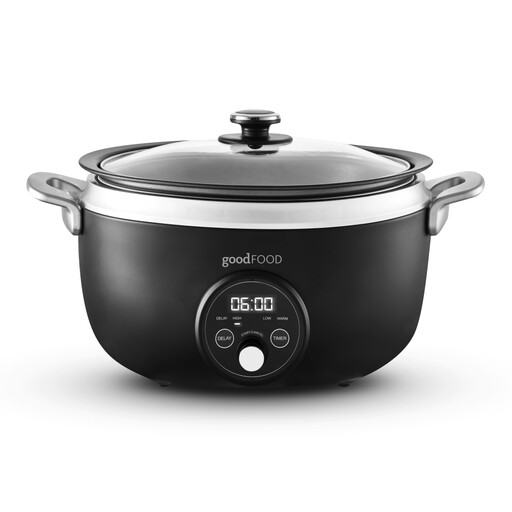
This smaller 3.5L model is worth comparing if your batches are modest but you want the stated delay function and timer.
The product name also specifies a removable aluminium pot, LED display and 170W rating. Check that the capacity fits your recipe and confirm hob compatibility before using the pot for searing.
Start by comparing models around 5.6L to 6.5L if you need several portions from one cook. Crock-Pot describes its 5.6L CSC066 as serving 7+ people, while a Morphy Richards 6.5L model is described as making 5–6 portions; neither figure guarantees the yield of your recipe. Check the space needed for ingredients and liquid, as well as how you will store the finished portions.
Do not rely on low-temperature slow cooking alone for dried red kidney beans. The Food Standards Agency warns about raw or undercooked beans, especially red kidney beans; the Food Safety Information Council advises soaking dried kidney beans for at least five hours and boiling them briskly in fresh water for at least 10 minutes before further cooking. Tinned beans have already been processed and do not need that dried-bean preparation step.
A timer is useful when you regularly need a batch ready around a planned mealtime. Compare the exact cooker’s countdown, delayed-start and keep-warm behaviour rather than assuming those controls work alike across models, and do not use scheduling in place of bean-specific preparation.
Look for a removable pot and confirm whether both the pot and lid can go in the dishwasher for the exact model. If you also want to sauté ingredients in that pot, separately confirm that its instructions permit use on your type of hob.