
24/7 Customer Support

Free returns

Same-day & Next-day Delivery

Quality Guaranteed

Unlock Your Welcome Offers: FREE Delivery | Up to 80% OFF | Free 30-day JoyPlus trial
Download the APP
Is your pet’s mealtime over in a flash? Many dog and cat owners know the scene well: the food is gone seconds after the bowl hits the floor, often followed by coughing, gagging or even vomiting. While a hearty appetite is usually a good sign, eating too quickly can lead to discomfort, poor digestion and in some cases, a dangerous condition known as bloat.
A slow feeder bowl is a simple and effective tool designed to address this very issue. By incorporating obstacles and patterns, these bowls turn mealtime into a more engaging challenge, encouraging your pet to eat at a healthier, more natural pace. This guide will walk you through what to look for in a slow feeder and highlight a few of our top recommendations to help you make an informed choice for your furry companion.
Finding the right interactive pet feeder involves more than just picking a fun pattern. To ensure it’s safe, effective and suitable for your pet, consider these key factors.
The material of the bowl impacts its safety, longevity and how easy it is to clean.
Regardless of the material, look for bowls that are easy to clean thoroughly, as leftover food particles can harbour bacteria.
Slow feeders come in a variety of designs, from simple ridges to complex mazes. The right puzzle feeder for your pet depends on their species, size and temperament.
The feeder should be appropriately sized for your pet. A bowl that is too small can cause frustration, while one that is too large may not effectively slow down a smaller animal. For larger breeds, older pets or those with joint issues, an elevated slow feeder can be a game-changer. Raising the bowl to a comfortable height can improve posture and reduce strain on the neck and joints during meals.
Here are a few standout options that cater to different needs, from all-in-one feeding stations to specialised designs for cats and larger dogs.
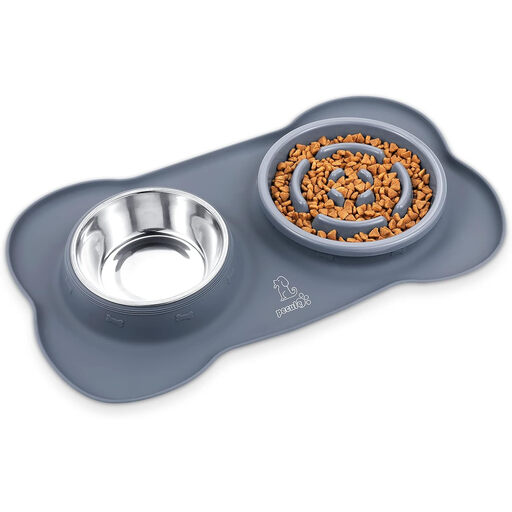
Why It Stands Out: This is a complete mealtime solution. The 3-in-1 design combines a slow feeder, a stainless steel water bowl and a built-in silicone mat to catch spills, keeping your floors clean and tidy.
Pros:
Who is it for: Owners of small dogs and cats looking for an all-in-one, non-slip feeding station that tackles both fast eating and messy habits.
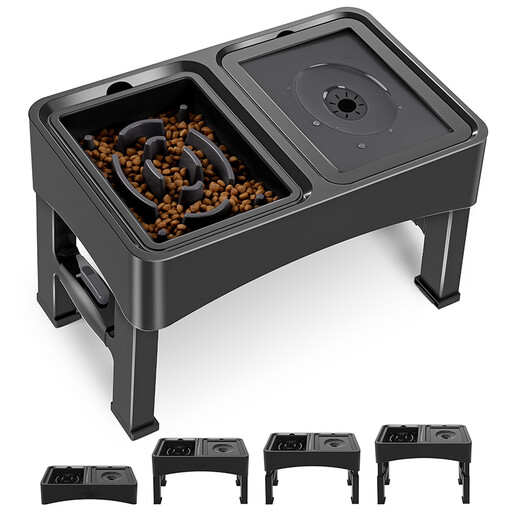
Why It Stands Out: This elevated slow feeder offers exceptional versatility with its adjustable height. It can be set to four different levels, accommodating your pet as they grow or providing ergonomic support for senior animals.
Pros:
Who is it for: Owners of growing puppies, large breeds or senior pets who would benefit from a raised dog bowl to slow down eating. Its adjustability makes it a long-lasting investment.
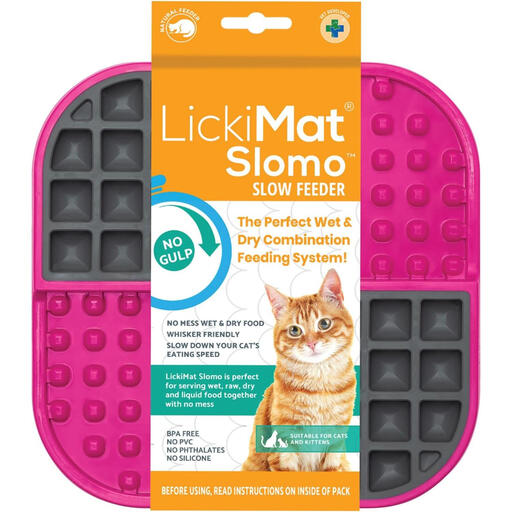
Why It Stands Out: Specifically designed with felines in mind, the LickiMat Slomo is a cat slow feeder mat that turns feeding into an enriching activity. Its flat, textured surface encourages licking, which can be calming for anxious cats and helps promote better oral hygiene.
Pros:
Who is it for: Cat owners seeking to slow down mealtimes, reduce anxiety or provide mental enrichment. It is particularly well-suited for cats who dislike deep bowls.
These recommendations are a great starting point, but every pet is unique. If you need a different size, material or a more complex puzzle design, there are many other choices available.
Explore our full range of slow feeder pet bowls to find the ideal match for your furry friend’s needs.
1. Are slow feeder bowls actually good for dogs? For most dogs that eat too quickly, a slow feeder can be highly beneficial. This type of anti-bloat dog bowl encourages a slower pace of eating, which can aid digestion, prevent vomiting and reduce the risk of bloat. It also provides valuable mental stimulation, turning a routine meal into a fun challenge. Always supervise your dog when introducing a new feeder.
2. Can I use a slow feeder for my cat? Yes, a cat slow feeder is an excellent tool for felines. It helps prevent regurgitation and taps into their natural foraging instincts, making meals more engaging. To avoid whisker fatigue, consider a flatter design like a lick mat for cats or a bowl with a low-profile pattern.
3. How do I clean a slow feeder bowl? Most modern slow feeders are designed for easy cleaning. Many made from silicone, plastic or stainless steel are top-rack dishwasher safe. For bowls with intricate patterns, using a small brush to dislodge any food residue before washing can be helpful. Always refer to the manufacturer's cleaning instructions to ensure proper care.