What matters when choosing
Start with the operating system and profiling tools your script needs. Then use a representative run to decide which hardware limits, if any, affect the investigation.
| Concern |
What to check |
Who this matters to |
| Profiler and operating system |
Confirm the target runtime, deployment OS and profiler; check any container or virtual-machine requirements. |
If my script depends on a particular development environment, I need to run the right profiler before faster hardware is useful. Around 33% of consumers put toolchain fit first. |
| Memory and concurrent tools |
Measure memory use during a representative run and check fitted memory against the tools and services you will run together. |
When I investigate allocations alongside an IDE, containers or local services, I need enough room to keep that setup running. Memory headroom is the primary concern for roughly 27% of consumers. |
| CPU and repeatable runs |
Establish whether CPU time is the bottleneck before comparing processor configurations; assess repeatable runs separately from profiler timing. |
If repeated CPU-focused runs slow my investigation, shorter run-and-analyse cycles matter to me. About 20% of consumers prioritise CPU turnaround. |
| Portability and the exact configuration |
Decide how often you will carry the laptop, then check the fitted components, operating system and seller terms for the unit offered. |
If I profile only occasionally or work in different places, I do not want a larger configuration without a clear need for it. Portability and spending control come first for around 20% of consumers. |
Joybuy laptop choices
These laptops offer Windows and Mac options to consider once you know where the script must run. Compare their stated configurations with your profiler and representative workload; their order is not a profiling-performance ranking.
 No image available
Lenovo Legion Pro 7 16IAX10H 83F5000UUK, 16-inch
Consider this configuration if your script and profiler run on Windows and your local investigation needs room for concurrent tools. Its name specifies Windows 11 Home, 64 GB RAM, a 2 TB SSD, an Intel Core Ultra 9 processor and an NVIDIA GeForce RTX 5090; confirm that those components address your workload rather than assuming the larger specification will fix the script.
View on Joybuy
 No image available
Apple MacBook Pro 16.2-inch M5 Max, 48 GB/2 TB, Space Black
Consider this MacBook Pro when the target work uses Apple-platform development tools, and check that its capacity suits the local project and traces. The product name specifies an M5 Max with an 18-core CPU and 40-core GPU, 48 GB unified memory and a 2 TB SSD. It does not replace a Windows- or Linux-specific test environment.
View on Joybuy
 No image available
MSI Stealth 18 AI Studio A1VGG-001UK, 18-inch
Consider this larger laptop if you need space for a local development setup, but confirm its operating system and whether the size suits how you work. Its name specifies an Intel Core Ultra 9 processor, 32 GB RAM, a 2 TB SSD and an NVIDIA GeForce RTX 4070; those specifications do not establish how quickly it will profile your script.
View on Joybuy
 No image available
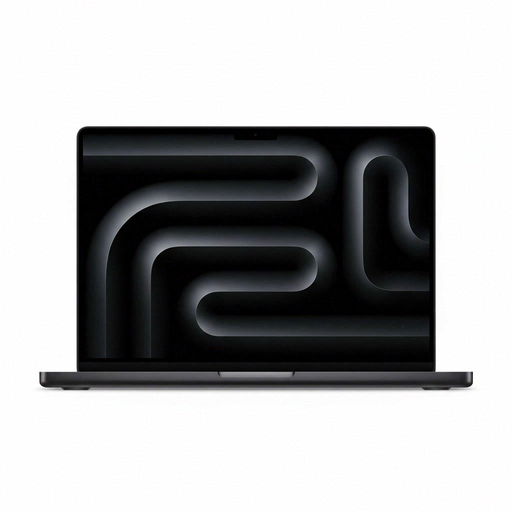
Apple MacBook Pro 14.2-inch M5 Pro, 24 GB/2 TB, Space Black
Consider this configuration for an Apple-platform profiling workflow if its memory meets the demands of your local tools. Its name specifies an M5 Pro with a 15-core CPU and 16-core GPU, 24 GB unified memory and a 2 TB SSD. Check whether the offered configuration includes a compatible power adapter; if you need to record Apple Processor Trace, Apple also requires macOS 15.4 or later and a Mac with M4 or later.
View on Joybuy
 No image available
ASUS Vivobook 15 X1504VA, 15.6-inch, 24 GB/1 TB, Cool Silver
Consider this laptop if its configuration meets the demands of a reproducible local run without stepping up to a larger workstation-style model. Its name specifies an Intel Core 5 120U, 24 GB memory and a 1 TB SSD. Confirm the offered operating system supports your profiler, and check unplugged running time if you will profile away from mains power.
View on Joybuy
Frequently asked questions
Do I need a workstation because my script is slow?
No: a slow script does not, by itself, show that laptop capacity is the cause. Profile a representative workload to find the slow path, then assess whether your current machine can run the necessary tools and workload. The Python Software Foundation cautions that deterministic profilers add overhead and are not benchmarking tools.
Should I choose Windows, Linux or macOS for profiling?
Choose the operating system that lets you reproduce the target runtime and use the profiler you need. Microsoft Learn documents Visual Studio CPU and memory diagnostics for its development workflow, while Apple Developer documents Instruments for Apple-platform apps. If you specifically need to record Apple Processor Trace, Apple requires a Mac with M4 or later and macOS 15.4 or later; any Mac can analyse a saved trace.
What should I check before ordering a configured laptop online?
Check the exact processor, fitted memory, storage, operating system, supplied accessories, seller, warranty and return terms for the configuration offered. For UK consumer purchases from a business, Citizens Advice describes a change-of-mind cooling-off period for qualifying online purchases and separate rights when goods are faulty or misdescribed; check the conditions and any exceptions that apply to your order.
Does UKCA or CE marking tell me whether a laptop suits profiling?
No: product marking does not establish compatibility with your script, runtime or profiler. UK government guidance dated 31 March 2026 lists UKCA or CE marking routes for electrical equipment and electromagnetic-compatibility products placed on the Great Britain market, subject to the applicable product requirements. Check the exact configuration and supplied power equipment separately from your profiling needs.


