Family batch-cook planners
If you cook for several people or want leftovers, bowl capacity, fill guidance and cleaning instructions deserve attention before extra programmes.


Choose a bowl that holds your usual family stew without exceeding its fill guidance, then decide which cooking steps you want the appliance to handle. A straightforward large-capacity slow cooker suits bigger batches; programmable controls are more relevant when dinner needs to be ready at a planned time. If you like to brown the beef first, consider a model with a suitable searing function or a bowl confirmed compatible with your hob.
If you cook for several people or want leftovers, bowl capacity, fill guidance and cleaning instructions deserve attention before extra programmes.
If you prepare stew earlier in the day and want it ready near a set mealtime, check scheduling and what happens when the cooking cycle ends.
If browning beef and vegetables is part of your recipe, a suitable sear function or a bowl confirmed safe for your hob may let you use fewer vessels.
For family beef stew, start with the amount you normally cook. Then decide whether serving-time flexibility or browning in the same vessel matters enough to shape your choice of controls and bowl.
| Concern | What to check | Who this matters to |
|---|---|---|
| Capacity and fill level | Match the bowl to your recipe volume and check the model’s fill guidance and dimensions. NHS Borders advises filling a slow-cooker bowl between half and three-quarters full. | If I cook enough stew for the family and another meal, I need room for the ingredients without overfilling the bowl. Around 40% of consumers would put capacity and workable fill level first. |
| Meal timing | Check whether the exact model offers scheduling, how far ahead it can be set and what it does when cooking ends. | When I prepare dinner early, I need it ready near our planned mealtime rather than relying on a manual switch-on time. For around 30% of consumers, timing would be the primary concern. |
| Browning and washing up | Check for a sear function or a bowl rated for your hob type; check the bowl and lid care instructions too. | I like to brown the beef for flavour, but would rather not wash an extra pan. Around 30% of consumers would prioritise that browning and clean-up routine. |
A larger bowl may suit batch cooking, but your usual stew still needs to fit the appliance’s fill guidance. NHS Borders advises filling a slow-cooker bowl between half and three-quarters full.
Compare your normal recipe yield with the exact model’s instructions, and check that its dimensions suit your storage space.
Good Food says browning beef is optional but adds deeper flavour. Whether you can do it in the cooking bowl depends on the model and hob: Crock-Pot specifies gas or electric hob use for its CSC093 bowl, while Morphy Richards says its selected hob-safe pots are unsuitable for induction.
Check the exact bowl and your hob type before planning to brown in the same vessel.
Otherwise, you will need a separate frying pan for that step.
Heat settings, advance scheduling and automatic keep-warm are distinct features. Crock-Pot lists scheduling up to 12 hours ahead and auto keep-warm for CSC093; those functions should not be assumed from a slow cooker’s size or brand.
If dinner must be ready at a particular time, check the exact model’s scheduling limit and end-of-cycle behaviour.
NHS Borders advises against cooking frozen meat in a slow cooker.
Thaw beef thoroughly in the fridge before slow cooking, then follow your recipe and appliance instructions.
Its slow-cooker range includes 1.5L, 3.5L and 6.5L options. Morphy Richards positions its cited 6.5L ceramic model for family meals and batch cooking.
Crock-Pot offers conventional and programmable slow cookers. Its cited 5.6L TimeSelect CSC093 is positioned for larger family meals.
The cited 8L PossibleCooker MC1001UK combines slow cooking with other cooking functions for households considering a multi-cooker.
These products cover smaller and larger slow-cooker bowls, models with controls worth checking for planned meals, and multi-cooker options. Choose by your usual stew quantity and the cooking steps you want to use.
 No image available
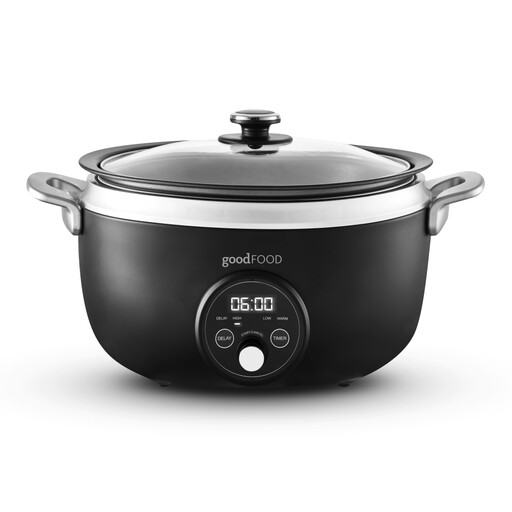
Consider this size if your family stew is closer to the four-to-six-portion recipes described by NHS Borders; check the appliance’s fill guidance against your ingredients.
The product name specifies a removable aluminium pot, 170W rating, LED display, delay function and timer. If you want to brown in the pot, confirm compatibility with your hob; check the delay limit and end-of-cycle behaviour before relying on it for dinner timing.
 No image available
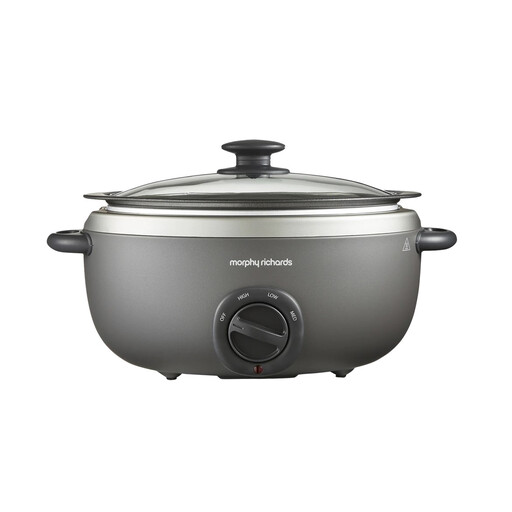
The 6.5L bowl is worth considering when you usually make a larger family stew or plan leftovers; compare your recipe volume with the model’s fill guidance.
If same-vessel browning is important, confirm the pot’s hob compatibility for your kitchen. Check the controls separately if you need scheduled cooking.
 No image available
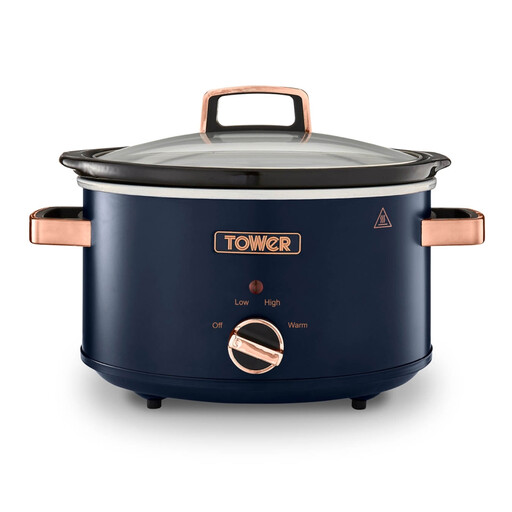
This 3.5L model is an option for a family-sized stew without deliberately making a large batch; check the bowl’s fill guidance for your recipe.
The product name specifies three heat settings, a removable pot and cool-touch handles. If you plan to brown the beef, check the pot instructions or use a separate pan.
 No image available
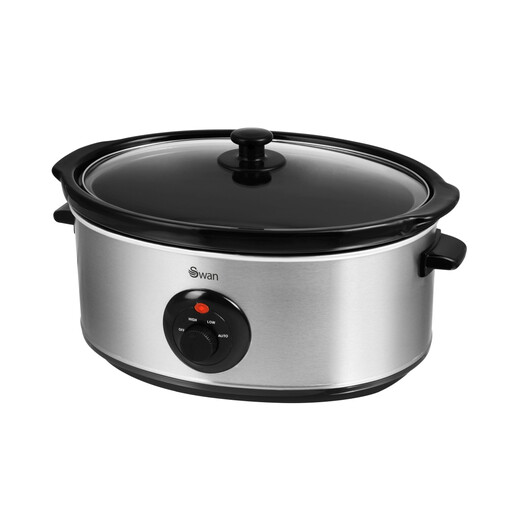
Consider the 6.5L capacity if your usual beef stew includes larger portions or planned leftovers, subject to the model’s fill guidance and your storage space.
Check the controls if you need advance scheduling, and check the pot instructions before attempting to brown ingredients in it.
 No image available
This 6L option is relevant if you want slow cooking alongside other programmes rather than a dedicated slow cooker; check its fill guidance for your stew quantity.
The product name lists 10 programmes and pressure-cooking, slow-cooking, rice-cooking and steaming functions. Check the slow-cook controls and whether its sauté function suits your browning step; do not assume the pot can go on a hob.
Start with your usual number of portions and the volume of the ingredients. NHS Borders uses a 3.5L slow cooker for recipes yielding four to six portions and advises filling the bowl between half and three-quarters full; a larger bowl may make more sense for bigger batches or leftovers.
No. Good Food says browning is optional but adds deeper flavour. If you want that step, use a separate frying pan, a bowl confirmed safe for your hob or a multi-cooker with a suitable sear function.
No. NHS Borders advises against cooking frozen meat in a slow cooker. Thaw the beef thoroughly in the fridge before use and follow the recipe and appliance instructions.
Use the timing for your recipe and appliance rather than one setting for every stew. Good Food’s four-serving recipe specifies 8–10 hours on low or 4 hours on high; the appropriate time for yours depends on its ingredients, quantity and appliance instructions.