Weekly soup batch cookers
If you want several portions from one cook, the useful capacity is the amount your usual recipe can fill appropriately—not simply the largest bowl that fits on the worktop.


Choose a slow cooker by the volume of soup you normally make, not its advertised capacity alone. Which? suggests roughly one litre of cooker capacity per serving as a sizing guide, while FoodSafety.gov advises filling a slow cooker between half and two-thirds full. A 6.5–7.5L model is worth considering for regular large batches if your recipe fits that range; a timer or hob-safe insert matters only if it suits the way you cook.
If you want several portions from one cook, the useful capacity is the amount your usual recipe can fill appropriately—not simply the largest bowl that fits on the worktop.
A programmable cooking time and automatic keep-warm setting can help when you know when you want to eat. Check how the particular model moves from cooking to holding food.
If you like to brown chicken or soften aromatics before slow cooking, a suitable hob-safe insert can avoid a pan-to-pot transfer. Its compatibility depends on both the model and your hob.
Work out the volume of your usual chicken and barley soup batch first, then decide whether timing controls, clean-up or browning in the cooking pot would change your routine.
| Concern | What to check | Who this matters to |
|---|---|---|
| Useful batch capacity | Compare your full recipe volume, including stock, chicken, vegetables and barley, with the bowl capacity. FoodSafety.gov advises filling a slow cooker between half and two-thirds full. | If I cook several portions at once, I need a bowl that holds the whole recipe without being underfilled. Around 38% of consumers put usable batch capacity and fill level first. |
| Cooking time and keep-warm | Check whether the model has a cooking timer, a finish-time function and automatic keep-warm, and how each operates. Start cooking after preparing the chicken rather than leaving it waiting at room temperature. | When dinner needs to fit around other commitments, I want to know when cooking will finish and what happens afterwards; around 23% of consumers make scheduling their primary concern. |
| Cleaning and storage | Check whether the removable bowl and lid are dishwasher-safe. Plan for portion containers and fridge or freezer space after cooking. | A full pot saves me another cooking session only if I can manage the washing-up and put the remaining soup away promptly. Roughly 23% of consumers prioritise that clean-up and storage routine. |
| Browning and extra functions | If you want to brown ingredients in the insert, confirm that the exact pot suits your hob. Consider multi-cooker programmes only if you expect to use them. | I would rather brown ingredients in the cooking pot than transfer them from another pan; for about 16% of consumers, browning or additional cooking functions are the main priority. |
A large stated capacity is not useful for every recipe. FoodSafety.gov advises keeping the cooker between half and two-thirds full during cooking; overfilling can also interfere with thorough cooking.
Estimate the volume of your usual soup with all its ingredients, then check which bowl size lets you cook that amount within the advised range.
Hob compatibility is model-specific: Crock-Pot says the CSC112 bowl suits gas, electric and induction hobs, while Morphy Richards says the 461020 pot does not suit induction.
Check the exact model and insert against your hob before relying on in-pot browning.
Keep-warm is for after cooking, not for bringing uncooked ingredients up to a safe cooking temperature. FoodSafety.gov advises starting a slow cooker after preparation rather than leaving ingredients to warm towards room temperature.
Thaw chicken safely, begin cooking after preparation and follow the appliance instructions and appropriate food-temperature checks.
Batch cooking does not end when the soup is ready: the portions you will eat later still need prompt cooling and cold storage.
Set out shallow portion containers and make room in the fridge or freezer before cooking a large batch.
Its range includes straightforward large-bowl slow cookers as well as models with digital timing and an insert intended for hob use.
Its 6.5L Sear & Stew models are relevant if you want a large soup bowl and the option to brown ingredients before slow cooking.
The examples here span a dedicated 7L slow cooker and a 6.5L multi-cooker for consumers considering other cooking modes too.
These choices include larger slow cookers for multi-portion soup and smaller-capacity options with other cooking controls. Compare each capacity with your actual recipe before choosing; the multi-cooker is an alternative for consumers who also want its stated cooking modes.
 No image available
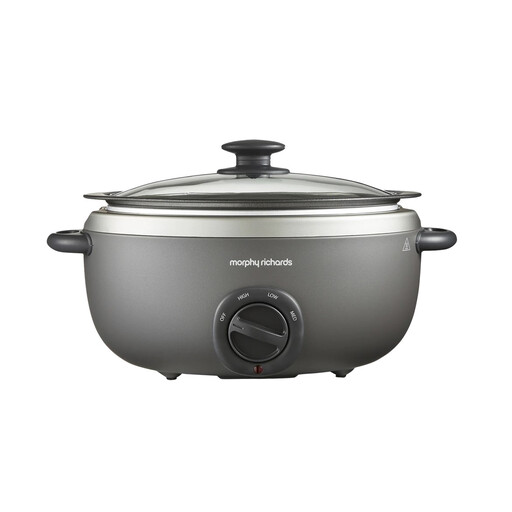
Consider this 6.5L model for a substantial soup batch if your recipe reaches the advised fill range.
If you plan to brown ingredients in its insert, note that this model’s pot is not suitable for induction hobs.
Check the timer and lid-cleaning instructions if those features matter to your routine.
 No image available
This 5L multi-cooker is an option if you want soup and slow-cook modes as well as other cooking programmes. Check whether your intended batch suits its capacity.
The product name also lists stew, steam and rice modes. Do not use a delayed start to leave prepared chicken waiting at room temperature.
 No image available
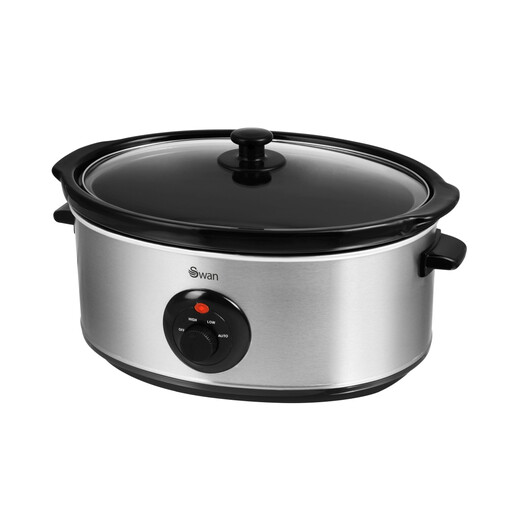
The 6.5L capacity makes this a model to consider for multi-portion soup, provided your normal recipe fills the bowl appropriately.
For a planned finish time, check the exact model’s controls before choosing it.
 No image available
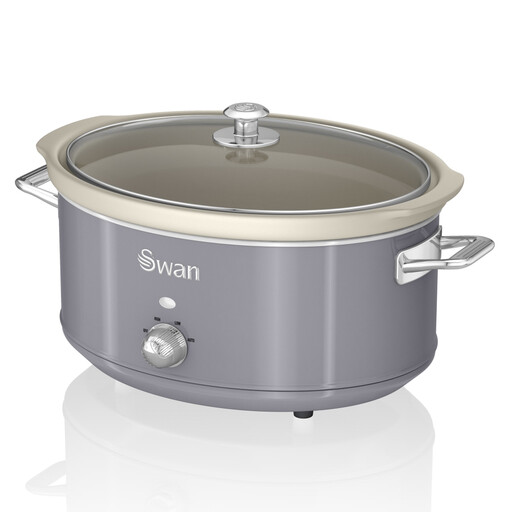
Consider its 6.5L bowl for a larger soup batch after checking your recipe volume against the advised fill range.
The named variant has three temperature settings, keep-warm and a stated 320W rating. Check the cleaning instructions and timing controls if either affects your choice.
 No image available
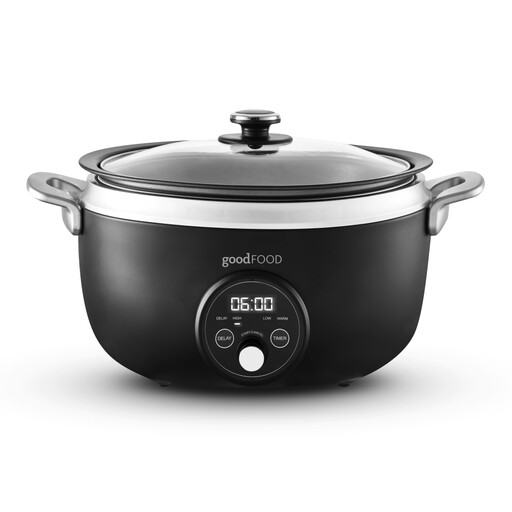
This 3.5L model is worth considering for a smaller soup batch, but check that the complete recipe fits while keeping the bowl within the advised fill range.
Its named features include a removable aluminium pot, LED display, timer and delay function, with a stated 170W rating. The pot is not suitable for induction hobs; do not use the delay function to leave prepared chicken at room temperature.
Choose a size that holds your full recipe between half and two-thirds of the bowl, in line with FoodSafety.gov’s fill guidance. Which? suggests roughly one litre of cooker capacity per serving as a starting point, but use your recipe volume to decide whether a 5L, 6.5L or larger bowl suits the portions you actually make.
Thaw it safely before slow cooking. FoodSafety.gov advises against relying on a slow cooker to thaw frozen poultry; if you thaw it in cold water or a microwave, cook it immediately afterwards.
Put the vegetables in first if you are following FoodSafety.gov’s slow-cooker guidance. It advises this order because vegetables cook more slowly than meat and poultry in a slow cooker.
Cool the leftover soup promptly, divide it into containers and refrigerate or freeze the portions you will eat later. Plan the storage space before making a full pot, and reheat a portion until steaming hot throughout.
Not necessarily: check the exact model. Crock-Pot specifies the CSC112 bowl for gas, electric and induction hobs, while Morphy Richards says the hob-safe pot on model 461020 is not suitable for induction.