Weeknight chilli cooks
If you want to use drained tinned beans and leave the chilli to slow-cook while you get on with your day, straightforward controls and a removable pot may matter more than extra cooking modes.


For a vegetable chilli making four to six portions, a 3.5L slow cooker is a sensible starting point: NHS Borders bases recipes of that size on a 3.5L bowl. Consider a larger cooker for regular batch cooking, or a hob-safe pot or multi-cooker if sautéing vegetables without another pan matters to you. Check the appliance’s filling instructions and, for a hob-safe pot, compatibility with your hob.
If you want to use drained tinned beans and leave the chilli to slow-cook while you get on with your day, straightforward controls and a removable pot may matter more than extra cooking modes.
If you make several meals at once, choose bowl capacity around your usual batch rather than the number of tins in one recipe. NHS Borders bases its four-to-six-portion slow-cooker recipes on a 3.5L bowl.
If you like to sauté vegetables before slow cooking but would rather not wash a separate pan, look at a hob-safe cooking pot or an in-bowl sauté function. Check hob compatibility before relying on a removable pot for that step.
Start with the amount of chilli you normally make. Then decide whether sautéing in the same pot or having more control over the cooking schedule would make a difference to you.
| Concern | What to check | Who this matters to |
|---|---|---|
| Batch size | Compare bowl capacity with your usual portions and the appliance’s filling instructions. NHS Borders uses 3.5L cookers for recipes making four to six portions. | If I regularly cook extra chilli for later meals, I need room for the whole batch without filling the bowl to the brim. Roughly 30% of consumers put batch size first. |
| Preparation and clean-up | Check whether sautéing happens in the appliance or in a removable hob-safe pot, and whether that pot works with your hob. | I want to sauté the chilli base without washing another frying pan. Around 40% of consumers make one-pot preparation their main priority. |
| Timing and controls | Compare cooking settings and timer functions; check the manual for correct use of keep-warm. The Russell Hobbs 23200 instructions reserve warm for already cooked food. | When my plans change, I want controls that fit the time available without treating keep-warm as a cooking setting. Roughly 30% of consumers prioritise timing and controls. |
The stated capacity is not a target fill level. NHS Borders advises filling a slow-cooker bowl between half and three-quarters full and bases its four-to-six-portion recipes on a 3.5L cooker.
Plan around the amount you usually cook, then follow the filling instructions for the model you buy. Move up in capacity if larger batches are a regular need.
Morphy Richards states that the cited 3.5L and 6.5L Sear & Stew pots are not suitable for searing on induction hobs.
Check the exact pot’s hob compatibility. With an induction hob, use a separate compatible pan unless the cooker’s instructions expressly permit induction use.
The Russell Hobbs 23200 manual says warm is for food that has already cooked and warns against using low to heat food.
Use the cooking settings as directed for the recipe, and follow your appliance’s instructions for holding food warm and handling leftovers.
Heart Research UK’s slow-cooker bean-chilli recipe uses drained tinned beans. Dried kidney beans require different preparation before slow cooking.
Use drained tinned beans for the tinned-bean recipe. If substituting dried beans, follow appropriate preparation instructions rather than adding them as though they were already cooked.
These ranges illustrate different capacity and control choices; check the specifications of the particular model before deciding.
Its cited Sear & Stew models offer a 3.5L option for smaller batches and a 6.5L option for batch cooking, with removable pots designed for sautéing on a compatible hob.
The cited CSC024 is a 5.6L multi-cooker for people who want to sauté and slow-cook in one appliance.
The cited 23200 is a 3.5L slow cooker with high, low and keep-warm settings for a simpler approach.
These slow cookers and multi-cookers cover 3.5L cooking, larger batches and appliances with additional functions. Choose by your usual chilli quantity and the preparation steps you want the appliance to handle.
 No image available
Consider this if you want to use one appliance for slow cooking and other recipes. Its named functions include slow cook, stew, roast, steam and bake; check its instructions when planning how full to make a batch.
 No image available
The 5.7L bowl and named sauté and slow-cook functions may suit larger chilli batches prepared in one appliance. It also has pressure-cooking functions; follow the model’s lid, filling and steam-release instructions when using pressure mode.
 No image available
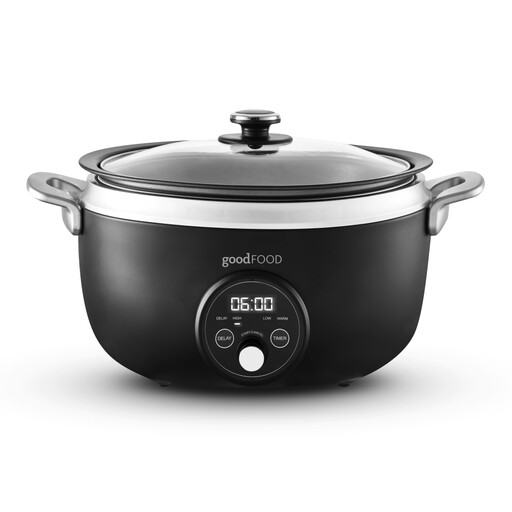
Its 3.5L capacity matches the cooker size NHS Borders uses for four-to-six-portion recipes. The title identifies a removable aluminium pot, LED display, delay function and timer; check the timing range if you need a particular schedule. The pot is stated to be unsuitable for induction hobs.
 No image available
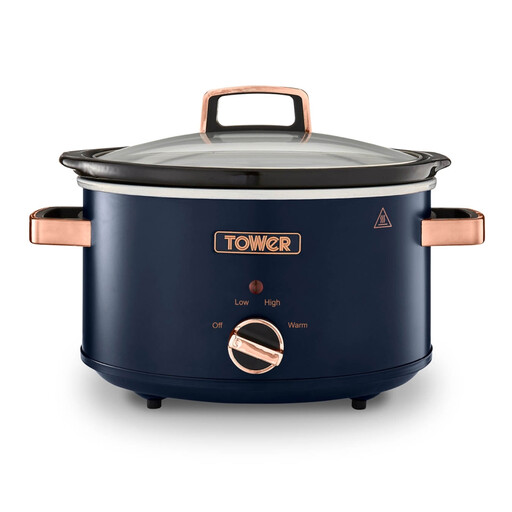
This is a 3.5L choice if you want a slow cooker for the four-to-six-portion recipe scale used by NHS Borders. Its title specifies three heat settings, a removable pot and cool-touch handles. If your chilli recipe calls for sautéed vegetables, check how you will prepare that step.
 No image available
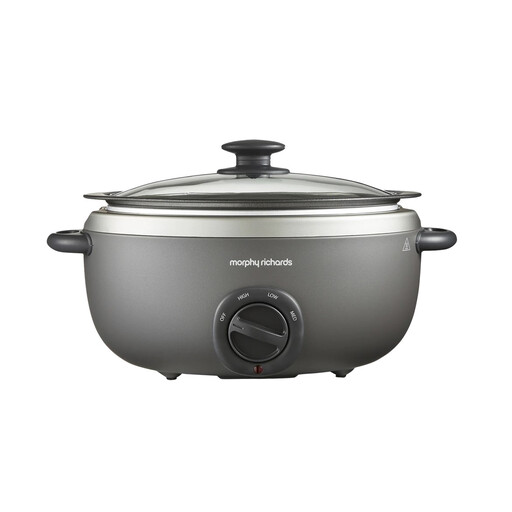
Consider this 6.5L model if you regularly make larger batches; Morphy Richards positions the range for batch cooking. Its searing pot is not suitable for induction hobs. Check the model’s filling instructions and controls before planning a batch or relying on a keep-warm setting.
It is a sensible starting point for a four-to-six-portion recipe: NHS Borders bases recipes of that size on a 3.5L cooker. If you routinely cook more, compare larger bowls and follow the chosen appliance’s filling instructions.
No. You can use a separate pan for a recipe that calls for sautéing, while a compatible hob-safe pot or an in-bowl sauté function can save that extra pan. Check hob compatibility: Morphy Richards says its cited Sear & Stew pots are not suitable for induction searing.
Use the tinned beans as your recipe directs; Heart Research UK’s slow-cooker bean chilli uses drained tinned black beans and kidney beans. Dried kidney beans are a different ingredient and need appropriate preparation before slow cooking.
Do not use it as a cooking setting: the Russell Hobbs 23200 manual says warm is for food that has already cooked. Follow your particular cooker’s instructions for cooking, holding food warm and handling leftovers.