
24/7 Customer Support

Free returns

Same-day & Next-day Delivery

Quality Guaranteed

Unlock Your Welcome Offers: FREE Delivery | Up to 80% OFF | Free 30-day JoyPlus trial
Download the APP
Chewing is a normal part of life for rabbits, guinea pigs, hamsters, gerbils, mice, rats and chinchillas. The right toy can add variety to an enclosure, encourage natural nibbling and make food-based enrichment more engaging. However, not every product marketed as a “boredom breaker” is suitable for every species.
This guide explains what to check before buying small animal chew toys, including rabbit chew toys, guinea pig chew toys, hamster chew toys and natural willow toys for small animals.
A colourful hanging toy may look appealing, but a large rabbit requires a different construction and scale from a hamster or mouse. Small rodents can become trapped in oversized gaps, while larger animals may quickly dismantle a lightweight toy.
Check the listed species, dimensions and enclosure placement before ordering. For example, a small willow tube is designed around smaller mouths, whereas a large hay cube or extra-large edible log is intended for larger herbivores.
Some products combine wood, hay, vegetables, seeds or starch. These are treats or enrichment items, not replacements for a suitable, balanced diet. Products containing edible ingredients should be offered in moderation, with fresh water available and normal hay or species-appropriate food maintained.
Look for clear composition and analytical information. A product that simply says “natural” without explaining its materials, ingredients or feeding guidance provides less useful information for comparison.
Willow, loofah, corn leaf and hay can absorb moisture. Damp or heavily soiled materials may become unsuitable for continued use. Natural fibres can also fray, split or loosen as they are chewed.
Inspect toys frequently, particularly after introducing them for the first time. Remove products with sharp splinters, loose components, mould, heavy soiling or pieces large enough to be swallowed.
For natural willow toys for small animals, check whether the listing identifies the material clearly, such as 100% willow. Some products use additional dyes, ropes, beads, binders or fillings, so read the full product description rather than relying on the front image.
Useful material options include:
Avoid toys with inaccessible wire, staples, sharp fasteners or loose decorative pieces. Where a toy hangs inside the enclosure, check that the attachment is secure and that the animal cannot become entangled.
Dimensions are not just a storage consideration. They affect whether your pet can reach the toy, carry it safely and interact with it without becoming trapped.
For rabbits, guinea pigs and chinchillas, larger willow carrots, hay cubes and chunky logs may offer a more suitable chewing surface. For hamsters, gerbils and mice, compact tubes and smaller rolls are generally easier to investigate. Rats may enjoy interactive items, but any product should still be checked for loose parts and appropriate access points.
Edible small animal treats should complement, not replace, the animal’s normal diet. Check the ingredients for items your pet should avoid, including unsuitable flavourings or known allergens. Products with grains, seeds, fruit or vegetables may be more appealing, but they can also add calories.
For example, the Rosewood I Love Hay Forage Cube lists timothy hay, meadow hay and a vegetable-based binder, with 30% crude fibre according to the supplied product information. It is described as a forage treat and gnaw toy rather than a complete feed.
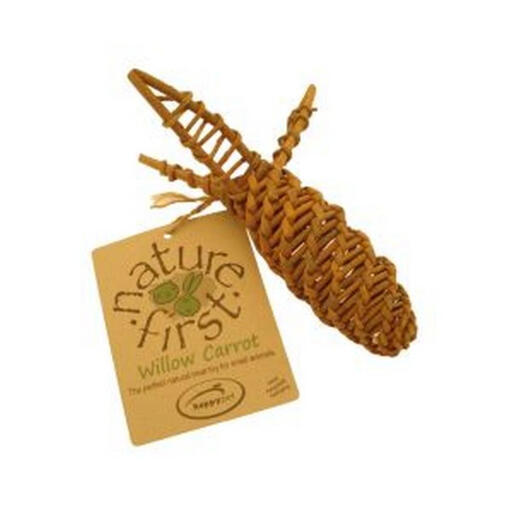
Why This Fits Their Persona: A straightforward single toy for owners introducing rabbits, guinea pigs or chinchillas to natural chewing without buying a large enrichment set.
The listing identifies 100% natural willow and gives a clear 17 x 10 x 4.5 cm size, making material and scale easier to assess.
Willow carrot shape; designed for chewing and enclosure enrichment; replace when worn or soiled.
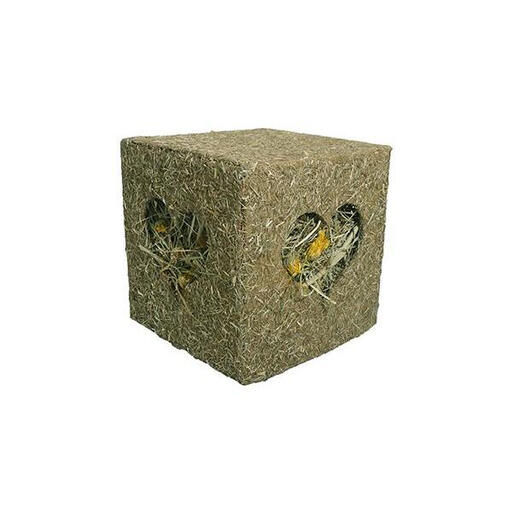
Why This Fits Their Persona: A practical choice for owners of medium to large herbivores who want a combined hay-based treat and activity.
It provides a stated composition, including timothy hay, meadow hay and vegetable-based binder, rather than using “natural” as the only material detail.
Large cube format; 30% crude fibre listed; combines foraging with an edible chewing activity.
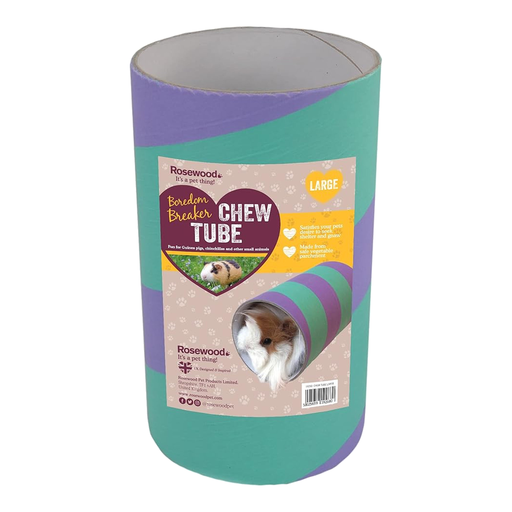
Why This Fits Their Persona: Its compact format suits hamster, gerbil and mouse enclosures where floor space is limited.
The listing specifies natural willow and a small format, reducing the risk of buying an oversized toy for a smaller rodent.
Hollow centre can hold a small amount of suitable treat; compact willow tube supports chewing and exploration.
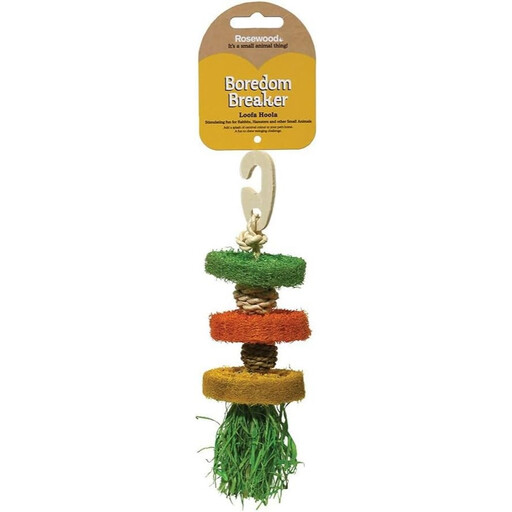
Why This Fits Their Persona: Suitable for owners seeking an active toy that can be hung or placed on the floor for rabbits, guinea pigs and hamsters.
Its 100% natural loofah construction is stated, while the replace-on-damage guidance addresses the wear trap common with fibre toys.
Ring design encourages batting and movement; can be used as a hanging or floor-based enrichment toy.
Rotate two or three small pet enrichment toys rather than filling the enclosure with everything at once. This keeps the environment varied and makes it easier to identify which materials your pet prefers.
Foraging toys for rabbits can be placed on a flat surface with a small amount of hay or approved treat hidden inside. Hay toys for rabbits and guinea pigs should remain dry and should not obstruct access to normal hay, water or resting areas. Dental health toys for rodents should be viewed as chewing enrichment, not as a substitute for veterinary care or a suitable diet.
During the first use:
We have compiled a complete, real-time list of products that fully satisfy these strict selection criteria and UK safety regulations.
There is no universal lifespan. A light chewer may use a willow toy for weeks, while an active rabbit may reduce it quickly. Replace it when it is heavily worn, unstable, damp, mouldy or soiled. Treat-and-gnaw products should also be replaced when largely consumed.
Willow products are commonly listed for species including rabbits, guinea pigs, chinchillas and smaller rodents, but suitability depends on the specific design and size. Always follow the product listing and inspect the toy before use.