
24/7 Customer Support

Free returns

Same-day & Next-day Delivery

Quality Guaranteed

Unlock Your Welcome Offers: FREE Delivery | Up to 80% OFF | Free 30-day JoyPlus trial
Download the APP
Choosing small animal toys is not simply a matter of picking the brightest item or the one with the longest product description. Rabbits, guinea pigs, hamsters, gerbils, mice, rats, chinchillas and degus have different body sizes, chewing habits and ways of exploring their enclosure.
As the Joybuy Product Recommendation Officer, I focus on practical details that help UK pet owners avoid unsuitable purchases and choose enrichment that fits real-life use.
Natural small animal toys can be useful, but the material alone does not make a toy suitable. Check whether the product includes dyes, glue, cotton rope, beads or other attached parts. A toy should also be appropriate for your pet’s size and chewing strength.
A willow tube designed for a hamster may be too small for a rabbit, while a lightweight hanging toy may not suit a strong chewer. Always inspect the construction before placing it in the enclosure.
Colourful shapes can attract a pet’s attention, but visual appeal does not necessarily provide sustained activity. Look for features that encourage chewing, hiding, pushing, climbing or foraging.
For example, a plain wooden tube with a hollow centre may offer more practical enrichment than a decorative item with no interactive feature. Small animal enrichment toys work well when they support behaviours your pet already displays.
Chew toys are designed to become worn. Loose fibres, splintered wood, damaged ropes and heavily soiled surfaces can create avoidable risks. “Durable” should not be interpreted as “permanent”.
Check toys regularly, particularly after the first few uses. Remove and replace any item showing significant damage. Store unused products in a cool, dry place, as moisture can affect natural wood, loofah and plant-based materials.
For small pet chew toys, look for clearly listed materials such as natural willow, untreated or pet-suitable wood, seagrass and loofah. If a product is coloured, check whether the description identifies the dye as vegetable-based or otherwise suitable for pets.
Avoid products with unclear material information, strong chemical odours or loose decorative components. Toys containing cotton rope or wooden beads require closer supervision because these parts may become detached through chewing.
The toy must match your pet’s body size and the available space. A small chew tube can be suitable for hamsters, gerbils and mice, while rabbits and guinea pigs generally need larger items with wider openings.
For hideaways and hamster hideaways, check that the entrance is large enough for your pet to pass through comfortably. Place houses and tubes on a stable, flat surface unless they are specifically designed to hang. Hanging toys should be positioned at a reachable height, without creating a fall risk.
Different toys solve different boredom problems:
Rotate several suitable toys rather than filling the enclosure with too many items at once. This can help maintain interest while preserving space for resting, feeding and movement.
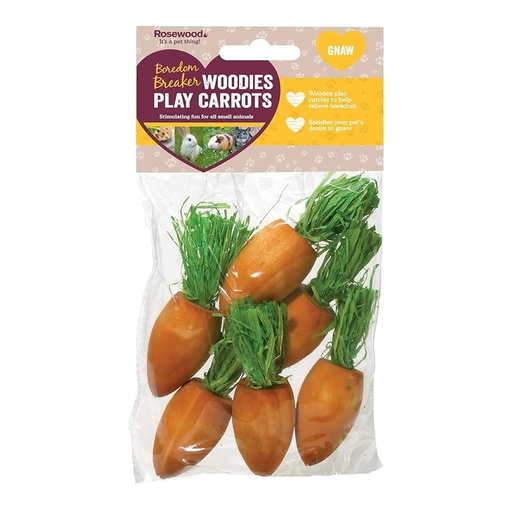
Why This Fits Their Persona: A straightforward option for new owners wanting several chewable items for a rabbit, guinea pig or chinchilla enclosure without adding a large structure.
The three-piece format gives you replacements as individual carrots become worn, rather than relying on one decorative toy.
Made from natural wood with vegetable-based dyes; supplied as three pieces for flexible placement.
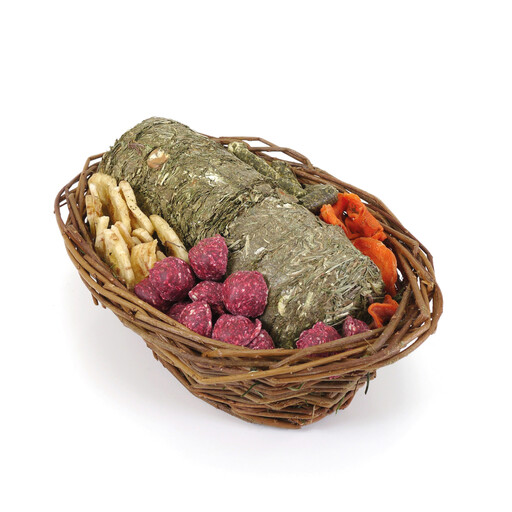
Why This Fits Their Persona: Suitable for owners who want food-based foraging combined with a natural basket that remains after the edible contents have been enjoyed.
It combines clearly listed ingredients with a physical willow item, rather than offering a single-use treat with no continued enrichment.
Contains meadow hay, herbs and listed fruit ingredients; high-sugar items should be offered sparingly to chinchillas and degus.
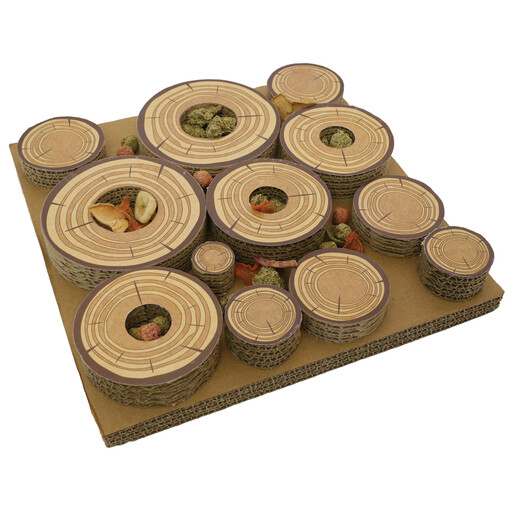
Why This Fits Their Persona: A practical match for curious pets that quickly lose interest in simple chew toys and need a more involved indoor foraging activity.
The hidden compartments create an activity beyond passive chewing, while the product warning identifies pets and chewing behaviours it may not suit.
Uses refillable treat compartments; compact pine-wood design is intended for hamsters, gerbils, mice, rats and other listed small pets.
We have compiled a complete, real-time list of products that fully satisfy these strict selection criteria and UK safety regulations.
Introduce one new toy at a time so you can see how your pet interacts with it. For hanging items such as a carrot dream catcher or loofah ring, keep the toy low enough to reach comfortably and check that it cannot become tangled.
Treat-based toys should contain only small portions suitable for the species. Maintain fresh water and the pet’s normal balanced diet. Plastic hideaways such as the Savic Igloo or Casita can be useful for resting and should be cleaned according to the product instructions. Natural tubes and wooden mazes should generally be kept dry and wiped rather than soaked.
There is no universal replacement interval. Inspect them at least weekly, and more often for active chewers. Replace a toy when it has sharp edges, loose parts, deep cracks, heavy soiling or substantial structural damage.
Not always. Rabbits and guinea pigs usually require larger openings and sturdier construction. Hamsters, mice and gerbils need smaller designs, such as a compact willow tube or small chew tube. Always compare the listed species, measurements and entrance size before buying.
Basic wooden, willow and loofah toys usually require replacement as they wear. Treat toys also create an ongoing cost because fillings need replenishing. Rotating a small selection and choosing refillable or multi-piece designs can help manage spending while keeping the enclosure interesting.