
24/7 Customer Support

Free returns

Same-day & Next-day Delivery

Quality Guaranteed

Unlock Your Welcome Offers: FREE Delivery | Up to 80% OFF | Free 30-day JoyPlus trial
Download the APP
A suitable toy can give a rabbit, guinea pig, hamster or other small pet more to do between meals and sleeping periods. However, buying small animal toys based on bright colours or claims such as “hours of fun” can lead to poor choices. The right option depends on your pet’s species, size, chewing habits and enclosure layout.
Colourful toys may attract attention in product photographs, but appearance does not tell you whether the item will withstand chewing or regular contact with bedding. Check the listed materials, including the type of wood, loofah, seagrass, rope or plastic used.
Natural materials can still become unsuitable when wet, mouldy, heavily soiled or splintered. A toy should be checked regularly and removed once it shows significant damage.
A toy suitable for a hamster may be too small for a guinea pig or rabbit. Conversely, a large hideaway can take up valuable floor space in a hamster enclosure. Pay attention to:
The product label should take priority over a general online description, particularly where the manufacturer lists size restrictions.
Foraging toys and gnawing toys can add variety, but they do not replace a suitable enclosure, species-appropriate diet, fresh water, exercise and daily observation. Treat maze toys should also be used with small portions of your pet’s usual suitable treats rather than becoming a source of excessive snacks.
Look for clear material information rather than vague wording such as “natural-looking”. Examples include natural willow wood, seagrass, loofah and non-toxic plastic. If a toy includes dye, binding agents, adhesive or rope, the listing should provide relevant information where available.
Inspect toys before use. Do not offer an item with sharp edges, loose parts, exposed wire, strong chemical odour or damp packaging. Wooden products should be stored in a cool, dry, well-ventilated place and generally cleaned according to the label. Some wooden maze toys should only be wiped with a dry cloth rather than washed with water.
A toy should remain stable during ordinary pushing, chewing and climbing. Place floor toys on a flat surface and hang suspended toys at a height your pet can comfortably reach. Avoid obstructing food, water, ventilation or the main running route.
For hamster houses and small animal hideaways, check that there is enough room for the pet to turn around and rest comfortably. Rounded plastic designs with ventilation holes can be practical, but they still need regular checks for cracks and secure assembly.
Different designs support different behaviours:
Supervise initial use. Remove a toy if your pet attempts to swallow a large piece, becomes entangled or damages it rapidly. Some products are not intended for aggressive chewers or larger animals, so read the warnings carefully.
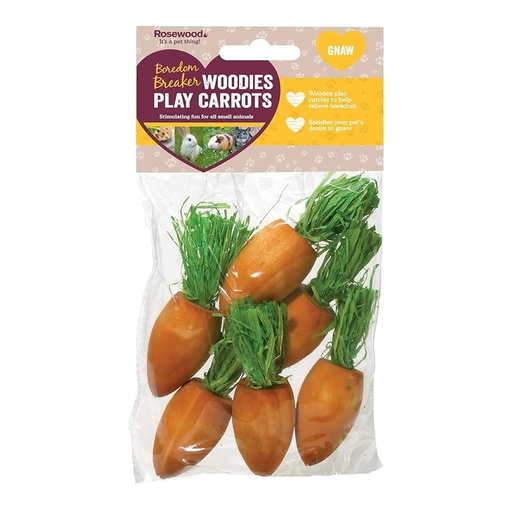
Why This Fits Their Persona: A three-piece set gives new owners a straightforward way to introduce chew-based enrichment in a rabbit, guinea pig or other suitable small-animal enclosure.
The listing identifies natural wood and vegetable-based dyes, rather than relying only on decorative appeal. Each piece can be removed when significantly worn.
Three separate wooden carrot shapes; natural wood construction for chewing and play.
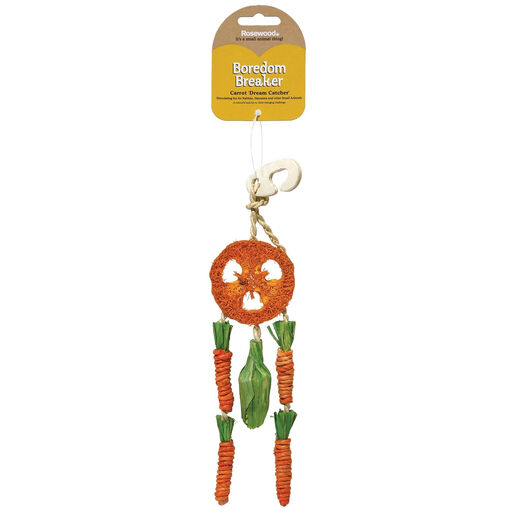
Why This Fits Their Persona: Suitable for owners who want one hanging item combining texture, movement and optional treat placement without taking up much floor space.
It includes listed materials—natural seagrass, wooden beads and safe cotton ropes—and provides a clear instruction to supervise initial use.
Carrot-shaped hanging design; dangling elements and varied textures for interaction.
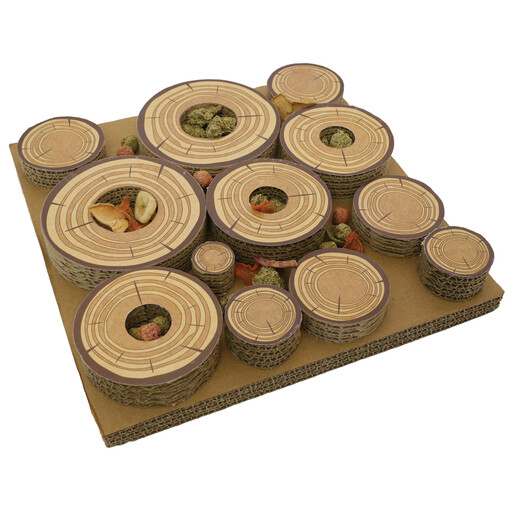
Why This Fits Their Persona: A practical choice for owners who want repeatable foraging sessions for hamsters, gerbils, mice, rats, small rabbits or guinea pigs.
The product specifies hidden compartments, pet-safe wood and dry-cloth cleaning. It also warns against use by larger animals or strong chewers.
Multiple treat compartments; compact log-shaped format designed for repeated exploration.
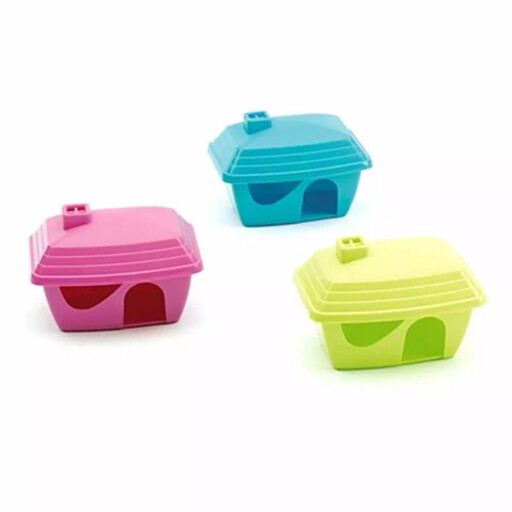
Why This Fits Their Persona: Designed for owners prioritising a dedicated sleeping area and easy cleaning within a hamster cage.
The house uses non-toxic plastic, includes ventilation and is described as easy to clean. Check the fit for your hamster before purchase.
Rounded hideaway design; washable plastic construction with ventilation.
We have compiled a complete, real-time list of products that fully satisfy these strict selection criteria and UK safety regulations.
Introduce one new item at a time so you can observe how your pet interacts with it. Rotate suitable toys rather than filling the enclosure with too many objects at once. This helps preserve interest and leaves enough room for normal movement.
For chewing and foraging, consider the Rosewood Boredom Breaker Small Chew Tube, made from natural willow wood and sized for hamsters, gerbils, mice and other small rodents. The hollow centre can hold a small treat, but the toy should be removed when significantly worn.
For a more involved activity, the Rosewood Naturals Hide 'n' Treat Maze measures 28cm by 18cm and combines compartments with gnaw-friendly surfaces. It should be placed on a flat surface and checked for loose or damaged sections.
There is no fixed lifespan. A lightly used plastic hideaway may remain suitable longer than a frequently chewed wooden toy. Inspect items at every cleaning session and replace them when cracked, splintered, heavily soiled or loose.
Not automatically. Some products list rabbits, guinea pigs and hamsters together, while others are intended for smaller rodents only. Compare the manufacturer’s species guidance, dimensions and warnings before buying.
The toy itself does not require power. Ongoing cost comes from the treats placed inside it. Use small portions of suitable food, refresh food regularly and keep treats within your pet’s normal balanced feeding plan.