
24/7 Customer Support

Free returns

Same-day & Next-day Delivery

Quality Guaranteed

Unlock Your Welcome Offers: FREE Delivery | Up to 80% OFF | Free 30-day JoyPlus trial
Download the APP
Rabbits, guinea pigs, chinchillas, hamsters and other small herbivores often benefit from activities that encourage natural searching and chewing. A small animal treat and forage toy can make feeding more engaging, but not every maze, tunnel or wooden accessory is suitable for regular use.
Before buying, look beyond colourful packaging and broad claims about enrichment. The useful questions are: can your pet access the treats safely, is the item large enough for comfortable movement, and will it withstand normal chewing?
A maze may look entertaining but become frustrating if the openings are too narrow or the route is excessively complicated. Small pets should be able to investigate the toy without becoming trapped or having to force their head into a compartment.
Choose a design with visible, accessible spaces and introduce it gradually. You can begin by placing treats near the entrance before moving them deeper into the maze.
Some products are designed mainly for appearance and may contain coatings, glues, synthetic fibres or painted components that are not intended for gnawing. A product described as “wooden” is not automatically appropriate for a rabbit or guinea pig.
Check the product description and packaging for material information. The referenced maze uses edible wood fibres, natural loofah, vegetable-based binding agents and food-grade dyes, according to its product information. Even with a product made for small herbivores, inspect it regularly and remove it if sections become loose or damaged.
A treat maze is an activity, not a substitute for hay, suitable food, exercise space or social interaction. Treats should remain a small part of the overall diet, particularly for rabbits and guinea pigs.
For longer-lasting value, look for a reusable design that can be refilled with small portions of suitable food. This is generally more practical than buying a single-use activity each time your pet needs stimulation.
The 28cm x 18cm dimensions of a maze provide a useful reference point for owners comparing enclosure accessories. Measure your available floor space before ordering, and consider whether your pet can turn around and approach the openings comfortably.
A rabbit forage toy needs enough room for nose-led exploration, while a hamster foraging toy should have access points appropriate for its smaller size. Do not assume a toy labelled for several species will suit every individual pet equally.
For a natural chewing toy, prioritise clear material details rather than vague phrases such as “eco-friendly” or “non-toxic”. Look for:
The maze’s product information identifies edible portions and gnaw-friendly surfaces. These features make it relevant to owners seeking a small pet gnaw toy, but chewing habits vary. The manufacturer warning states that it is not suitable for aggressive chewers, so supervision is important.
Treat residue can attract insects or develop mould if left in a damp enclosure. Refresh hidden treats daily, remove uneaten food and clean the toy according to the label. Allow it to dry fully before returning it to the enclosure.
A reusable toy is only economical when it remains hygienic and structurally sound. Replace it when compartments split, binding loosens or your pet removes large pieces.
The listed maze is the relevant option among the supplied products for this specific use. The other listed items are intended for children, dogs, home décor or cosmetics, so they should not be repurposed as animal enrichment equipment.
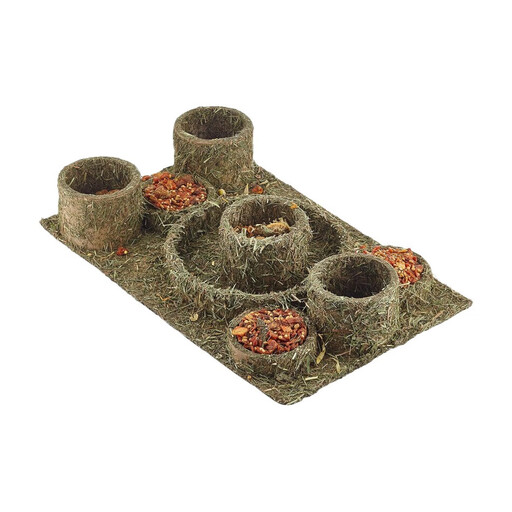
Why This Fits Their Persona: One reusable maze can provide repeated treat-searching sessions without needing a battery or electronic parts. Its 28cm x 18cm footprint is suitable for owners planning enrichment within a suitably sized enclosure.
The product information specifies materials, dimensions, use instructions and replacement warnings, helping shoppers assess it more clearly than a vague decorative toy.
Reusable maze format; combines hidden treats with gnaw-friendly surfaces; no batteries required.
Why This Fits Their Persona: Owners prioritising clearly described construction may value the combination of edible wood fibres, natural loofah and vegetable-based binding agents listed for this interactive small animal toy.
The material list gives buyers more useful information than relying on an unsupported claim that a product is naturally safe for every pet.
Named material components; hidden compartments; suitable for rabbits, guinea pigs, chinchillas, hamsters and other small herbivores according to the listing.
Why This Fits Their Persona: It suits owners who want one activity to combine a treat maze for rabbits or guinea pigs with exploratory movement and a natural chewing toy surface.
It is intended to be refilled and inspected, rather than presented as a disposable activity. The instructions also call for supervision during initial use.
Dual forage-and-gnaw format; generous listed dimensions; daily treat refreshing supports repeated use.
We have compiled a complete, real-time list of products that fully satisfy these strict selection criteria and UK safety regulations.
A rabbit forage toy or guinea pig enrichment toy can encourage searching and movement when used alongside hay, exercise and normal feeding. The referenced maze is listed for rabbits, guinea pigs, chinchillas, hamsters and other small herbivores. Individual size, chewing behaviour and enclosure space still need to be considered.
There is no fixed lifespan. It depends on how often the toy is used, how aggressively your pet chews it and whether it is kept dry. Inspect it before each use and replace it if parts become loose or damaged.
The maze itself does not require batteries or charging. Its ongoing cost comes from the treats placed inside and any replacement needed through normal wear. Using small portions from your pet’s existing suitable treat allowance can help control costs, but feeding amounts should remain appropriate for the species.