
24/7 Customer Support

Free returns

Same-day & Next-day Delivery

Quality Guaranteed

Unlock Your Welcome Offers: FREE Delivery | Up to 80% OFF | Free 30-day JoyPlus trial
Download the APP
Choosing small animal treats is not simply a matter of picking the most colourful packet. Rabbits, guinea pigs, hamsters, chinchillas, degus, gerbils, mice and rats have different feeding patterns, body sizes and chewing habits. A product that suits a rabbit may be unsuitable for a degu, particularly when it contains fruit, seeds or other sugary ingredients.
This guide from the Joybuy Product Recommendation Officer focuses on the details that matter at the point of purchase: ingredient balance, fibre content, species suitability, pack size and whether a treat also provides useful enrichment.
The word “natural” does not automatically mean a product is appropriate for every small pet. Dried banana, apple, carrot and other fruit ingredients can be more suitable as occasional rewards than everyday snacks. Chinchillas and degus, in particular, need careful portion control when a treat contains naturally sweet ingredients.
Always check:
Edible gnaw toys can encourage chewing and activity, but they should not replace a pet’s normal diet. Rabbits, guinea pigs and other herbivores still require suitable hay and species-appropriate main food. A treat with an attractive shape or hanging clip may offer enrichment, but its nutritional contribution depends on the ingredients and feeding quantity.
A 1kg bag may appear economical, but it is only practical if it can be stored properly and used before the contents become damp or stale. Conversely, a small single-piece item may cost more per use but suit owners who are introducing treats gradually or have one small pet.
Look for clear storage instructions, resealable packaging where available and a quantity that matches your household.
For hay-based and herb-based natural small animal treats, fibre is an important comparison point. The ingredient list is shown in descending order by weight, so a product listing meadow hay, timothy hay or plant fibre near the beginning may be more aligned with herbivore feeding routines than one dominated by cereals, seeds or fruit.
Examples from the available range include:
These figures describe the product’s analysis; they do not make a treat a substitute for a balanced diet.
A suitable treat should be manageable for the pet’s mouth and behaviour. Large hay cubes and wooden logs may suit rabbits or guinea pigs, while smaller animals may need smaller pieces or closer supervision.
Check:
Small animal chew toys and edible gnaw toys should be removed when heavily soiled, damaged or reduced to unsafe fragments.
Specific guidance is more useful than general wording such as “for all small pets”. For example, some products list rabbits, guinea pigs, chinchillas and degus, while others also include hamsters, gerbils, mice and rats.
Serving instructions in this range vary from:
Introduce new treats gradually and provide fresh drinking water. If your pet has a diagnosed dietary condition or unusual digestive sensitivity, ask a qualified veterinary professional for individual advice.
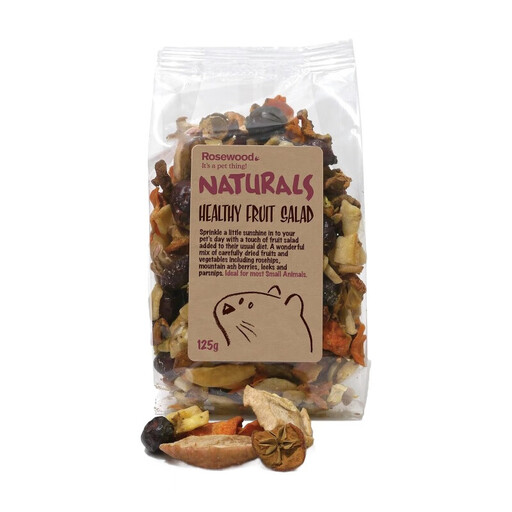
Why This Fits Their Persona: A modest 125g pack offers variety for owners starting to compare rabbit treats, guinea pig treats and other small herbivore snacks without committing to a large quantity.
The composition is clearly listed and the product states no added sugars or artificial preservatives. Its fruit content still means portions should remain occasional and measured.
125g pack; mixed rosehips, banana, apple, carrot and herbs; stated feeding guide of 1–2 pieces daily for adult small herbivores.
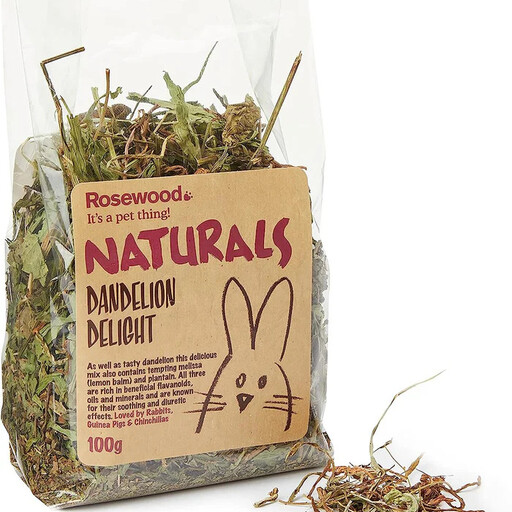
Why This Fits Their Persona: Owners who prefer a simple ingredient list may value this single-ingredient treat for adult rabbits, guinea pigs and hamsters.
There is no long flavour blend to interpret: the composition states 100% dandelion. This makes ingredient checking more straightforward.
100g pack; 100% dandelion composition; listed crude fibre of 15%; crunchy format for supervised chewing.
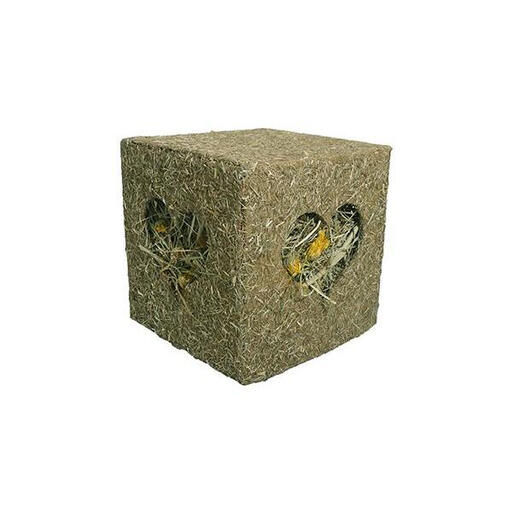
Why This Fits Their Persona: A larger rabbit, guinea pig or chinchilla household may want a treat that combines forage access with a gnawing activity rather than a quick snack.
It is described as a hay-based forage and gnaw toy, rather than a fruit-heavy snack. Replace it if it becomes damp or soiled and supervise initial use.
Large single cube; timothy and meadow hay composition; listed crude fibre of 30%; suitable for daily forage access according to the product information.
For forage treats for rabbits, the Nature’s Salad 200g mix can be sprinkled over hay or pellets in small quantities to encourage searching behaviour. The Herbal Garden Salad provides dandelion, nettle, plantain, raspberry leaf and other herbs, with a stated crude fibre level of 18%.
For more active chewing, the Veggie Burst Pea Pods contain timothy hay, barley grass, pea fibre, alfalfa, pumpkin, carrot and apple. The pack contains three pieces and the stated guide is one to two pieces weekly. The Nibble Woodroll with Carrot is suitable for a wider range of animals, including rats and mice, and combines an edible wood exterior with a carrot-based centre.
Owners shopping specifically for chinchilla treats or degu treats should pay close attention to the product’s fruit and vegetable content. The Chinchilla & Degu Delight is labelled for adult chinchillas and degus, while the Willow Treat Basket includes banana and carrot components that the product information advises offering sparingly to these species.
We have compiled a complete, real-time list of products that fully satisfy these strict selection criteria and UK safety regulations.
It depends on the species, product and the rest of the diet. Some dried herb treats list one to two pieces daily, while harder gnaw products may be recommended once or twice weekly. Follow the pack guidance, keep portions small and reduce treats if your pet is also receiving other rewards.
Only if the product is appropriate for the species and remains clean and intact. Inspect it regularly, remove sharp or loose pieces and follow any supervision instructions. Edible toys such as hay cubes and gnaw logs should be replaced when damaged, damp or heavily soiled.
Price alone does not indicate suitability. Compare the cost per serving, ingredient list, fibre analysis, pack size and expected use. A larger hay-based product may provide longer-lasting enrichment, while a small single-ingredient pack may be more economical for occasional feeding or gradual introduction.