
24/7 Customer Support

Free returns

Same-day & Next-day Delivery

Quality Guaranteed

Unlock Your Welcome Offers: FREE Delivery | Up to 80% OFF | Free 30-day JoyPlus trial
Download the APP
Buying small animal treats can seem straightforward, but colourful packaging and broad claims often make comparison difficult. A snack labelled “natural” may still contain cereals or added flavourings, while a chew toy may be too small, too hard or unsuitable for your pet’s species.
The right choice depends on more than appearance. UK owners should check the ingredients, fibre content, feeding guidance and intended use before adding treats to a rabbit, guinea pig, hamster, chinchilla, degu, gerbil, mouse or rat’s routine.
Most snacks are complementary pet food, not a replacement for a species-appropriate staple diet. Rabbits, guinea pigs and chinchillas generally need constant access to suitable hay, while smaller rodents require a balanced food formulated for their species.
Treats should be offered in moderation and adjusted according to your pet’s size, age, activity and existing diet. A product with attractive fruit, vegetable or floral ingredients can still be unsuitable in large quantities.
“Natural” does not automatically mean low in sugar, high in fibre or appropriate for every small pet. Read the full composition rather than relying on the front of the pack. Cereals, vegetable derivatives and fruit ingredients may all be useful in a complementary snack, but their position in the ingredient list matters.
Look for transparent information on crude fibre, crude fat, moisture and feeding amounts. These figures allow a more practical comparison between natural small animal treats.
Edible chew toys can encourage gnawing and provide enrichment, but they should not be treated as a cure for dental problems. A chew must also be appropriately sized, free from unsafe packaging and used under supervision, particularly during the first session.
Replace any item once it becomes damaged or develops sharp edges. If your pet shows difficulty eating, excessive drooling or other unusual behaviour, seek veterinary advice rather than relying on small animal dental treats.
For herbivores such as rabbits and guinea pigs, compare crude fibre and crude fat on the label. For example, Rosewood Naturals Little Hearts lists 18% crude fibre and 2% crude fat, while the Rosewood Veggie Burst Pinecones list 13.6% crude fibre and 0.7% crude fat.
These figures do not determine whether a snack is suitable on their own, but they help identify options that fit a moderate treat routine. Always compare the product with your pet’s main food rather than assessing it in isolation.
Check whether the product is intended for rabbits, guinea pigs, hamsters, chinchillas or other rodents. A snack suitable for several species may still need different portion sizes.
For example, the Cornflower & Daisy Sticks feeding guide states 1–2 sticks daily as a complementary treat, with the amount adjusted according to size and dietary needs. Little Hearts provides a small, portionable format, but its guidance still recommends moderation and adjustment for individual pets.
Choose the format according to how your pet uses treats:
Treats should not be left in damp bedding, and opened packs should be resealed and stored in a cool, dry place. Fresh drinking water should always be available.
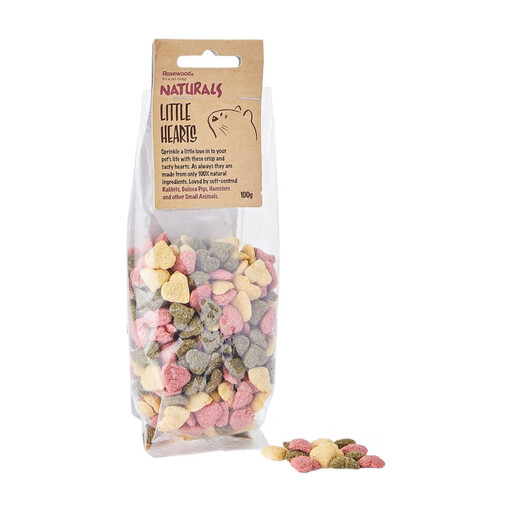
Why This Fits Their Persona: The small heart format is easy to portion for owners introducing occasional rabbit treats, guinea pig treats or snacks for other small herbivores.
The pack provides composition and analytical constituents rather than relying only on decorative packaging or broad natural-food wording.
18% crude fibre; 2% crude fat; heart-shaped pieces allow straightforward portioning.
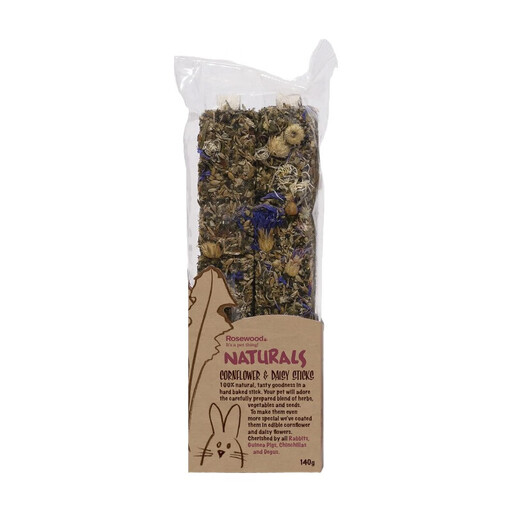
Why This Fits Their Persona: Owners who prefer a clearly described floral snack can offer these sticks to rabbits, guinea pigs, hamsters and other small herbivores as part of a balanced diet.
The product gives a defined feeding guide and lists cereals, cornflower, daisy, vegetable derivatives, minerals and vitamins.
140g pack; 14% crude fibre; no artificial colours, flavours or preservatives listed in the product details.
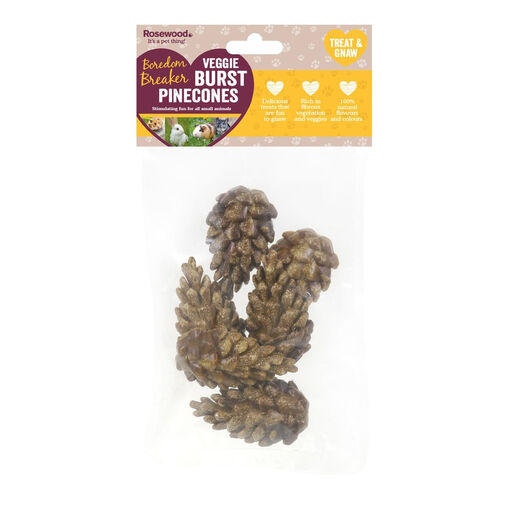
Why This Fits Their Persona: A six-piece format suits multi-pet households and owners looking for rodent treats that combine gnawing with foraging activity.
Its stated ingredients and 7cm format make the intended snack and gnawing use clearer than a generic hanging treat.
Six pieces per pack; 0.7% crude fat; underside cavities can hold small animal treat paste for interactive feeding.
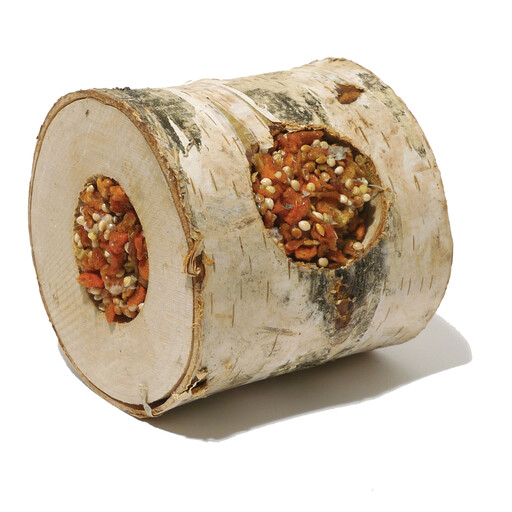
Why This Fits Their Persona: Owners seeking a longer-lasting activity for rabbits, guinea pigs, chinchillas, degus and rodents may prefer a chew-and-reward format.
The product is clearly presented as a pack-of-one edible woodroll, with instructions to supervise first use and replace it when damaged or consumed.
Carrot filling; made from edible materials according to the product details; suitable for several rabbit and rodent species.
We have compiled a complete, real-time list of products that fully satisfy these strict selection criteria and UK safety regulations.
Treats should remain a small part of the overall diet. Follow the pack’s feeding guide, consider your pet’s species and size, and reduce the amount if your pet is receiving other snacks. Hay, suitable staple food and fresh water should remain the priority for herbivorous pets.
Some are designed for both rabbits and rodents, but suitability depends on size, ingredients and chewing behaviour. Check the listed species, remove all packaging and supervise the first use. A chew toy should be replaced if it becomes damaged or produces sharp fragments.
No. Even a snack labelled as a high-fibre pet treat is still a complementary product. It should not replace the constant access to appropriate hay required by many small herbivores. Use treats for occasional reward, enrichment or supervised gnawing rather than as the foundation of the diet.