
24/7 Customer Support

Free returns

Same-day & Next-day Delivery

Quality Guaranteed

Unlock Your Welcome Offers: FREE Delivery | Up to 80% OFF | Free 30-day JoyPlus trial
Download the APP
Buying small animal treats can seem straightforward until you compare the ingredients, feeding guidance and intended use. A colourful packet may promise natural flavours or dental benefits, yet the product might not suit your pet’s species, daily diet or chewing habits.
For UK owners of rabbits, guinea pigs, hamsters, gerbils, mice, rats, chinchillas and degus, the most useful approach is to look beyond the front of the packaging. Check what the treat is made from, how it is intended to be used and whether the feeding instructions are realistic for your pet.
Heart shapes, fruit fillings and bright packaging can make a treat look appealing to owners, but appearance does not confirm that it is suitable for every small pet. Rabbits and guinea pigs have different dietary priorities from hamsters and rats, while chinchillas and degus may need particularly careful portion control.
Always check the named species on the label. A product described for rabbits, guinea pigs and smaller rodents may be suitable across several species, but it should still be offered in moderation.
The phrase “natural small animal treats” does not automatically mean low in calories, high in fibre or appropriate as a staple food. Some treats contain cereals, vegetable derivatives or fruit ingredients that should remain occasional extras rather than replace hay, species-appropriate pellets or fresh food.
Look for a clear composition and analytical information. Ingredients such as hay, plant fibre, herbs and vegetables can help you understand the product’s purpose, but portion size remains important.
A small biscuit may provide a quick reward but offer little lasting activity. Conversely, a woodroll or pinecone-style product may be designed for gnawing and foraging rather than rapid consumption.
If you want small animal chew treats, check whether the item is made from edible materials, whether it contains fillings and whether it should be removed once damaged. Supervision during first use is a sensible precaution, particularly with unfamiliar shapes or attached toys.
For herbivorous pets, fibre is a key part of the everyday diet. Treats should complement, not displace, the main food. As a practical comparison, Rosewood Naturals Little Hearts list 18% crude fibre, while the Veggie Burst Pinecones list 13.6% crude fibre and 0.7% crude fat.
These figures are not directly comparable across every product format, but they help distinguish a fibre-focused option from a treat intended mainly for flavour. Check the full ingredient list, not only words such as “natural” or “vegetable”.
Choose the format according to how your pet interacts with food:
The product should be an appropriate size for the animal. Never assume that a larger treat is more engaging; it may simply be harder to monitor.
In the UK, treats are generally sold as complementary pet food, so the packet should explain how they fit alongside a balanced diet. Check:
Introduce new healthy pet treats gradually and watch for changes in appetite, droppings or behaviour. If your pet has a diagnosed dietary condition, ask a qualified veterinary professional before changing its diet.
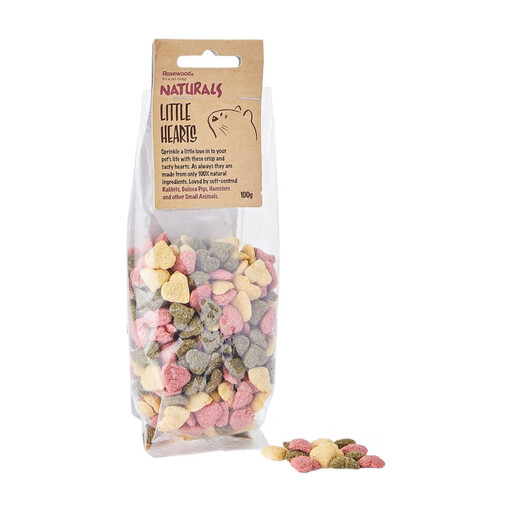
Why This Fits Their Persona: The 100g pack offers a straightforward starting point for owners introducing portioned treats to adult rabbits, guinea pigs, hamsters and other small herbivores.
The pack provides stated feeding guidance rather than leaving portion size entirely to guesswork.
Heart-shaped pieces are easy to portion; the listed crude fibre content is 18%.
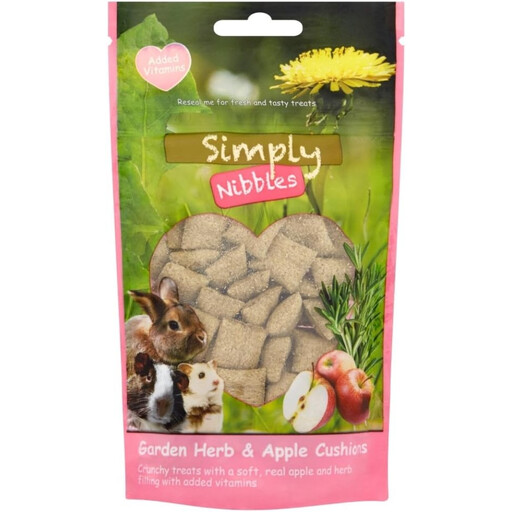
Why This Fits Their Persona: Owners seeking a more varied reward can use the crunchy outer cushion and soft apple-and-herb centre for hand-feeding or simple enclosure-based stimulation.
The listed ingredients identify powdered apple at 4% and garden herbs at 2%, helping shoppers assess the recipe more clearly.
Suitable for several small-pet species; can be fed by hand or hidden around the habitat.
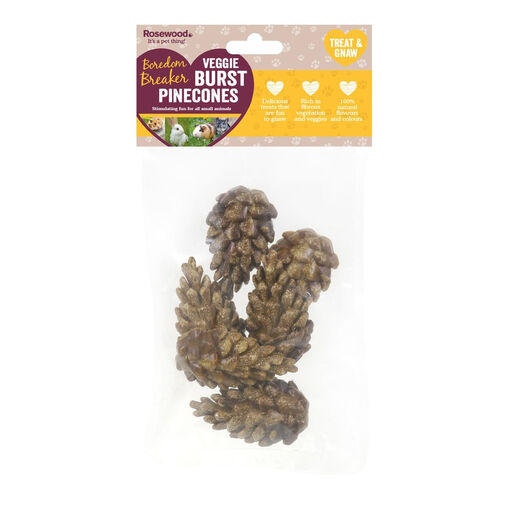
Why This Fits Their Persona: Suitable for owners managing several rodents or wanting more interactive enrichment for rabbits, chinchillas, degus, hamsters, gerbils, mice and rats.
The six-piece format supports repeated enrichment sessions, while each item can be placed in the enclosure rather than consumed immediately by hand.
Contains wheat plant, oat bran and pea fibre; underside cavities can hold small animal treat paste.
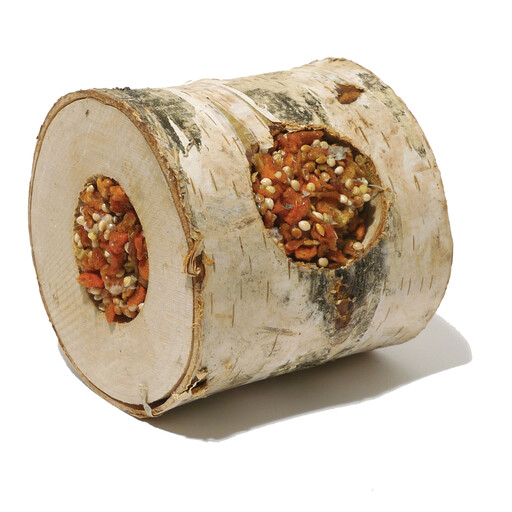
Why This Fits Their Persona: A practical match for pets that spend time chewing, investigating and extracting food from enrichment items rather than taking a quick snack.
It is clearly presented as a treat-and-gnaw product, with instructions to supervise first use and replace it when fully consumed or damaged.
The edible woodroll has a carrot-centre filling and can be placed in the enclosure or attached to cage bars.
We have compiled a complete, real-time list of products that fully satisfy these strict selection criteria and UK safety regulations.
There is no single amount for every species or pet. Follow the product label, then adjust for your animal’s size, age, activity level and regular diet. For example, Little Hearts provide a stated daily guide, while chewable enrichment items are generally offered in moderation rather than used as unlimited food.
Only when the packaging specifically names those species or indicates suitability for small herbivores. Compare the ingredients and feeding instructions before sharing a product between pets. A treat designed for a rabbit may not be appropriate for every rodent.
Not necessarily. Some products combine food and chewing, such as an edible woodroll, while others are primarily snacks. Treat them as complementary enrichment and inspect each item during use. Replace anything that becomes damaged, sharp or unsuitable for your pet’s enclosure.