
24/7 Customer Support

Free returns

Same-day & Next-day Delivery

Quality Guaranteed

Unlock Your Welcome Offers: FREE Delivery | Up to 80% OFF | Free 30-day JoyPlus trial
Download the APP
Choosing small animal treats and toys can seem straightforward until you compare ingredient lists, materials, sizes and feeding instructions. A colourful product may attract attention in the shop, but it may not suit your rabbit, guinea pig, hamster or chinchilla.
The practical aim is to combine a balanced everyday diet with suitable opportunities for foraging, chewing and movement. The following guide highlights common buying traps, the specifications worth checking and product options for different household needs.
Treats should complement, not replace, a species-appropriate diet. Products containing fruit, vegetables or cereals can be appealing, but some contain natural sugars or concentrated ingredients. This matters particularly for animals with more sensitive dietary requirements, such as chinchillas and degus.
Check the feeding guide, composition and analytical constituents before buying. A product labelled as a complementary pet food should be offered in moderation, with fresh water always available.
Natural small animal treats can still vary considerably in fibre, sugar and texture. Fruit-based treats may be appropriate in small portions for some pets, while hay-based or herb-based options may fit herbivorous diets more easily.
Likewise, natural materials used in toys are not automatically risk-free. Inspect for loose threads, sharp edges, staples, glue or small detachable parts. Remove any item that becomes heavily soiled, frayed or damaged.
A toy can look attractive in a product photograph yet provide little useful engagement in an enclosure. Rabbits and guinea pigs often benefit from floor-based items to nudge, toss and chew. Hamsters, gerbils, mice and rats may respond to hiding places and foraging challenges.
Look for a clear purpose: gnaw toys for chewing, forage toys for small animals for food-seeking behaviour or hanging items for climbing and stretching. Rotating two or three suitable items can be more useful than filling the enclosure with products your pet ignores.
For rabbits and guinea pigs, hay should remain central to the daily diet. When comparing rabbit treats or guinea pig treats, prioritise the stated crude fibre percentage and serving size rather than relying on words such as “healthy” or “wholesome”.
For example, the Meadow Hay Cookies list 32% crude fibre and are made from 100% meadow hay. By comparison, the Healthy Fruit Salad lists 18% natural sugars and should be portioned carefully according to the product guidance. A fruit-based snack can add variety, but it should not become an unrestricted food.
Introduce new treats gradually and monitor droppings, appetite and general behaviour. If your pet has a diagnosed condition or a restricted diet, seek guidance from a qualified veterinary professional before changing its food.
For small animal chew toys, check exactly what the toy is made from. Natural wood, loofah, willow, corn leaf and bulrush are commonly used materials, but construction still matters.
Prefer products with clearly described materials and avoid toys containing accessible wire, staples or glue. Vegetable-based dyes may be specified, but every toy should still be checked regularly. Supervise initial use, especially with a new pet or a particularly enthusiastic chewer.
A toy must be accessible without creating a trap or obstruction. Hanging toys should be positioned at a safe, reachable height, while floor toys should not reduce essential space for resting, eating and movement.
Also consider maintenance. A washable forage mat may suit an indoor enclosure, whereas a woven toy needs dry storage to limit moisture and deterioration. Always follow the product label and replace items once loose parts appear.
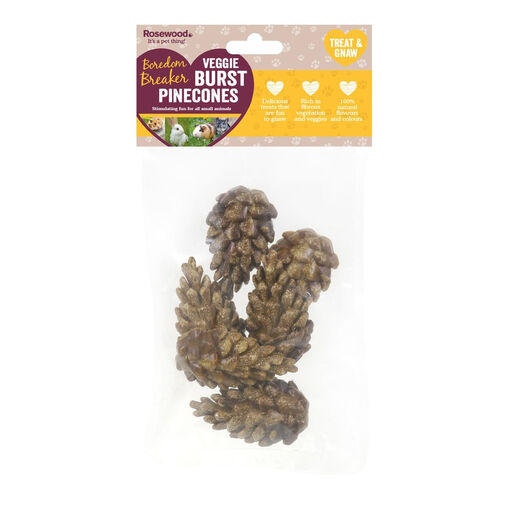
Why This Fits Their Persona: A six-piece pack gives new owners several opportunities to introduce supervised gnawing and treat-based enrichment without buying separate products immediately.
It combines a gnawable pinecone shape with underside cavities for small animal treat pastes rather than offering a purely decorative item.
Six pieces per pack; listed crude fat is 0.7% and crude fibre is 13.6%.
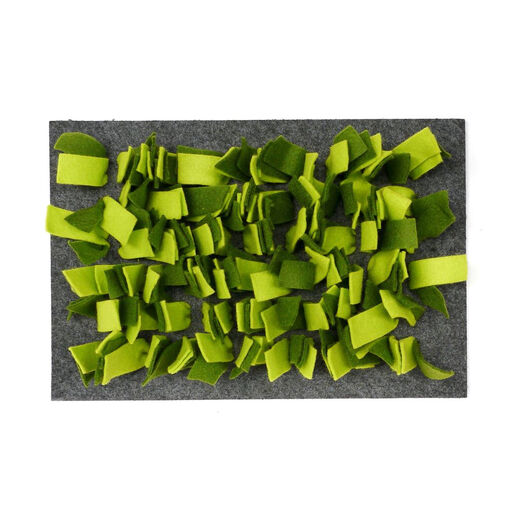
Why This Fits Their Persona: Suitable for owners who want a reusable enrichment accessory that can be incorporated into indoor routines and cleaned between uses.
It creates an actual hide-and-seek activity using food rather than depending only on colour or dangling decoration to attract attention.
Measures 29.5 x 20cm; hand washable and suitable for several small animal species.
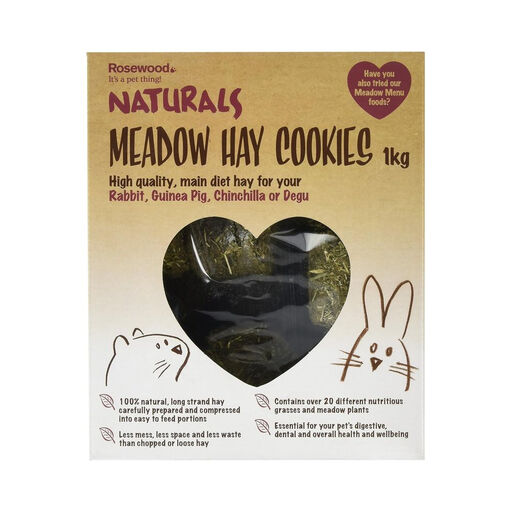
Why This Fits Their Persona: The larger pack may suit multi-pet homes or owners who use small portions regularly for enrichment and rewards.
The single-ingredient composition makes it easier to identify what you are feeding and avoids a long list of added flavours or sweeteners.
Made from 100% meadow hay; 1kg net quantity and 32% crude fibre listed.
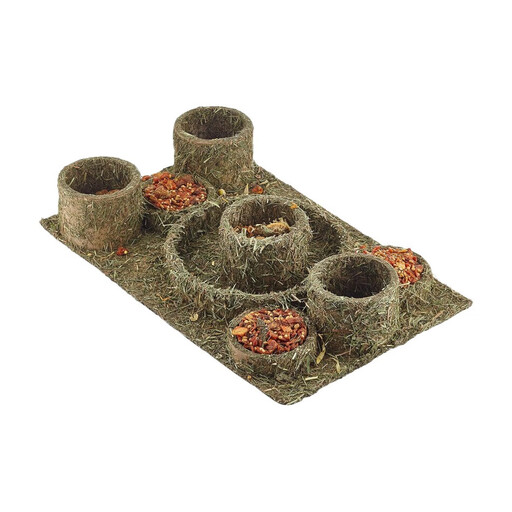
Why This Fits Their Persona: Owners looking for a structured activity can hide small portions of suitable food in the compartments and refresh them as needed.
Its 28cm x 18cm maze format gives the activity a defined purpose, while regular inspection helps address loose or damaged parts.
Offers hidden compartments; combines foraging surfaces with gnaw-friendly materials.
We have compiled a complete, real-time list of products that fully satisfy these strict selection criteria and UK safety regulations.
A treat-and-toy combination can also be useful. The Nibble Woodroll with Carrot, for example, is designed to combine edible filling with a chewable outer surface. The Hide ’n’ Treat Maze and Snuffle Forage Mat offer food-searching activities without requiring every enrichment session to involve a new edible item.
Use the feeding instructions on the packaging and keep treats as a small supplement to the regular diet. Start with a small amount when introducing a new product, provide fresh water and observe your pet’s response. Hay and the normal species-appropriate food should remain the dietary foundation.
Lifespan depends on the material, moisture, chewing intensity and enclosure conditions. A wooden or loofah toy may last days or weeks, while a washable forage mat can be reused for longer if it remains intact. Inspect items frequently and replace them when heavily worn, soiled or damaged.
Not necessarily. A hanging toy may suit an active climber but be unsuitable if it creates a snagging risk or cannot be reached safely. Select enrichment toys for rabbits and rodents according to species, size, temperament and available enclosure space. Supervise first use and remove any toy your pet attempts to ingest inappropriately.