Small-batch brewers with little storage
If you make one or two cups at a time and put the grinder away afterwards, look closely at its capacity and stored size. A manual model may suit you if you are comfortable grinding by hand.


Choose a compact manual grinder if you usually make one or two cups and value easy storage more than speed. If you grind frequently, an electric burr grinder reduces the hand work but needs more room; for espresso, check the exact model’s stated grind range rather than assuming any burr grinder will suit it. Match capacity to your usual portion, not just the size of the bean hopper.
If you make one or two cups at a time and put the grinder away afterwards, look closely at its capacity and stored size. A manual model may suit you if you are comfortable grinding by hand.
If you alternate between espresso and coarser brews, choose by the exact model’s stated adjustment range. A grinder described for filter coffee or moka pot should not be assumed to cover espresso.
If you grind often, electric operation or timed dosing may justify giving a grinder cupboard or counter space. Check the space it occupies as well as how you will clean it.
Choose it when: You usually grind for one or two cups, want to store the grinder away and do not mind turning the handle.
Trade-off: Hand grinding takes time and effort, particularly at fine settings; capacity and adjustment differ between variants.
Choose it when: You regularly make coarser brews and want electric grinding without needing an espresso setting.
Trade-off: A hopper takes space and does not by itself make a grinder suitable for single dosing. H.R. Higgins says the Wilfa Svart Aroma CGWS-130B does not offer an espresso grind.
Choose it when: Espresso is a regular drink, or one grinder must also cover coarser methods.
Trade-off: Allow room for the appliance and check that its adjustment and dosing arrangement suit your particular espresso workflow.
| Concern | What to check | Who this matters to |
|---|---|---|
| Storage and portion size | Compare the grinder’s stored dimensions and stated capacity with your usual bean dose; check whether the handle folds. | If I make one or two cups and put the grinder away after use, I need it to fit my storage space without holding far more beans than I use. Around 37% of consumers put this fit first. |
| Brewing range | Check the exact model’s stated settings for your brewer, especially if you make espresso. | When I switch between espresso and coarser brews, I need an adjustment range stated for both rather than a general burr-grinder description. For around 36% of consumers, brewing range is the primary concern. |
| Daily effort and cleaning | Decide whether hand grinding is practical for your routine; check any timer and the maker’s cleaning instructions. | If I prepare coffee repeatedly, the effort of each grind and the cleaning routine can decide whether a model works for me. Ease of daily use comes first for around 27% of consumers. |
A small stated footprint and a large bean hopper describe different things. Wilfa states a 250 g hopper for the Svart Aroma, while Timemore lists 20 g for standard C3 variants and 30 g for Max variants.
Measure where you will keep the grinder and compare its capacity with the amount you normally grind. If you use pre-weighed beans, check how the exact model handles them.
Baratza assigns Encore ESP settings 1–20 to espresso, while H.R. Higgins says the Wilfa Svart Aroma CGWS-130B does not offer an espresso grind.
If espresso matters to you, check the specific model’s stated espresso range and adjustment system before ordering.
A model name alone does not establish the voltage, plug or documentation supplied with a particular electric grinder.
Check the exact version’s rating plate, plug and documentation for your intended place of use, as well as the seller’s return terms.
Capacity, grind range and power arrangements can differ between variants. Timemore’s C3-family capacities, for example, depend on the precise model.
At checkout, confirm the full model name and the specifications that matter to your usual dose and brewing method.
Its manual C3 family offers capacities aimed at relatively small doses, with differences between variants.
The manual Mini-Slim + is an option to examine for one- or two-cup preparation.
The electric Encore ESP has separately stated settings for espresso and coarser brews.
The electric Dose Control Pro is worth examining if timed dosing and a stated espresso-to-French-press range matter to you.
The Svart Aroma CGWS-130B illustrates a filter-focused electric route with a timer and a stated small footprint.
These choices include portable electric grinders described for espresso and other brewing methods, plus two manual Timemore models. Compare each one with your normal portion, storage space and willingness to grind by hand.
 No image available
Consider this electric model if you want a stated range from espresso to French press. Its name specifies 30 settings and auto-stop operation; check how it handles your usual small dose and confirm the supplied electrical version.
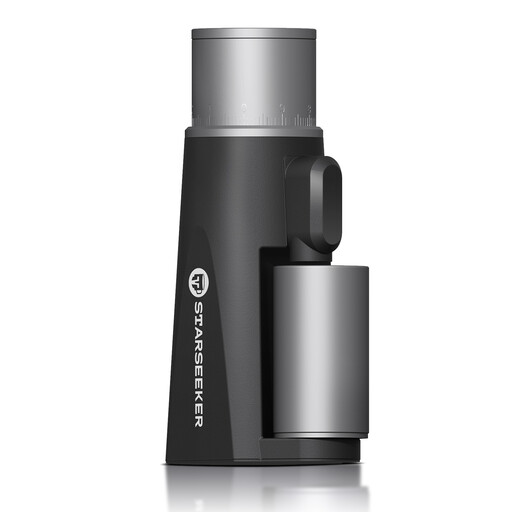 No image available
This wireless model is described for espresso and pour-over. Check its capacity against your usual portion and confirm the supplied electrical version; the product information also cautions that very light-roast beans may jam at fine espresso settings.
 No image available
Consider it if one-touch electric operation and a stated range covering espresso and French press suit your routine. The product name specifies Type-C charging and a 1000 mAh battery; check the dose capacity and supplied electrical documentation. Follow the product’s dry-brush cleaning instructions rather than rinsing the burr.
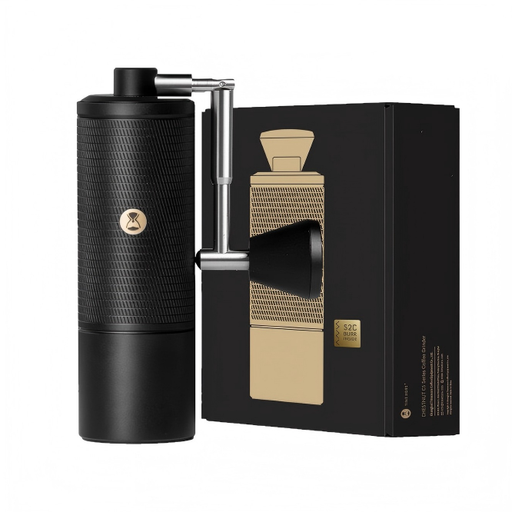 No image available
This hand grinder may suit one- or two-portion preparation if you accept the effort of manual grinding. Compare its stored size with your available space and check its capacity and cleaning instructions before ordering.
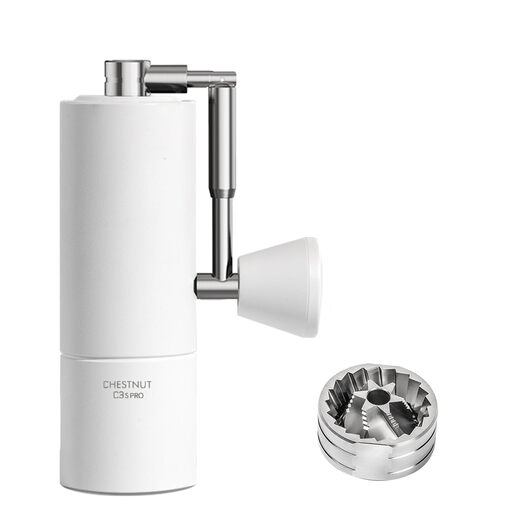 No image available
The foldable handle makes this manual model worth considering for cupboard storage, provided hand grinding suits your routine. Its name specifies an S2C stainless-steel conical burr and adjustment from espresso to French press. Confirm the exact variant’s capacity before choosing it: Timemore lists 20 g for the C3S Pro, while this product description states 30 g.
Yes, if compact storage matters and you do not mind grinding by hand. Hario Europe specifies the Mini-Slim + for up to two cups or 24 g, while Timemore lists 20 g for standard C3 variants; an electric model may be more practical if you grind repeatedly each day.
No: check the exact model’s stated espresso range. Baratza assigns Encore ESP settings 1–20 to espresso and Sage describes an espresso-to-French-press range for the Dose Control Pro, whereas H.R. Higgins says the Wilfa Svart Aroma CGWS-130B does not offer an espresso grind.
Confirm the exact model and supplied version, then check its rating plate, voltage, plug and documentation for where you will use it. Also compare its stored dimensions and cleaning instructions with the space and routine you have in mind.
Read the seller’s change-of-mind terms and how to arrange a return before using the grinder beyond inspection. Keep that separate from any remedies for goods that arrive faulty, damaged or misdescribed.