
24/7 Customer Support

Free returns

Same-day & Next-day Delivery

Quality Guaranteed

Unlock Your Welcome Offers: FREE Delivery | Up to 80% OFF | Free 30-day JoyPlus trial
Download the APP
Carving out a dedicated space for work or study in a UK home can be a real challenge. Whether you're in a compact city flat, a student hall, or trying to fit a home office into the corner of a bedroom, every square centimetre counts. The search for a small computer desk that is functional, stylish and doesn't dominate the room can feel overwhelming.
As the Joybuy Product Recommendation Officer, my role is to help you navigate the options. This guide is designed to provide practical advice and highlight some versatile choices, helping you find a workspace solution that fits your home and your needs perfectly.
Before you start browsing, a little planning goes a long way. Focussing on these key areas will help you narrow down your search for the ideal computer desk for small spaces.
The most critical step is to measure the area where the desk will go. Note the maximum width, depth and height you can accommodate. An 80cm desk is often a sweet spot, providing enough surface for a laptop and a notebook without a large footprint. Also, consider your own comfort. The standard desk height is around 73-76 cm, but ensure there's enough clearance for your legs and office chair.
The materials of a desk affect its durability, weight and appearance. A common combination for modern furniture is a particleboard top with a steel frame. This pairing offers a reliable and cost-effective solution that's sturdy enough for daily use.
From a style perspective, look for designs that create a sense of openness. A modern desk greige finish, for example, is a fantastic neutral. This grey-beige hybrid colour is subtle, sophisticated and reflects light, which can help a small room feel less cluttered.
Think about how you will use your desk for bedroom or home office. Do you need drawers and shelves for storage, or is a minimalist surface for a laptop sufficient? Pay attention to details like adjustable feet, which are essential for ensuring your study table is stable on slightly uneven floors—a common feature in older British properties. Finally, consider the assembly process; clear instructions and labelled parts can make setup much smoother.
Based on the criteria of functionality, style and suitability for compact living, here are a few recommendations to consider for your home.

Why It Stands Out: This desk is a prime example of a purpose-built solution for small rooms. Its dimensions are specifically designed to offer a functional workspace without overwhelming the area. The on-trend greige and black steel frame is a versatile combination that complements a wide range of contemporary interior designs.
Pros:
Who is it for?: This is an excellent choice for students needing a dedicated study table, remote workers setting up a home office desk in a spare room, or anyone who requires a compact, stylish and no-fuss workstation.
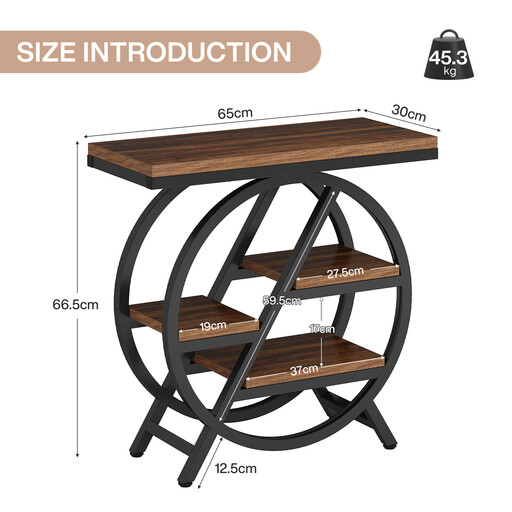
Why It Stands Out: For those with truly minimal space or needs, this piece challenges the traditional desk concept. Its vertical, three-tier design provides both storage and a surface in one, making it a highly versatile item for a living room or bedroom.
Pros:
Who is it for?: This table is ideal for individuals who don't require a permanent, full-time workstation but want a stylish, stable surface for occasional laptop use. It also works well as a storage companion to a more minimalist desk.
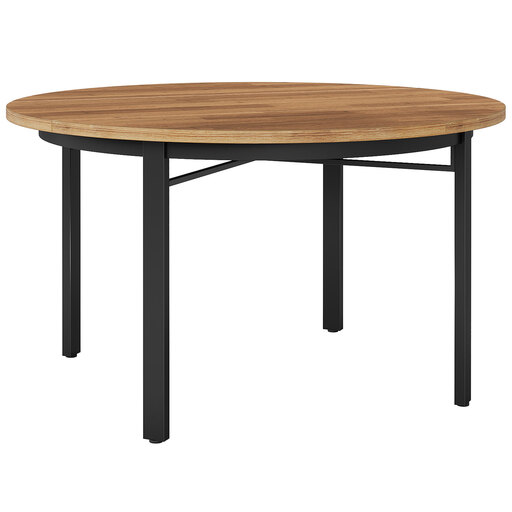
Why It Stands Out: In many studio flats and open-plan living areas, having separate furniture for every activity isn't feasible. This table is designed to serve double duty, functioning as a comfortable dining area that can quickly transform into a spacious work surface.
Pros:
Who is it for?: This is best suited for those living in smaller homes or flats who need one hard-working piece of furniture for meals, meetings and creative projects.
If these specific models aren't quite what you're looking for, don't worry. The right fit is out there. For a broader selection of designs that blend durability with modern aesthetics, you may want to browse our full collection of Metal & Wood Tables.
For most small spaces, a desk with a width between 80 cm and 100 cm is ideal. This provides enough room for a laptop or single monitor setup without feeling cramped. A depth of 50-60 cm is usually sufficient for comfortable use.
Consider placing the desk in a corner to maximise floor space. You can also choose a model with a visually light design (thin legs, light colour) to make it feel less bulky. Using wall-mounted shelves above the desk for storage can also free up the surface area.
Yes, greige is an excellent choice. As a light, neutral colour, it helps make a space feel brighter and more open. It's also incredibly versatile, pairing well with a wide variety of other colours and decor styles, from minimalist to modern rustic.