What to check before choosing
Start with the design commands you need at your fingertips, then check the space left for your mouse. Switch feel, connection options and desk positioning matter once the layout fits your work.
| Concern |
What to check |
Who this matters to |
| Direct access to design controls |
Compare the exact arrow, utility and navigation keys with your software shortcuts; inspect the secondary-function map. |
When I adjust a virtual craft, I want frequently used commands within easy reach without giving up mouse space. Around 36% of consumers put direct access to design controls first. |
| Feel during longer sessions |
Consider keyboard height and switch feel alongside mouse reach, desk arrangement and breaks. |
If I spend long stretches designing and gaming, I want a key feel and workstation arrangement that suit how I work. For around 29% of consumers, session feel is the primary concern. |
| Mouse room and game inputs |
Check the keyboard’s footprint against your usable mouse area, and decide whether you would adjust actuation settings. |
With very little desk space, I would rather give the mouse more room, even if some design commands need secondary functions. Around 21% of consumers prioritise mouse space and configurable game inputs. |
| Devices and custom controls |
Confirm the exact model’s connection modes, operating-system compatibility, UK key layout and remapping options. |
If I switch devices or rely on custom commands, I need the keyboard’s connections and controls to work with my setup. Device flexibility and customisation come first for around 14% of consumers. |
Joybuy keyboard choices
These keyboards offer different ways to balance desk space against direct-access keys, from 60% and 65% layouts to 75% and a 96% option with more keys. Compare each board with the commands you use and the mouse area available on your desk.
 No image available
HyperX Alloy Rise 75 Wireless Keyboard UK
Consider this 75% wireless model if you want a compact layout without choosing 60%; check its exact key arrangement against your design shortcuts.
Confirm the physical footprint and UK key arrangement for your desk and typing needs.
View on Joybuy
 No image available
ASUS ROG Falchion Ace HFX 65 Analog Gaming Keyboard, UK layout
The 65% format is worth considering when desk space is tight but you do not want to move straight to a 60% layout.
Its title specifies a UK layout. Check the exact key map and compatibility with the computer used for your design work.
View on Joybuy
 No image available
Razer Huntsman V3 Pro Mini 60% Analog Optical Keyboard
This 60% board suits a desk where mouse room takes priority, provided secondary-function access works for your design commands.
Razer specifies adjustable actuation from 0.1 to 4.0 mm. Check the exact key layout before buying, particularly if you need a UK arrangement.
View on Joybuy
 No image available
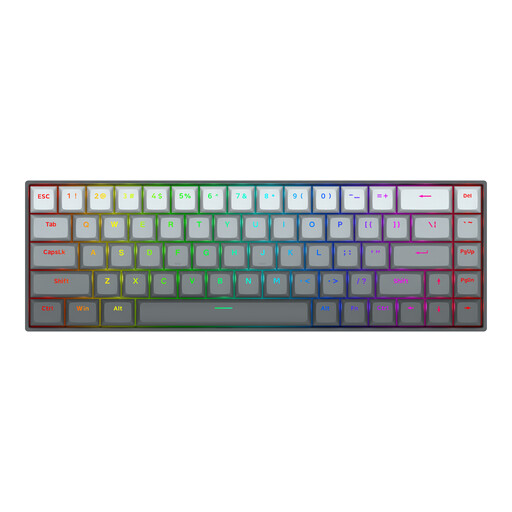
Redragon M68 Magnetic Switch Gaming Keyboard, 68 keys, US layout
Consider this compact 68-key model if a smaller keyboard is important and a US layout works with your typing and shortcuts.
The title specifies magnetic switches and a US layout. Check its physical dimensions against your desk before choosing it.
View on Joybuy
 No image available
ASUS ROG Strix Scope II 96 Wireless Gaming Keyboard, black, UK layout
A 96% layout may suit design work that calls for more direct-access keys, if the keyboard still leaves enough room for your mouse.
Its title specifies wireless operation and a UK layout. Check the board’s dimensions against your available desk space.
View on Joybuy
Common questions
Should I choose 60%, 75% or tenkeyless for spacecraft design?
Start with 75% if you want mouse room while keeping arrow and utility keys readily available. Tenkeyless gives you more dedicated keys if your desk can accommodate it; choose 60% when space matters most and you are comfortable using secondary functions for navigation and shortcuts.
Is a low-profile keyboard automatically more comfortable for long sessions?
No: a lower keyboard may suit your preference, but its height alone cannot establish comfort. The Health and Safety Executive’s display-screen guidance also points to posture, desk arrangement, breaks and changes of activity, so assess the whole workstation.
What should I check before using a wireless keyboard with several devices?
Check the exact model’s connection modes, pairing limits, operating-system support and key layout. Logitech G lists LIGHTSPEED, Bluetooth and wired data for the G515 LIGHTSPEED TKL Wireless, while Keychron lists connection to up to three devices for the K2 HE ISO; confirm that the model you choose fits your own devices and shortcuts.


