Choose a stationary trackball if there is barely room to move a mouse, a compact conventional mouse if familiar movement and scrolling matter more, or a vertical mouse if hand fit and posture are your main concerns during long editing sessions. Check the available movement space, connection method and hand fit; changing the mouse alone may not address discomfort caused by the wider workstation setup.
Who is this for?
Calendar planners with crowded desks
If a laptop, keyboard or papers leave little clear space, a stationary trackball avoids moving the device across the desk. A compact conventional mouse remains an option if you have room for familiar mouse movement.
Editors navigating long schedules
Moving between event lists and making small changes to calendar layouts calls for scrolling you can control alongside deliberate pointer placement. The scroll wheel or ring and any adjustable controls are worth checking for the way you work.
People editing for extended sessions
When hand position matters more than minimising device size, check shape, hand-size guidance and button reach. The Health and Safety Executive advises considering the whole display-screen workstation and working conditions, not just the pointing device.
What matters when choosing?
Stationary trackball
Choose it when: There is too little clear desk space for repeated side-to-side mouse movement.
Trade-off: Rolling a ball takes a different habit from moving a mouse; PCMag notes a learning curve for some new trackball users.
Compact conventional mouse
Choose it when: You want familiar pointer movement and can spare some clear surface beside the keyboard.
Trade-off: A smaller mouse still needs room to move, even when its wireless connection removes a cable from the desk.
Vertical mouse
Choose it when: An upright hand position is your priority and the particular model fits your hand.
Trade-off: It still needs movement space, and its shape cannot substitute for assessing an uncomfortable workstation.
| Concern |
What to check |
Who this matters to |
| Desk space |
Measure the clear movement area beside your keyboard; consider whether a cable would cross it. |
If papers and a keyboard leave almost no room to move a pointer, keeping the device stationary becomes the priority. Around 42% of consumers would put desk space first. |
| Scrolling and control |
Check the scrolling method and whether pointer speed and any shortcut controls can be adjusted for your system. |
When moving through long event lists and then placing labels precisely, I need navigation that works for both tasks. Roughly 33% of consumers would prioritise calendar navigation and editing control. |
| Hand fit |
Check hand-size guidance, handedness and button reach; consider the wider desk setup if discomfort occurs. |
For extended editing sessions, I would put a comfortable fit ahead of the smallest device. About 25% of consumers would make long-session comfort their primary concern. |
Buying pitfalls
-
Assuming a smaller mouse always needs less working space
A compact mouse still travels across the desk. A trackball stays in place, although its control method can take time to learn.
Measure the clear area beside your keyboard before deciding whether familiar mouse movement or a stationary device matters more.
-
Choosing a vertical shape without checking fit
Logitech describes Lift as intended for small-to-medium hands and offers a left-handed version. That does not make every version suitable for every user.
Check the manufacturer’s hand-size guidance, button reach and handedness of the version you intend to order.
-
Expecting a new mouse to resolve all desk discomfort
The Health and Safety Executive considers display-screen work in the context of the whole workstation and working conditions.
If discomfort occurs during regular work, review the desk, chair, screen arrangement and work pattern as well as the mouse.
Brands to consider
Logitech
Its MX Anywhere 3S is a compact conventional-mouse option, while Lift offers a vertical shape for a different hand-position preference.
- Logitech lists Bluetooth multi-device pairing and two scrolling modes for MX Anywhere 3S.
- Logitech positions Lift for small-to-medium hands and offers a left-handed version, so check the fit and variant rather than assuming either will suit you.
Kensington
Its Orbit Trackball with Scroll Ring is a stationary option for a desk with little mouse-movement space.
- Kensington lists a finger-operated ball, scroll ring and adjustable cursor and scrolling speeds for Orbit.
- Orbit uses wired USB and a different control technique from a conventional mouse; check port access and cable placement.
Razer
The Orochi V2 offers another small conventional-mouse shape, positioned by Razer for portable gaming rather than specifically for office ergonomics.
- Razer lists Bluetooth and 2.4 GHz wireless modes for Orochi V2.
- Check whether its shape, battery arrangement and controls suit calendar editing instead of treating its gaming positioning as a comfort claim.
Joybuy product choices
These choices include compact conventional mice and mice for an upright-grip preference, alongside a larger conventional model with scrolling controls. For a crowded desk, check the space needed to move any of them before choosing on device size or features alone.
 Image unavailable
HOFOTEK M311 2.4G+BT Wireless Mouse, white-grey
Consider this conventional wireless shape if you have some room for mouse movement but want to keep cables off the desk.
The product name specifies 2.4G+BT connectivity, adjustable DPI and one AA battery. If you scroll through long schedules frequently, check the wheel and scrolling controls before ordering.
View on Joybuy
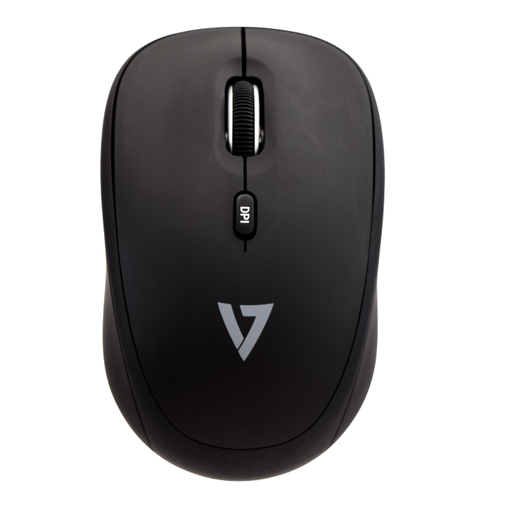 Image unavailable
V7 MW100-1E Wireless Mouse, black
This conventional mouse is worth considering if you want a small device and have clear space to move it.
Its product name specifies a 2.4GHz USB nano receiver, four buttons, an optical sensor and 1600 DPI. Check scrolling behaviour for long event lists and compatibility with the computer you use.
View on Joybuy
 Image unavailable
HP 920 Ergonomic Wireless Mouse, black, with detachable wrist rest
Consider the HP 920 if an upright grip is a priority and you can spare room for both the mouse and its movement.
The named bundle includes a detachable wrist rest. Check hand fit, button reach and how the rest sits in your desk layout before choosing it for extended sessions.
View on Joybuy
 Image unavailable
Logitech MX Master 3S Mouse, black
This conventional mouse is relevant if scrolling through schedules matters more to you than minimising the mouse’s footprint.
Check that its shape, button reach and movement area suit your desk; an ergonomic description alone cannot establish personal comfort.
View on Joybuy
 Image unavailable
V7 MW500BT Bluetooth Vertical Mouse
This vertical model is an option if you prefer an upright grip while editing, provided its shape fits your hand and desk.
The product name specifies Bluetooth and 2.4GHz modes, six buttons and an adjustable sensor rated at 1600 DPI. Check hand fit and system compatibility for your setup.
View on Joybuy
Frequently asked questions
Is a trackball right for every small desk?
No: a stationary trackball is most relevant when mouse-movement space is the limiting factor. Its ball-based control takes a different habit from moving a mouse, and PCMag notes a learning curve for some new users.
Will a vertical mouse fix discomfort during calendar work?
A vertical mouse is not a complete answer to workstation discomfort. Check that it fits your hand, and consider the desk, chair, screen and working conditions too; the Health and Safety Executive advises assessing the whole display-screen workstation.
Can I use one mouse with both my laptop and another device?
Some models can, if both devices support the required connection. Logitech says MX Anywhere 3S can pair with up to three devices over Bluetooth; check your devices’ compatibility and whether you need a separate receiver.
What should I check before ordering?
Confirm the exact variant, connection method, included accessories and the seller’s warranty and returns terms. Terms offered by a manufacturer for purchases through its own store do not automatically apply to another retailer.


