
24/7 Customer Support

Free returns

Same-day & Next-day Delivery

Quality Guaranteed

Unlock Your Welcome Offers: FREE Delivery | Up to 80% OFF | Free 30-day JoyPlus trial
Download the APP
For healthcare workers, food handlers, cleaners, tattoo artists and allergy-conscious households, small disposable nitrile gloves can make everyday tasks more hygienic and manageable. However, not every product labelled “nitrile” offers the same fit, protection or suitability for food and chemical contact.
A low price can be misleading if gloves split during use, feel loose around the fingers or cannot be used safely with the substances you handle. This guide explains what to check before buying, with practical recommendations for common UK use cases.
Nitrile is generally selected as a latex-free alternative, but resistance varies according to the formulation, thickness, chemical and exposure time. A glove suitable for food preparation may not be appropriate for strong solvents, concentrated disinfectants or laboratory chemicals.
Always check the product’s resistance information and follow the chemical manufacturer’s safety guidance. For demanding work, look for relevant chemical-resistant gloves standards and documentation rather than relying on the material name alone.
A small glove can still be too long in the fingers or loose across the palm. Excess material may reduce dexterity, catch on equipment and increase the chance of contamination. Conversely, an overly tight glove can be uncomfortable and more likely to tear when stretched.
Check the seller’s sizing information where available. If your hand measurement sits below the usual small range, consider XS small nitrile gloves instead.
Terms such as medical-grade nitrile gloves and food-safe disposable gloves should be supported by product information, intended-use details and relevant conformity markings. For healthcare applications, check whether the packaging identifies applicable medical glove requirements, such as EN 455. For food handling, look for a food-contact declaration and instructions covering the foods and conditions involved.
Powder-free construction is often preferred for healthcare, food and clean handling because loose powder can create unwanted residue. It does not, however, remove the need for correct hand hygiene or glove changes.
For users avoiding natural rubber latex, choose clearly labelled latex-free examination gloves. The Unigloves Pearl products listed below are described as made from nitrile and latex-free. By contrast, latex products may not be suitable for people with a known latex sensitivity.
Powder-free nitrile gloves are a practical choice where particulate contamination or hand dryness from glove powder is a concern. Some nitrile gloves also have a chlorinated finish to make pulling them on easier, although comfort still depends on correct sizing.
For professional tasks, review:
A glove suitable for dentistry, tattooing or food preparation should not automatically be treated as suitable for every industrial or chemical application.
A beaded cuff can make gloves easier to pull on and may help reduce liquid rolling towards the wrist. Textured fingertips can improve grip when handling wet or oily items. Touchscreen-compatible gloves may be useful for checking recipes, updating clinical records or operating a tablet without removing the gloves.
These features support convenience, but they do not replace changing gloves between tasks or washing hands before and after use.
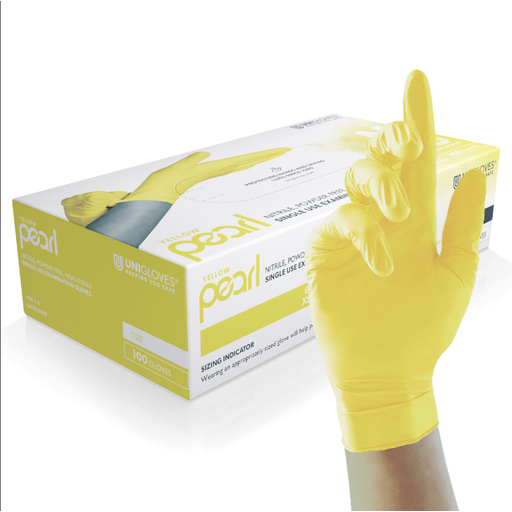
Why This Fits Their Persona: A box of 100 offers a practical starting supply for household cleaning, food preparation, gardening and occasional healthcare-related tasks.
The listing identifies the gloves as powder-free, latex-free and suitable for contact with all food types, rather than leaving intended use unclear.
The product information lists a beaded cuff, textured fingertips, touchscreen compatibility and a stated AQL of 1.5.
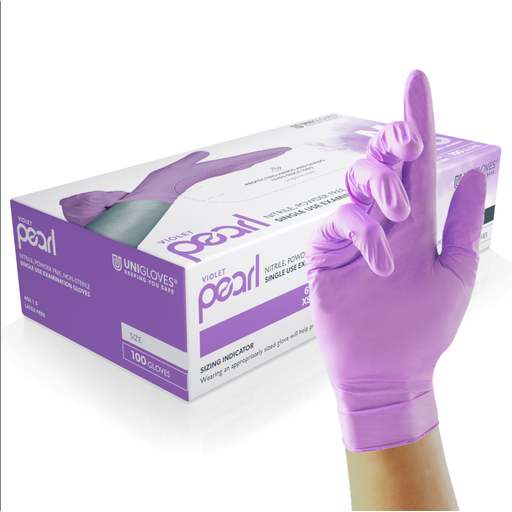
Why This Fits Their Persona: A suitable option for dental, tattoo, piercing and professional cleaning users who value a clearly specified, close-fitting disposable glove.
The listing specifies nitrile construction, a powder-free and latex-free finish, and a stated use across healthcare, dentistry, tattooing and piercing.
Textured fingertips are listed for grip, while the chlorinated finish is intended to support easier donning.
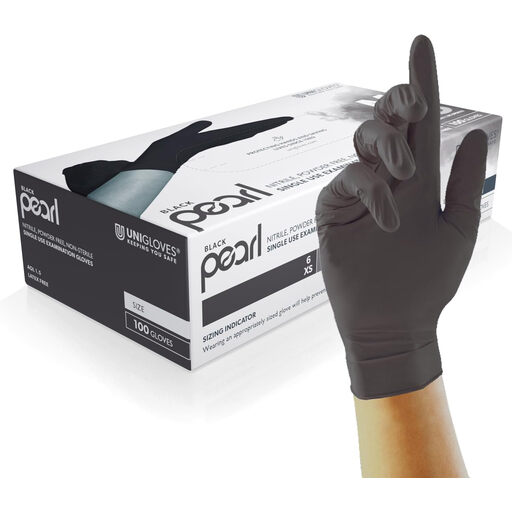
Why This Fits Their Persona: The black colour can support workplace colour-coding and is practical for cleaners, tradespeople, tattoo studios and frequent task changes.
The product details identify it as powder-free, latex-free and chemical-resistant, while also stating single-use handling and disposal.
The listing includes a box of 100, textured fingertips, a beaded cuff and touchscreen compatibility.
We have compiled a complete, real-time list of products that fully satisfy these strict selection criteria and UK safety regulations.
They can be, provided the specific product is labelled or documented as suitable for food contact. Check the packaging and product information for the relevant food-contact declaration. Change gloves when moving between raw and ready-to-eat food, and never use visibly damaged gloves.
There is no universal wear time. Replace them when torn, visibly contaminated, wet inside, stretched or when changing tasks. For healthcare, food handling and tattooing, task-based changes are generally more useful than trying to extend the life of one pair.
Some are listed as chemical-resistant, but resistance depends on the chemical, concentration, temperature and contact duration. Read the product’s chemical-resistance information and the cleaning product’s safety instructions. For strong corrosive substances, use gloves specified for that exact hazard rather than relying on a general-purpose disposable glove.