
24/7 Customer Support

Free returns

Same-day & Next-day Delivery

Quality Guaranteed

Unlock Your Welcome Offers: FREE Delivery | Up to 80% OFF | Free 30-day JoyPlus trial
Download the APP
Living in a compact UK home often means making clever choices with furniture. The dining table, a centrepiece for meals and gatherings, presents a unique challenge: how do you find a piece that fits your daily life without sacrificing the ability to host friends and family? A permanent six-seater can dominate a small flat, while a tiny two-person table leaves you unprepared for guests.
This is where the extendable dining table for small spaces becomes an invaluable asset. This guide is designed to help you navigate the different types, mechanisms and styles available. We will look at practical considerations to help you find a functional and stylish table that adapts to your needs, whether it's for a quiet breakfast for two or a lively dinner for four or more.
Before exploring specific products, let's cover a few key points. Thinking about these factors will help you narrow down your options and select a table that truly works for your home.
The way a table extends is crucial for both convenience and space management. The most common types for compact tables are:
It is essential to measure your room, but you need to take two sets of measurements. First, measure the area where the table will sit in its compact, everyday state. Ensure there is enough room to move around it comfortably.
Second, measure the space with the table fully extended. A good rule of thumb is to allow at least 90cm of clearance on all sides where chairs will be. This provides enough room for someone to sit down and for others to walk behind them. This planning ensures your new compact dining table is a help, not a hindrance.
The shape of your table can significantly impact the flow of a room. A round extendable dining table often works well in smaller or square-shaped rooms, as the lack of sharp corners can make the space feel larger and easier to navigate. Rectangular tables are a classic choice and work well in a dedicated kitchen diner table area.
For material, an oak dining table is a popular and durable choice. Its natural grain brings warmth and character, and it complements a wide range of interior styles, from modern Scandinavian to more traditional aesthetics.
Here are a few recommendations that balance clever design, quality materials and practical functionality for small-space living.
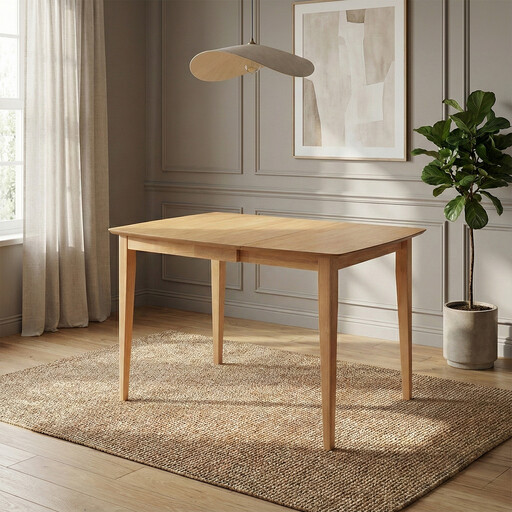
Why It Stands Out: The Seattle table uses a classic and reliable drop-leaf mechanism. It transforms from a neat 75cm square table into a 120cm rectangular surface, making it a highly practical choice for everyday use and occasional hosting. The solid oak and oak veneer construction provides a light, airy feel.
Pros:
Who is it for? This is an excellent choice for individuals or couples in a small flat. It serves as a perfect 4 seater extending dining table when needed, without overwhelming the space day-to-day.
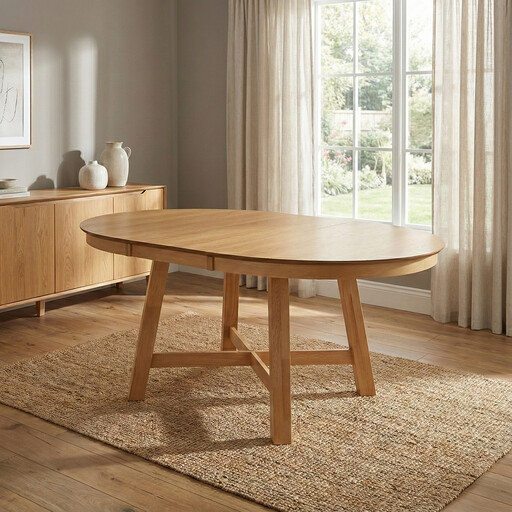
Why It Stands Out: The Roseville’s main feature is its integrated butterfly leaf mechanism. The extension is cleverly stored inside the table, meaning no extra parts to find a home for. It smoothly transitions from a generous round table to a large oval shape.
Pros:
Who is it for? This table is suited for those who entertain more regularly or have a family. It offers the flexibility to host larger gatherings while maintaining a manageable footprint for daily use.
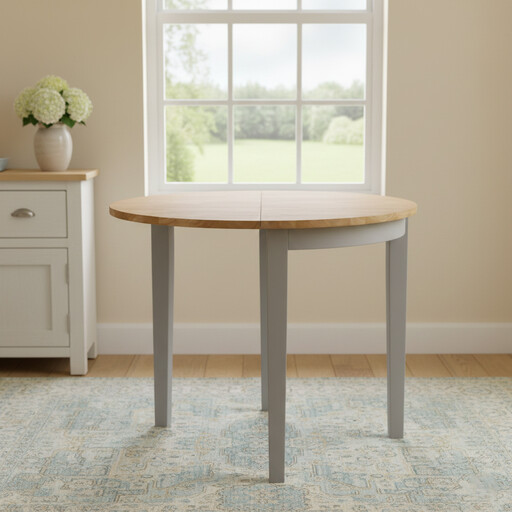
Why It Stands Out: The Altona is a true multi-tasker. It functions as a slim, half-moon console table that sits neatly against a wall. When needed, the top folds out to create a full 90cm round table, perfect for dining.
Pros:
Who is it for? This is the ultimate small extendable dining table for studios, narrow kitchen diners or anyone who needs a dining surface only occasionally. It prioritises saving space above all else.
If the models above are not quite the right fit, or if you wish to see more designs and finishes, there are many other possibilities to consider. A well-chosen table can transform how you use your space.
Explore our complete range of oak extending dining tables
What is the most space-saving type of extending table? For the absolute minimum footprint, a convertible console table like the Altona is hard to beat, as it serves another purpose entirely when not used for dining. For more regular use, a drop leaf dining table is also highly effective, as it can be pushed against a wall to free up floor space.
How do I care for an oak dining table? Generally, a soft, dry cloth is sufficient for daily cleaning. For spills, use a slightly damp cloth and dry the surface immediately. Avoid using harsh chemical cleaners or abrasive materials, as these can damage the finish. Always use coasters and placemats to protect the wood from heat and moisture.
Is a round or rectangular table better for a small space? This depends on your room's layout. A round extendable dining table can be better for square rooms and for improving traffic flow, as there are no corners to bump into. A rectangular table often fits more naturally into a long, narrow room or a defined dining nook. Both can be excellent choices, so consider which shape best complements your specific area.