Tight-space freezer users
A narrow kitchen gap or compact flat makes the appliance’s full dimensions, door access and ventilation space as important as its stated width.


Choose a fridge-freezer by checking the measured installation space and the exact model’s ventilation requirements before comparing freezer compartments. For regular portions of grated cheese, look at frozen-compartment volume and drawer layout rather than total appliance capacity; an integrated model also needs a compatible cabinet and hinge arrangement. No Frost and Low Frost are different model-specific features, so weigh maintenance against the space and storage you need.
A narrow kitchen gap or compact flat makes the appliance’s full dimensions, door access and ventilation space as important as its stated width.
If you keep labelled portions alongside other frozen food, compare the space and arrangement of the freezer compartment rather than relying on the fridge-freezer’s total capacity.
If removing ice is a concern, check the exact model’s frost-control system without overlooking freezer space or installation fit.
For a small kitchen, establish that the appliance can be installed and opened properly, then judge how much usable freezer space remains for cheese portions.
| Concern | What to check | Who this matters to |
|---|---|---|
| Fit and installation | Compare full dimensions, door-opening space and the exact model’s ventilation instructions with the measured gap. | If my kitchen gap is tight, I need the doors to open and air to circulate, not just a width that fits on paper. Around 42% of consumers put physical fit and installation first. |
| Freezer space and organisation | Check frozen-compartment litres separately from total capacity, along with drawer size and layout. | When I freeze grated cheese in portions, I want room to keep the bags apart from other food and find them easily. Roughly 33% of consumers primarily care about usable freezer space and organisation. |
| Frost and everyday upkeep | Confirm whether the exact model says No Frost, Frost Free or Low Frost; compare its energy label and product information sheet too. | If I would rather spend less time dealing with ice, the frost system matters to my routine. About 25% of consumers place lower-maintenance freezing first. |
A narrow appliance can still be unsuitable because of its depth, height, door swing or airflow requirements. Which? notes that freestanding fridge-freezers may need several centimetres at the sides and top for air circulation.
Measure the complete space and compare it with the exact model’s dimensions and installation instructions before ordering.
Total litres include chilled storage, which does not tell you how much room is available for frozen cheese. Bosch, for example, states separate chilled and frozen volumes for its KIV87NSE0G integrated model.
Compare frozen-compartment litres and drawer layout, then consider where labelled portions would sit alongside other frozen food.
Frost control varies by model: Beko lists Frost Free on selected small models, while Bosch describes its KIV87NSE0G as Low Frost.
Check the wording for the appliance you intend to buy and decide how much defrosting you are willing to manage.
A convenient appliance position still needs a suitable electrical connection. Electrical Safety First advises placing a fridge-freezer near a wall socket rather than using an extension lead.
Plan the socket position before installation, keep the mains cable unobstructed and follow the model’s instructions.
Beko describes narrow fridge-freezers at 54.5 cm wide and lists features including Frost Free, adjustable shelves and reversible doors across selected models.
Hotpoint lists its HPKH 1261 W4UK as a freestanding 50/50 model measuring 54 cm wide, 182.4 cm high and 57.5 cm deep, with No Frost and Fast Freeze.
Bosch lists the integrated KIV87NSE0G with a sliding hinge, a 177.2 cm height, a 54.1 cm width and 70 litres of frozen-compartment volume.
These freestanding fridge-freezers offer narrow widths for small-kitchen layouts. Compare their stated dimensions and frost systems, then check each model’s freezer arrangement, operating temperature and installation instructions for your space and food-storage needs.
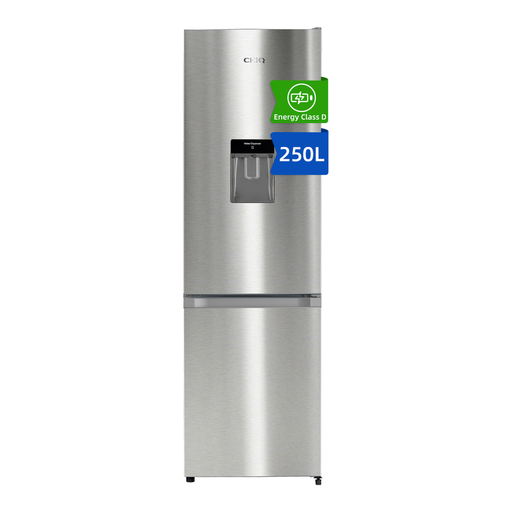 No image available
Consider this freestanding model if a 54 cm-wide appliance fits your kitchen and you prefer No Frost. Its title states a height of 181 cm, total capacity of 250 L, a water dispenser and a D energy rating.
Before relying on it for frozen cheese, confirm the freezer compartment’s operating temperature and layout, plus the required ventilation and door-opening space.
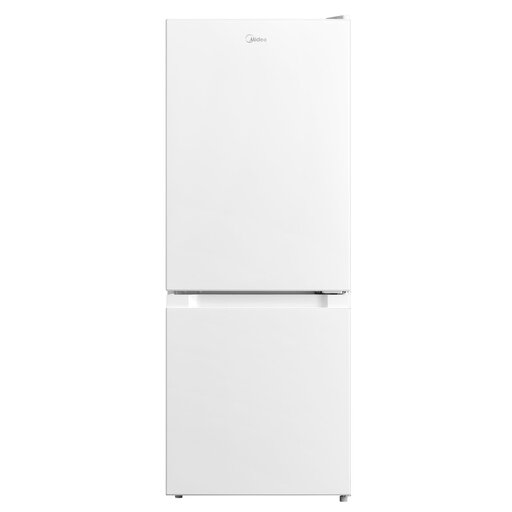 No image available
Consider this model where appliance height is restricted. Its title describes it as 123 cm high, with Low Frost and an E energy rating; Low Frost should not be treated as frost-free.
Check the exact dimensions, freezer layout and operating temperature, as well as installation clearance and door access.
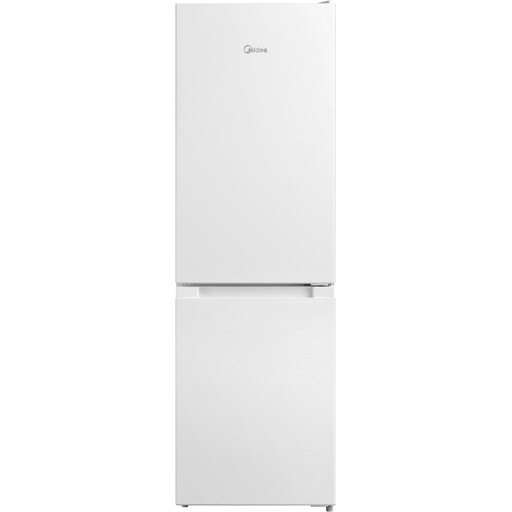
 No image available
Consider this freestanding model when a particularly narrow width matters. Its title states 47 cm wide, 144 cm tall, 157 L total capacity, Low Frost and an E energy rating.
Check how much of that capacity is available in the freezer and whether its layout suits portioned cheese. Confirm operating temperature, installation clearance and door-opening space before choosing it.
 No image available
Consider this freestanding model if a 50 cm width is workable. Its title states 173 L total capacity and an E energy rating.
Check the frozen-compartment volume and drawer arrangement for your portions, and confirm the frost system, operating temperature and installation space for the exact model.
Check that the appliance can keep its freezer around −18°C. GOV.UK gives that temperature as household freezing guidance for England, Northern Ireland and Wales; use the exact model’s controls and a freezer thermometer if you need to check its operating temperature, and follow the cheese packaging’s freezing instructions.
Do not assume an ice box has the same food-storage conditions as a dedicated freezer compartment. Check its manual to establish whether it is intended for freezing food and can operate around −18°C; appliance size and total capacity alone will not answer that question.
Measure the available height, width and depth, then allow for the exact appliance’s protrusions, door swing and required ventilation space. Which? notes that a freestanding fridge-freezer may need several centimetres at the sides and top for air circulation, so check the model’s installation instructions rather than treating its stated width as the complete gap required.
Compare the energy label and product information sheet for each exact model, but assess freezer space and installation fit separately. An energy rating does not tell you whether the compartment will accommodate your portions of grated cheese.
Electrical Safety First advises placing a fridge-freezer near a wall socket instead of using an extension lead. Check that the intended position also provides the airflow and cable arrangement required by the appliance’s installation instructions.