
24/7 Customer Support

Free returns

Same-day & Next-day Delivery

Quality Guaranteed

Unlock Your Welcome Offers: FREE Delivery | Up to 80% OFF | Free 30-day JoyPlus trial
Download the APP
Small kitchen appliances can make everyday cooking easier, but choosing the wrong one may leave you with a bulky device, difficult cleaning or functions you rarely use. For UK households, students, home bakers, coffee drinkers, campers and families, the right purchase should match available space, cooking habits and running costs rather than simply having the longest feature list.
A multifunction blender may offer several attachments, while a health kettle may include numerous programmes. These features are useful only if they fit your routine. Before buying, identify the two or three tasks you perform most often, such as preparing smoothies, kneading dough or making hot drinks.
Product descriptions may show the maximum bowl or tank size, but the practical working capacity can be lower. A large mixing bowl does not mean you should fill it to the rim, and an ice maker’s daily output is not the same as its storage capacity. Check both measurements before deciding whether an appliance suits a flat, family kitchen or motorhome.
Removable parts, drain holes and dishwasher-safe accessories can make a bigger difference than an extra speed setting. Also measure the appliance, including the space needed to open a lid or tilt a motor head. Compact kitchen appliances still need safe ventilation and a stable, heat-resistant surface.
UK homes generally use 220–240V, 50Hz mains electricity, but always confirm the product specification and plug arrangement before purchase. Wattage indicates the appliance’s electrical input, not necessarily the final cooking performance.
A simple running-cost estimate is:
Power in kW × hours used × your electricity tariff = approximate cost
For example, a 1,000W appliance used for 15 minutes consumes approximately 0.25kWh. Actual costs depend on your tariff and usage. Appliances with heating elements, such as an electric hot pot, espresso machine or electric steamer pot, may use more electricity than a blender used briefly.
For a small household, a 1.5L blender or compact kettle may be sufficient. Families may prefer a 5L hot pot or mixing bowl. Those living in a motorhome or taking equipment camping should prioritise weight, footprint and ease of transport.
Check the full external dimensions, not just the container size. For example, a worktop ice maker measuring 35 × 23 × 30cm may fit beneath some cabinets, but it still needs clearance for ventilation and access to the water tank.
Look for food-contact components such as 304 stainless steel, clearly described non-stick surfaces and removable parts. Never immerse a powered base, plug or cable in water. Heating appliances can remain hot after switching off, while steamers and hot pots require particular care around lids and vents.
For non-stick waffle plates, use wooden, silicone or plastic utensils. For stand mixers and dough makers, follow the stated maximum flour or dough quantity to reduce strain on the motor.
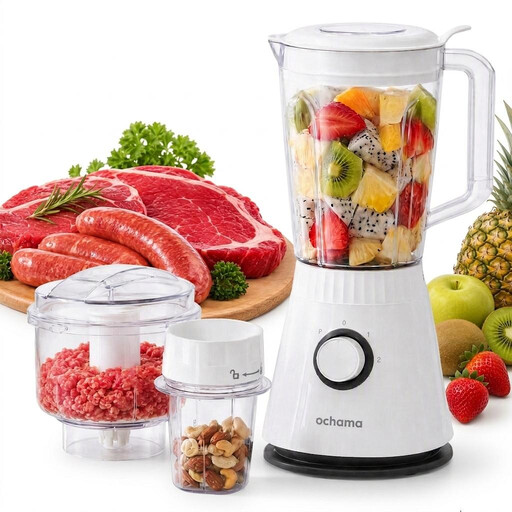
Why This Fits Their Persona: Its compact 1.5L pitcher suits students, couples and smaller UK kitchens where one appliance needs to handle several everyday tasks.
The detachable components support quicker cleaning, while three speed settings keep operation straightforward rather than unnecessarily complicated.
600W motor; functions include blending, ice crushing, meat chopping and spice grinding.
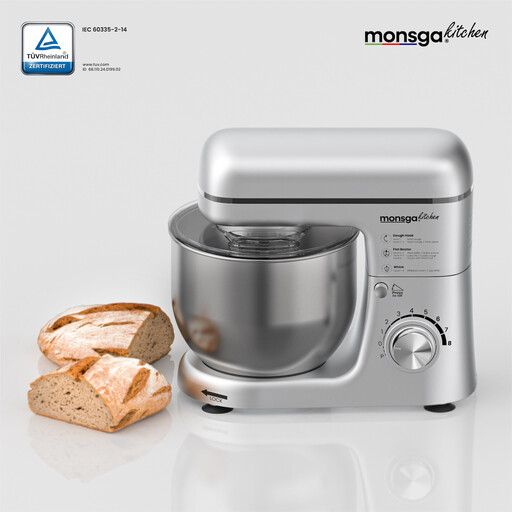
Why This Fits Their Persona: Regular bakers can use one machine for bread dough, cakes, biscuits, cream and mashed potatoes without relying on several baking appliances.
The recommended usable capacity is 5.0L, helping buyers distinguish working capacity from the listed 6.0L maximum bowl volume.
Eight speed settings; tilt head, splash guard, whisk, beater and dough hook included.
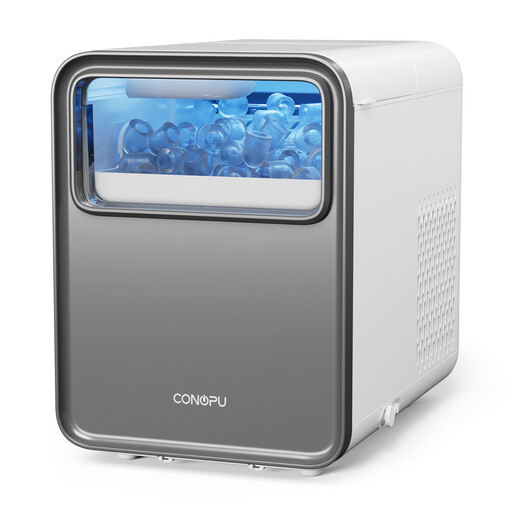
Why This Fits Their Persona: Useful for families, entertaining, barbecues, camping and motorhome trips where freezer space may be limited.
The water-shortage and ice-full indicators address two common inconveniences, while the side drain and 30-minute self-cleaning cycle simplify maintenance.
Produces nine ice cubes in approximately 6–8 minutes; offers two ice sizes and a 1.5L water tank.
We have compiled a complete, real-time list of products that fully satisfy these strict selection criteria and UK safety regulations.
It depends on wattage and usage time. Blenders and waffle makers are generally used for short periods, while hot pots, kettles and espresso machines use heating elements. Compare the rated power and estimate consumption using your electricity tariff before buying.
Measure the appliance footprint, then allow additional room for ventilation, cables, opening lids and safe handling. A compact design may still be unsuitable if it must sit directly beneath a low cabinet or beside a sink.
Follow the manufacturer’s capacity limits, unplug before cleaning, remove limescale where appropriate and keep powered bases dry. Clean food residue promptly, store detachable parts safely and avoid using unsuitable utensils on non-stick surfaces.